


Sustainability research – free sources of Environmental, Social and Governance (ESG) information
11/11/2025

With Cranfield’s Green Week here, we thought we’d look at ESG resources. If you’re working on a thesis, literature review or a research project in sustainability, business or policy, you’ve probably come across the term ESG (Environmental, Social & Governance). What you might not know is just how many free, high-quality resources exist to help you gather company data, country-level indicators, regulatory frameworks and reporting standards around ESG.
Several Government bodies provide guidance on sustainability which can be useful for grounding ESG within wider Sustainable Development Goals frameworks:
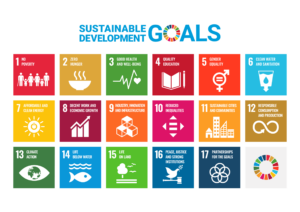
- The United Nations has 17 Sustainable Development Goals. Developed in 2015, this global partnership aims to link sustainable goals and show the importance of how everyone can play a part in the world’s sustainability agenda and how it all interconnects.
- The European Union has adopted a proposal for a Directive on corporate sustainability due diligence.
You can also find country and global-level ESG datasets which are useful for macro / national / policy -level ESG work:
- The World Bank – Sovereign ESG Data Portal / ESG DataBank
- United Nations Sustainable Development Goal indicators
- UK government open data portal where many government datasets (including environment/social/governance related) live
Companies and organisations also want to show that they are playing their part. Guidelines and standards have been produced so that companies can report on the steps they are taking to achieve a good ESG score or rating. These include…

- GRI – Standards provide guidance on what reporting standards are available for companies – large or small, public or private
- IFRS/ISSB Sustainability Standards were developed to enhance investor-company dialogue so that investors receive decision-useful, globally comparable sustainability-related disclosures that meet their information needs.
- European Union Corporate sustainability reporting rules require large companies and listed companies to publish regular reports on the social and environmental risks they face, and on how their activities impact people and the environment.
- GHG (Greenhouse Gas Protocol) Standards provide a framework for businesses, governments, and other entities to measure and report their greenhouse gas emissions.
For companies and organisations in the UK:
- The UK Government plans to adopt the IFRS/ISSB Standards via UK Sustainability Reporting Standards
- Task Force on Climate‑related Financial Disclosures (TCFD) Guidance (UK) along with Public sector annual reports: sustainability reporting guidance
are the UK government’s guidance for the public sector on climate-related disclosures - The UK Financial Conduct Authority (an independent public body that regulates UK financial services forms) has also produced guidance on Sustainability reporting requirements.
- For the UK, Government conversion factors for company reporting of greenhouse gas emissions can be used to report on certain greenhouse gas emissions.
Company reports and disclosures
- Corporate register – directory of sustainability and corporate social responsibility reports
- ResponsibilityReports – Searchable listing of company responsibility/sustainability reports.
Companies and organisations collect the non-financial information and report it as part of the ESG (environmental, social and governance) data. This is often shared as part of a company’s annual report. These are used by other organisations to create ESG scores or ratings. These cover areas such as human resource practices, e.g. number of females on a board, business ethics, environmental sustainability, social factors and corporate governance.
Ratings agencies and databases
Here are some free sites containing ESG data on companies:
- Sustainalytics [16,000+ companies including emerging markets]
- MSCI Inc. – ESG Ratings & Climate Search Tool [10,000+ companies]
- S&P Global ESG Scores [13,000+ companies, 35 focus areas]
- ISS ESG Gateway [7,300+ public & private companies, aligned to European Union regulation]
- CDP Search [22,700+ companies, data gathered from questionnaires sent to companies]
All of these sources gather different data and use a variety of corporate information sources to create their rating or score. These scores or ratings can be used to assess a company’s sustainability and ethical performance so that one company can be compared with another.
For more comprehensive coverage of ESG data, Library Services also provides access to Bloomberg and Workspace.
Feature image from Pixabay. Available at: https://pixabay.com/photos/money-profit-finance-business-2696219/

Categories & Tags:
Leave a comment on this post:
You might also like…

Engineering Tomorrow. Part two: Can we move around the world without emissions?
Moving people and goods around the world is essential to modern life. But every journey has an environmental cost, and reducing the emissions associated with transport is one of the major engineering challenges of ...

Following in the footsteps of aerospace pioneers
I came to Cranfield to understand how aircraft stay in the sky. Months later, I was measuring the performance of aircraft engines in flight aboard the National Flying Laboratory Centre's Saab 340B. My ...

From looking up at jet engines to powering the future of flight
From flying aboard Cranfield's Saab 340B flying classroom to rebuilding a gas turbine component by component, Jouni Kailouh's journey shows how specialist, hands-on experience can turn a fascination with propulsion into a future career ...
Engineering Tomorrow. Part one: Can we power the future without costing the Earth?
The world needs energy. To power homes, industries, transport and the technologies shaping our future. But as demand grows and the pressure to reduce emissions increases, how do we generate the energy we need ...

Looking ahead: Building foresight skills for a more sustainable future
As sustainability challenges become more complex and uncertain, organisations need people who can look beyond today's pressures and think strategically about the future. From changing regulations and emerging technologies to supply chain disruption and ...

Brazil to Cambridge: How Cranfield helped me build a career in data analytics
I was hungry for something bigger. Before Cranfield, I was living in São Paulo, Brazil, working as a Data and Market Intelligence Analyst in the trading division of Raízen. My background is actually ...
Comments are closed.