

PhD researcher at the IF Oxford Science and Ideas Festival
16/04/2024
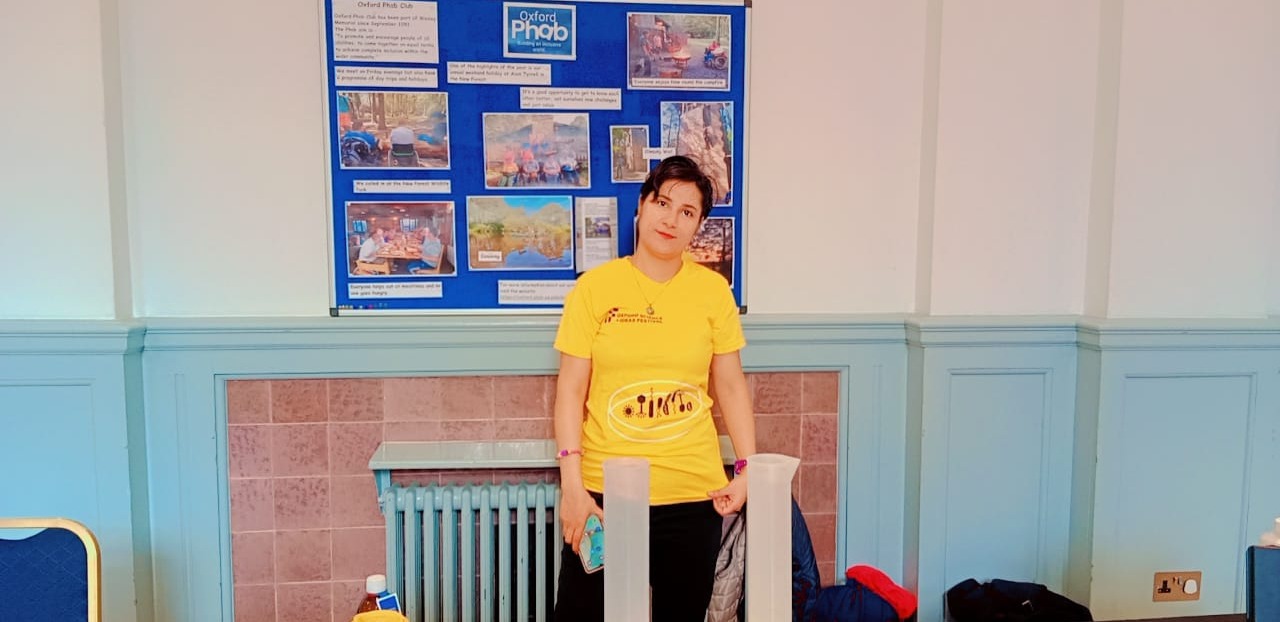
IF Oxford is a science and ideas Festival packed with inspiring, entertaining and immersive events for people all ages. PhD researcher, Zahra attended the festival. Here she shares what motivated her to get involved.
I am thoroughly interested in social communication, as it plays a vital role in fostering connections, understanding diverse perspectives, and building meaningful relationships in today’s interconnected world.
Since this social event spanning technology, art, and science not only entertains but also encourages children and their families to embark on a journey of discovery, igniting curiosity and imagination, I was really interested in being one of the team members. It was a new and interesting experience for me.
Were there any stand-out moments for you?
I found great satisfaction in elucidating experiments to audiences of varying age groups. Particularly engaging were the interactions with younger children, although simplifying explanations presented a challenge. Yet, witnessing their enthusiasm for these novel concepts was immensely rewarding.
In essence, we played a pivotal role in the overarching event, fostering a welcoming and educational atmosphere where both children and families could interact with researchers and creative professionals, experiencing captivating experiments first-hand.
Did your activity relate to your PhD, in what way?
Engaging in conversations and simplifying the explanation of my research project has proven invaluable to my research journey. Additionally, our diverse array of experiments catered to audiences of all ages. It reaffirmed the importance of effective science communication in inspiring curiosity and promoting lifelong learning, driving my passion for engaging with diverse audiences on complex topics in accessible ways.
Do you have any advice to others thinking of participating in outreach activities?
This initiative cultivates social connections by offering a platform for researchers to share their scientific knowledge and ideas with the public. Moreover, it proved to be an enjoyable experience for us, serving as an interactive forum where children could freely question experts, engage in entertaining activities, and explore exciting new experiments.

Categories & Tags:
Leave a comment on this post:
You might also like…

Introducing Barrington Library
Welcome to all our new students! Barrington Library supports all the students and staff at Cranfield Defence and Security on the Shrivenham site. We are looking forward to meeting you all soon, in person or ...

About to start your journey at Cranfield? We’re here to help!
Congratulations on accepting your offer to study at Cranfield! If you’re keen to get a head start before your course begins, our Library Services team is here to support you every step of the way. ...

Bank holiday hours for Library Services: Monday 31 August
Library Services staff will be taking a break on Monday 31 August for the bank holiday. You will still be able to access all the resources and help you need via our library website. The 24/7 ...

The real cost of studying in the UK – what international students need to budget for
Moving overseas to pursue a postgraduate degree is one of the most exciting investments you can make in your future. It's also one of the most significant financial commitments you and your family will ...
Seven things you should definitely prepare for before studying at Cranfield University
You're thinking about Cranfield. Maybe you've done the virtual tour, read through the course pages, spoken to the course director or attended a webinar. Now, you're trying to figure out what life here is ...

From insurance to aerospace: why I chose to study a PhD with Cranfield
My path to studying for a PhD wasn't exactly a straight line. I had just graduated with an MEng in Aerospace Engineering from the University of Surrey and, like a lot of people, wasn't ...