

My group project: Building a liquid hydrogen propelled civil airliner
23/05/2023
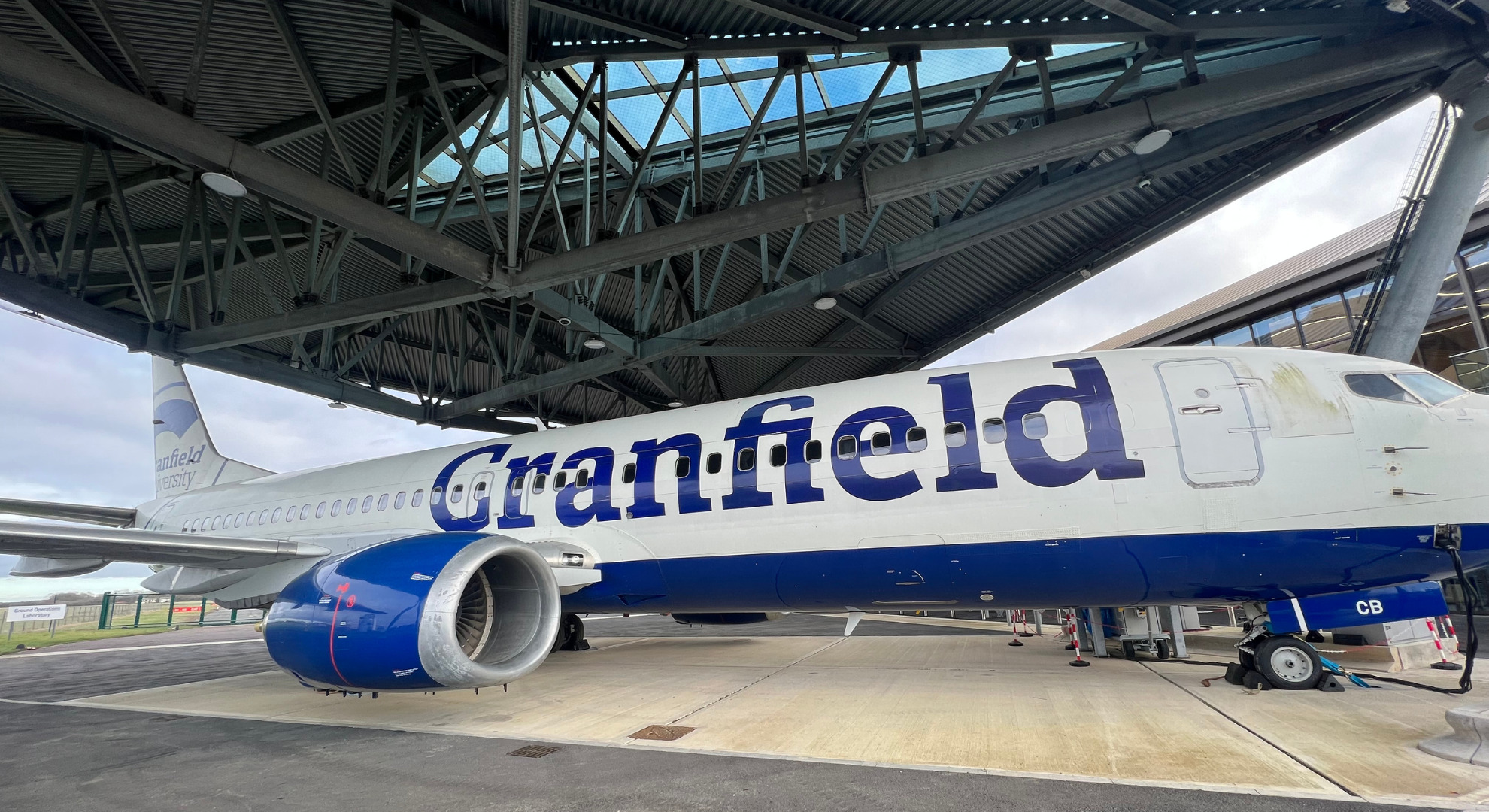
As part of Aerospace Vehicle Design MSc, specifically me studying Avionics System Design, all the students worked on one single project to build a Liquid Hydrogen Propelled Civil Airliner, based on the conceptual design given by Professor Howard Smith.
The design and development of a liquid hydrogen propelled civil airliner is a necessity for decarbonising the aviation sector, which contributes over 2% of the carbon footprint across the world and a vital element of moving the UK towards achieving net zero by 2050.
We were assigned individual tasks for which we must work over a period of six months, starting in October to present the outcomes at the end. We split into three different working groups: aircraft design, system design and avionics system design. I was part of the avionics system design where I had to develop, design and simulate components and software’s which belonged to the cockpit of an aircraft and the avionics bay.
My topic was to work on the 4D flight management system. It’s called 4D because we introduced time as a factor into the flight management system for reducing the amount of fuel consumed and reducing the amount of time it takes to move from point A to point B.
Since the project began, we have worked on the aircraft and system level requirements. We also worked on the fault tree analysis, system level hazards and failure analysis for every system we design. The last two months of the project, we focused on software-based development of our individual components as well as hardware integration of the software which we had developed.
As part of this project, we submitted a report which our professor reviewed and finally we ended our project with a critical design review where industry personnel and professors reviewed our work, asked questions, discussed the possible risk factors and how to resolve them.
I successfully worked on the Intelligent 4-Dimensional Flight Planning System as my primary task and led a group of 8 team members to produce a video (which was my secondary task) that brought our aircraft (A-22 Aether) to life.

Categories & Tags:
Leave a comment on this post:
You might also like…
Keen to develop your study skills?
Alongside the technical skills and academic knowledge that you will gain on your course, as a Cranfield student you have the opportunity to develop a range of other skills that can enhance your learning experience. ...
The V-conomy: powering the sixth wave of global economic growth
The world could be on the verge of a major surge in economic growth and development, driven by the convergence of AI and clean energy technology. Waiting to ride the K-wave The Russian ...

Need help using the Python programming language?
We know some of our students are currently trying to learn Python, so we wanted to make you aware of some great LinkedIn Learning videos that can help. But don't you have to pay for ...
What does it really take to become a Chevening Scholar?
Say “Turkmenistan” to most people and you’ll get a blank look. That was true when I left Ashgabat for the UK to study an MSc in Logistics and Supply Chain Management at Cranfield University ...

Get a head start on referencing and plagiarism
We offer a module on Referencing And Avoiding Plagiarism which you can find on your Canvas dashboard. It explains the role and importance of citing references and how to incorporate the work of other authors ...
How Cranfield shaped my journey as an Aerospace Engineer
If I'm being specific about the moment it clicked, it was reading a paper called "On the Role and Challenges of Computational Fluid Dynamics (CFD) in the Aerospace Industry" by two Boeing engineers, P. ...