

How do I reference Facebook and Twitter… in the APA7 style?
25/08/2022

All types of media are covered by the APA7 referencing guide, and you may find useful information via social media that you want to use in a piece of academic work. It might be a conversation, a Tweet, or a Facebook post by a business that provides context or illustration to your argument.
This post will show you how to reference Twitter and Facebook in your work.

What you need to include:
Author [@username]
(Date).
Title (content of the post) followed by [description of audio-visuals].
Site name, e.g. Twitter.
URL
And how your reference should look:
Marketing Week [@MarketingWeekEd]. (2022, August 11). Former Tesco brand boss Michelle McEttrick named @Primark’s first chief customer officer [Thumbnail with link attached]. Twitter. https://twitter.com/MarketingWeekEd/status/1557645775689207808ref_src=twsrc%5Egoogle%7Ctwcamp%5Eserp%7Ctwgr%5Etweet</
In-text citation: (Marketing Week, 2022)
What you need to include:
Author/Group Author [username]
Date
Title (content of the post) followed by [description of audio-visuals]
Site name, eg. Facebook.
URL
A Facebook reference should look as follows:
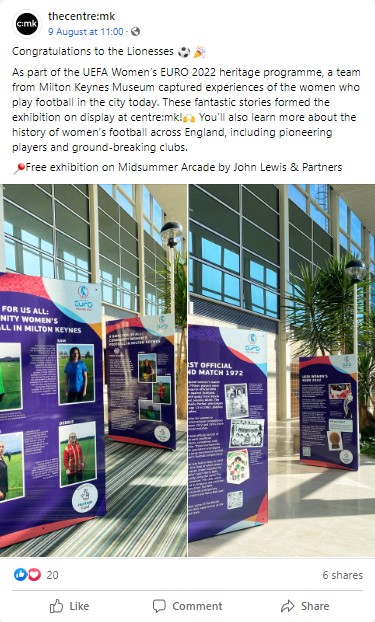
The Centre MK [@centremkofficial]. (2022, August 9). Congratulations to the lionesses. [Photograph]. Facebook. https://en-gb.facebook.com/centremkofficial/
In-text citation: (The Centre MK, 2022)
If you have any questions about how to reference, please email your Library.
Please note: Cranfield supports two different referencing styles – APA7 (Author-date) and Numbered (NLM). Please make sure you use the style preferred by your supervisor or lecturer. The advice above relates only to the APA7 style. If you have any questions about referencing, please contact the Library.
Featured Image by Thomas Ulrich from Pixabay: https://pixabay.com/photos/phone-display-apps-applications-292994/

Categories & Tags:
Leave a comment on this post:
You might also like…

Setting your research on the right course: Four questions every researcher should ask
Whether you are just beginning your doctoral journey or are already well into your research career, successful research rarely happens by accident. Like any successful mission, it depends on good planning, informed decisions, and getting ...

5 budgeting mistakes students make (and how to avoid them)
Good financial planning isn't about how much money you have. It's about the habits you build. We asked Dr Lakshmy Subramanian, Course Director for the Banking, Economics and Finance MSc, about the budgeting mistakes ...
Finding your reading materials
Use Library Search Library Search is the first place to start when you are trying to find academic sources for your work. This is the search box on the library website homepage. It allows you ...

Formula 1 was the dream and Cranfield was the conduit
I still remember the exact moment Formula 1 (F1) got its hooks into me. I was in my first year of an aerospace undergraduate engineering degree when I watched a video about the sport ...

Introducing Barrington Library
Welcome to all our new students! Barrington Library supports all the students and staff at Cranfield Defence and Security on the Shrivenham site. We are looking forward to meeting you all soon, in person or ...

About to start your journey at Cranfield? We’re here to help!
Congratulations on accepting your offer to study at Cranfield! If you’re keen to get a head start before your course begins, our Library Services team is here to support you every step of the way. ...