


Digitising the Cranfield University Photo Archive
30/06/2022
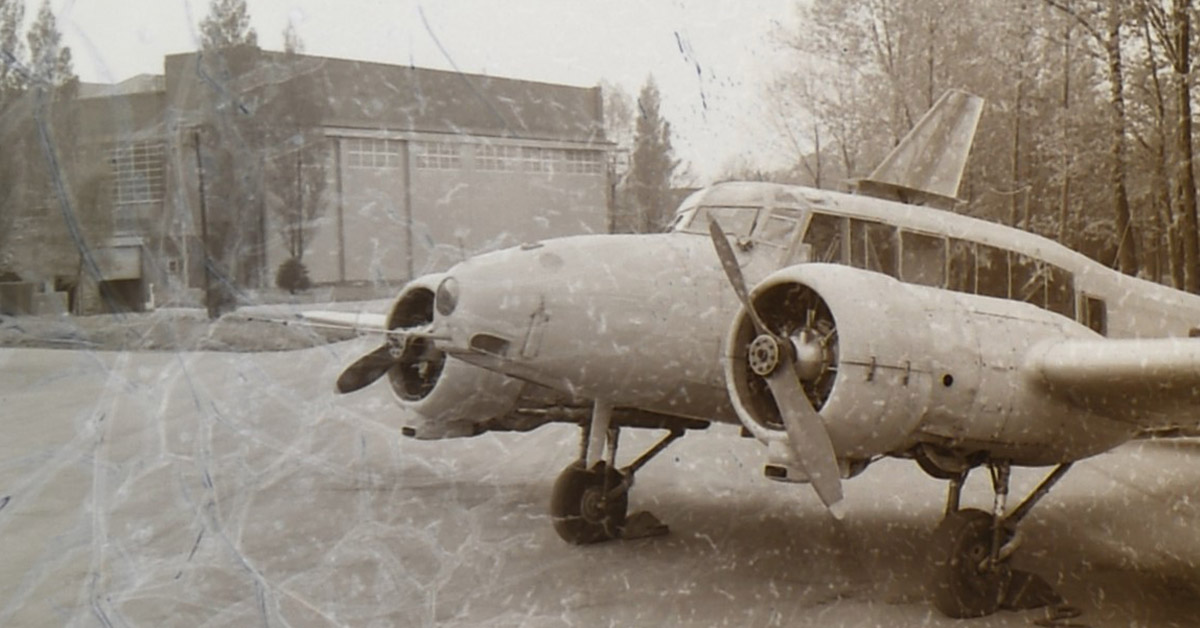
We are delighted to announce that we have been awarded a scoping grant to help us digitise more of our Photographic Archive and make the images available online.
The grant has been provided by Archives Revealed, a partnership programme between The National Archives, The Pilgrim Trust and the Wolfson Foundation, and is the only funding stream in the UK dedicated to cataloguing and unlocking archives.
As the UK’s first College of Aeronautics, which opened in 1946, Cranfield has carried out ground-breaking research and teaching for over seven decades. The output of the Photographic Unit comprised nearly 100,000 negatives, covering the period from 1957 to 2000. It captured Cranfield’s research and teaching facilities and equipment, events, royal visits and Honorary Graduations such as those of Sir Frank Whittle, Freddie Laker and Neil Armstrong. The collection also contains unique photographs of rare aircraft based at Cranfield. These were used either for teaching or exhibited in the air museum the College curated in the 1950s.
Due to access to our airport, the Unit was also in the enviable position of being able to charter aeroplanes to document changes to the local landscape from the air. Importantly, these photographs document the development and evolution of Milton Keynes, Bedford, Welwyn Garden City, Silsoe village, incorporating views of Flitwick Manor and Shuttleworth House.
With the help of Caroline Barrass, the University’s Head of Trust and Foundation Fundraising, in 2020 we were successful in receiving a donation from a local charitable foundation to digitise the first (and oldest) 20,000 negatives. We have shared a selection of these online via #CranfieldPhotoArchive on Twitter and Instagram and will continue to do so.
It has been an absolute joy to unlock the collection and finally see images that have been lost for the last 65 years. However, further funding has proved difficult to attract and so we applied to the Archives Revealed programme to help us access the expert advice we need to maximise the collection’s impact, enable further digitisation to take place, and then publish the images in an online database.
It is a unique collection, of both educational and informational value, which is not only of importance to Cranfield but has extensive national and international significance to the aviation sector. We can’t wait to be able to share more images with you and find out more about the stories behind them!

Categories & Tags:
Leave a comment on this post:
You might also like…

5 budgeting mistakes students make (and how to avoid them)
Good financial planning isn't about how much money you have. It's about the habits you build. We asked Dr Lakshmy Subramanian, Course Director for the Banking, Economics and Finance MSc, about the budgeting mistakes ...
Finding your reading materials
Use Library Search Library Search is the first place to start when you are trying to find academic sources for your work. This is the search box on the library website homepage. It allows you ...

Formula 1 was the dream and Cranfield was the conduit
I still remember the exact moment Formula 1 (F1) got its hooks into me. I was in my first year of an aerospace undergraduate engineering degree when I watched a video about the sport ...
Introducing Barrington Library
Welcome to all our new students! Barrington Library supports all the students and staff at Cranfield Defence and Security on the Shrivenham site. We are looking forward to meeting you all soon, in person or ...

About to start your journey at Cranfield? We’re here to help!
Congratulations on accepting your offer to study at Cranfield! If you’re keen to get a head start before your course begins, our Library Services team is here to support you every step of the way. ...

Bank holiday hours for Library Services: Monday 31 August
Library Services staff will be taking a break on Monday 31 August for the bank holiday. You will still be able to access all the resources and help you need via our library website. The 24/7 ...