

Unearthing Britain’s Pompeii in Must Farm: was it arson?
19/01/2016
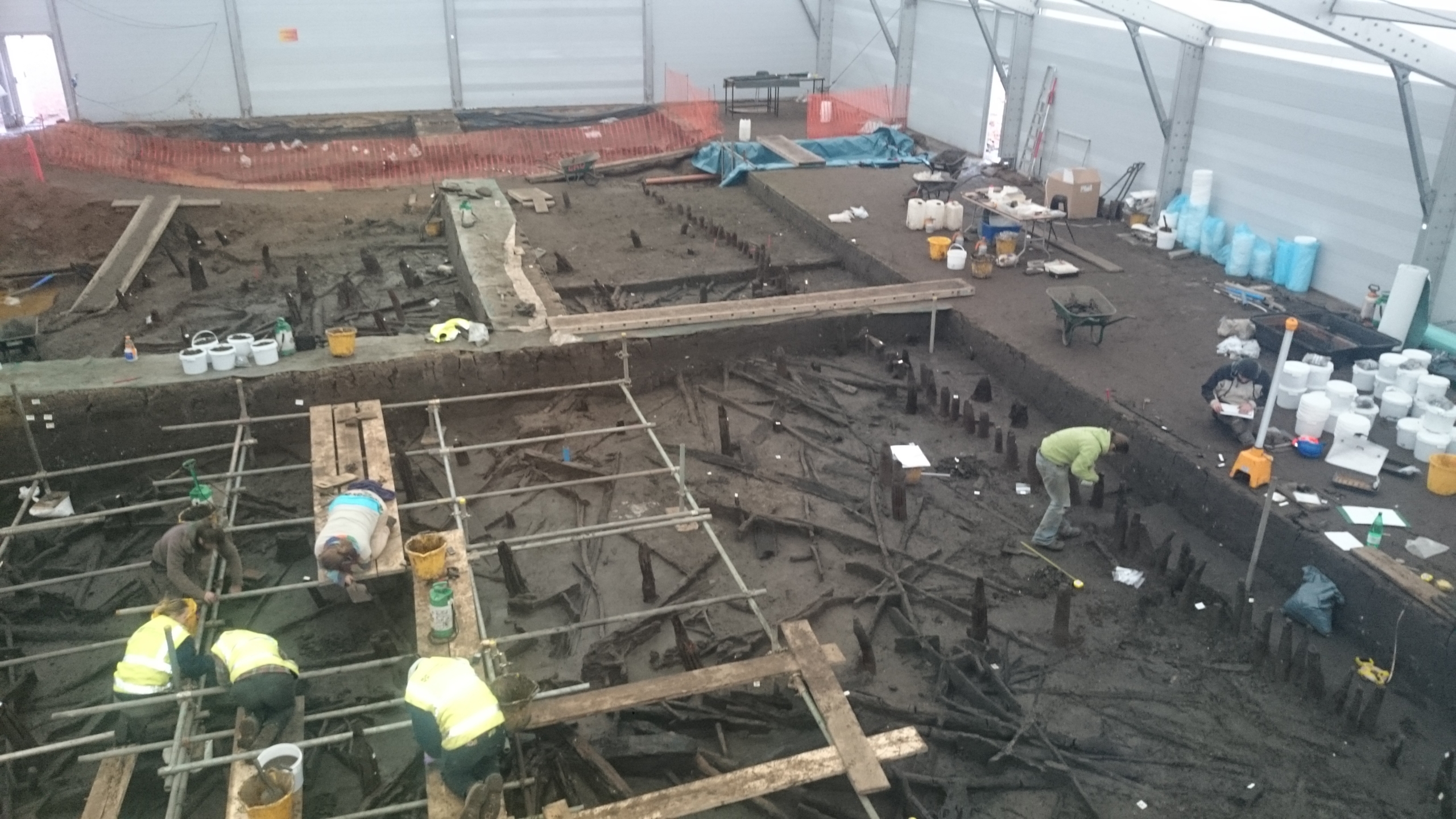
This month archaeologists discovered Britain’s Pompeii in Cambridgeshire. It is thought that a fire destroyed the wooden houses which may have formed part of a settlement at Must Farm quarry and which date back to around 1000 – 800 BC. The fire is now being investigated by a specialist team. I was asked if there was anything I could add to the team because over the past fifteen years I’ve worked in both modern forensic science and traditional archaeology, and have studied similar burnt structures before – but this level of preservation is almost unprecedented in British archaeology.
Burnt structures are striking in the archaeological record; fired-red brick, stone and clay or black charred timbers tend to stand out against natural earth tones of most excavations. Many earlier interpretations of such fire traces were expressly linked to historical or literary descriptions of widespread destruction, such as the traces of burning found within excavations at Colchester being linked to the Boudican destruction of the Roman colonia of Camulodunum in AD 60.
What could we learn from Must Farm?
While this approach lends itself to compelling narratives, it looks backward in time, and assumes that what appears dramatic in the ground must have had a similarly dramatic historical footprint. But fire doesn’t work like that, and from trivial beginnings – be it a bread oven in London or Mrs O’Leary’s cow in Chicago – great fires arise. As the archaeologist Francis Pryor said, “…the archaeologist is presented with the near impossible task of differentiating between Boudica and, say, the results of a bakery fire.”
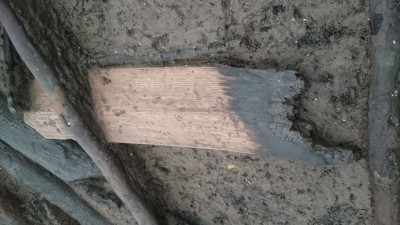 The site of Must Farm offers a near-unique opportunity to look in detail at a fire from the British Bronze Age, in a type of structure that, under normal circumstances, would never have survived to such a degree. Here we not only have huge timber uprights with mortise and tenon joints preserved in detail, but also the fragile roofing material and fibrous lashings to go with them. Some present near-total carbonisation, some have areas that could have been cut and shaped yesterday.
What we hope to be able to do with the site is to use the incredible resolution of detail about the structure to inform our models of how a fire might have developed and spread throughout it. We can use techniques derived from forensic fire investigation to give an indication of how much fuel was present in the structure, what sort of temperatures might have been reached, how quickly it might have developed and whether it was still smouldering as it collapsed into the river below. We might even be able to say something about whether the fire appeared to be a planned destruction in some way.
Crucially, understanding the final destructive burning of this building is not a separate process from understanding the living structure. Whether the building burnt down as a result of an unplanned incident, or if it was a carefully planned event, in its blackened timbers and reddened clay it preserves traces of that living building that a forensic approach will help to understand.

Categories & Tags:
Leave a comment on this post:
You might also like…

Moving to the UK to study? How to plan for banking, exchange rates and transfers
Currency and banking are two of the most practical parts of financial planning for international students. They are also often the most overlooked. We asked Dr Lakshmy Subramanian, Course Director for Cranfield University's Banking, ...

Cranfield: an environment where innovation thrives
The latest Knowledge Exchange Framework rankings from UK Research and Innovation (UKRI) gives an insight into the real and meaningful impact that UK universities have. The seven categories that make up KEF6 cover everything ...
How Cranfield accelerated my career in Logistics and Supply Chain Management
After graduating from the MSc in Logistics and Supply Chain Management at Cranfield University, I've been reflecting on the experiences that made my journey so valuable and the impact it has had on my ...

Mendeley: a powerful tool to organise and manage your references
Are you looking for a way to manage your references, create in-text citations and reference lists for your assignments or thesis? If so, you may wish to consider using Mendeley. What is it? Mendeley is ...

Keen to develop your study skills?
Alongside the technical skills and academic knowledge that you will gain on your course, as a Cranfield student you have the opportunity to develop a range of other skills that can enhance your learning experience. ...

The V-conomy: powering the sixth wave of global economic growth
The world could be on the verge of a major surge in economic growth and development, driven by the convergence of AI and clean energy technology. Waiting to ride the K-wave The Russian ...