


Is a PhD for me?
24/09/2021
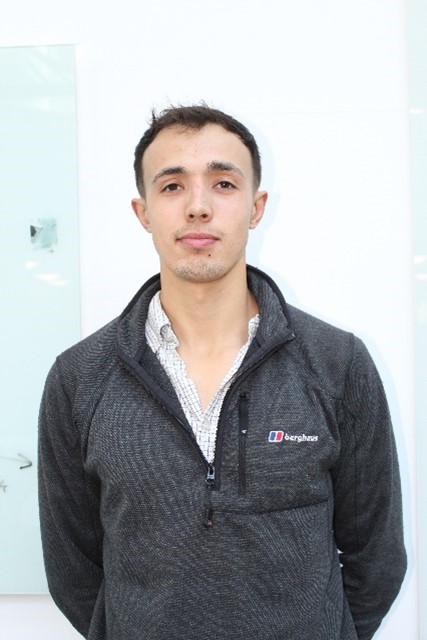
My friends often ask me why I chose to study a PhD and why particularly resource recovery from wastewater (How I simplify my title ‘Enhancing biomineral production for resource recovery from wastewater using biocatalysts’). Initially, I completed a BSc in Geological Sciences and an MSc in Geochemistry at the Universities of Leeds and St Andrews respectively. Throughout these 4 years I’ve come to find that my best work has come from subjects I’m passionate about, and as I continued to learn and understand more about our planet’s many systems, I’ve become more motivated by environmental protection and remediation to keep the planets chemistry in balance. Between my MSc and starting this PhD I took part in a Voluntary Services Overseas (VSO) International Citizenship Service (ICS) programme to Uganda, where we worked with our Ugandan counterparts to deliver teaching on the sustainable development goals to youth groups (16-30) and facilitate training in vocational and life skills (such as soap making and financial accounting) with the goal to help them achieve resilient livelihoods. This small introduction into some social sciences and learning about sustainable development from a bottom-up approach changed my outlook and drove me towards looking at how physical sciences could work with social sciences. I also worked as a landscape gardener in London for six months which really hit home the luxury green spaces are and how we need to preserve them by developing our infrastructure sustainably and reducing our footprint on the planet.
For me having a strong motivation for the possible impacts of my research is what helps me get through the tough times experienced in many PhDs, where nothing quite seems to work, or progress seems too slow. My passion for environmental protection and sustainable development is my drive to complete this project. Reducing our waste is key to this, which is being done by using less and being more efficient. However, resource recovery is where I think we can make the most impact, finding value in waste products encourages circularity which in any industry is becoming more key for sustainable development and meeting global climate change goals. My project looks to achieve a small part of this by recovering ‘lost’ nutrients from wastewater using biomineralisation to produce sustainable, organic, and efficient fertilisers so that farming today can move closer to a sustainable and circular economy.
What really excites me about my project is how it is pushing the boundaries of ‘Nature-based’ solutions beyond what is publicly known by combining knowledge of biomineralising bacteria and cutting-edge microenvironment engineering to come up with solution to. The possibility that bacteria (some of the smallest organisms on the planet) could be the salvation for ensuring nutrient recovery from wastewater providing an affordable fertiliser alternative and closing the nutrient loop for Humankind is poetic to me.
The improved understanding and implementation of resource recovery techniques has huge potential benefits to developing nations, who are often priced out of the markets of many commodities. For my project I see this as a potential way to provide a sustainable and, importantly, local fertiliser to subsistence farmers in developing nations, improving their yields, and allowing them to send the excess to market providing a much-needed boost to their income. Within developed nations this recovery is key to move away from unsustainable, mined mineral fertilisers whose overuse, and high solubility has led to many of the pollution problems faced in natural water courses.

Categories & Tags:
Leave a comment on this post:
You might also like…

Mendeley: a powerful tool to organise and manage your references
Are you looking for a way to manage your references, create in-text citations and reference lists for your assignments or thesis? If so, you may wish to consider using Mendeley. What is it? Mendeley is ...

Keen to develop your study skills?
Alongside the technical skills and academic knowledge that you will gain on your course, as a Cranfield student you have the opportunity to develop a range of other skills that can enhance your learning experience. ...

The V-conomy: powering the sixth wave of global economic growth
The world could be on the verge of a major surge in economic growth and development, driven by the convergence of AI and clean energy technology. Waiting to ride the K-wave The Russian ...

Need help using the Python programming language?
We know some of our students are currently trying to learn Python, so we wanted to make you aware of some great LinkedIn Learning videos that can help. But don't you have to pay for ...
What does it really take to become a Chevening Scholar?
Say “Turkmenistan” to most people and you’ll get a blank look. That was true when I left Ashgabat for the UK to study an MSc in Logistics and Supply Chain Management at Cranfield University ...

Get a head start on referencing and plagiarism
We offer a module on Referencing And Avoiding Plagiarism which you can find on your Canvas dashboard. It explains the role and importance of citing references and how to incorporate the work of other authors ...