


Findings From My Thesis Research
30/09/2020
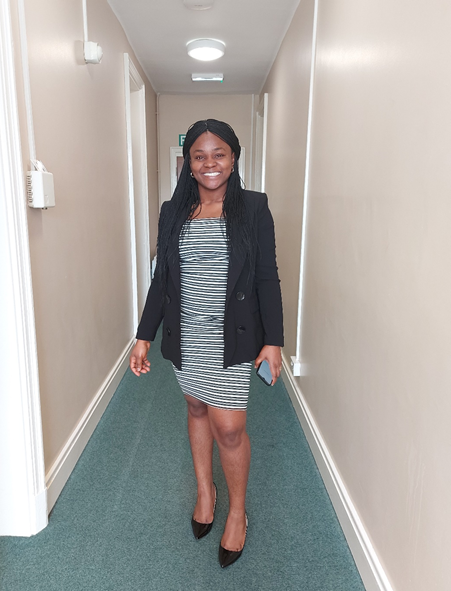
Welcome back once again to my blog!
I’m happy to announce to you all that my thesis has been successfully completed!
In other news, I’m a proud graduate of Environmental Engineering MSc from the prestigious Cranfield University. This has indeed been a rare experience backed up with lots of new findings which I consider “Gems for Life”. I have encountered people from different races, learnt about different cultures and picked up few new words from several different languages. This isn’t without stress brought on by the new normal, nonetheless, the end of a task is always greater than the beginning. I can only say, I am super proud of myself and how far I have been privileged to come.
To the most important reason for this blog, which is, keeping you updated on the results and findings from my thesis research as promised. Just a recap on what my thesis was all about. “The use of Biostimulants and Surfactants in management of sports turfgrasses”. This quote by Henry Miller, “The moment one gives close attention to anything, even a blade of grass, it becomes a mysterious, awesome, and indescribably magnificent world in itself” forms a part of my motivation for taking up this research topic. Anything can be beautiful with lots of care.
The use of Biostimulants and surfactants in this experiment was born out of the need to curb the negative impacts on substances on soils and the environment at large. For example, a result of irrational use of chemical fertilizers and irrigation water. Some of these negative impacts include, a soil which is poor in its functionality and efficiency to recycle nutrients. Also an inability of plant roots to forage nutrients from the soil through over dependence on chemical fertilizers. Washing off of chemical fertilizers from the soil through surface run-off, leaching into groundwaters and out of the nutrient cycle, volatilization of unused chemical fertilizers and deposition of Nitrogen into the atmosphere where they impact plant community and cause a decrease in biodiversity and lastly a wastage of irrigation water on hydrophobic soils.
Since many farmers and turfgrass managers have made assertions of the numerous positive effects of biostimulants and surfactants, Scientific evidences are needed to back-up these claims and to understand how the application of these biostimulants-surfactants formulations affect the soil microbiology. This forms the aim of this research. This was done through a critical review of literature to understand the current trend in the use of biostimulants and a randomized complete block designed field trial to measure plant quality indices such as turf colour, turf quality, sward density and Normalized Difference Vegetation Index (NDVI).
Findings from my experiment showed that there was no significantly different treatment effect between turfgrasses treated with biostimulants and surfactants and untreated turfgrasses. This is because, beneficial effects of biostimulants are only significantly observed when there is a stress condition in soils or plants. These conditions include heat, moisture, temperature and salinity stress. My experiment was conducted under optimal condition where there was absence of stress conditions. Biostimulants helps the plants to build resistance to stress conditions while improving nutrient use and efficiency within plant quality traits. In the absence of these conditions, the positive effects of biostimulants are not easily observed.
Recommendations for biostimulants researchers on providing scientific evidences to back-up the assertions of farmers and turf managers includes; Trials to be carried out in green houses where these stress conditions (e.g., varying moisture levels or inducing drought conditions) could be created. This would create opportunities for more scientific findings on the use of biostimulants as a means of reducing the negative impacts of chemical fertilizers. Biostimulants could also be applied during stomata opening of plants where assimilation rates are at its peak by observing circadian rhythm of plants. This would improve the positive effects biostimulants. A synergistic biostimulant formulation (biostimulants from a mixture of natural sources) is encouraged. Method of assessing plant health indices should also be evaluated. This should be done digitally using optical sensors for turf colours and data image analysis as they provide a more objective and accurate readings without introducing bias from a manual and independent observer. Varying concentration and doses of treatments applied should also be encouraged as it helps determine the most exact and adequate dose of biostimulants required by plants.
It was such an interesting time carrying out this research. And it was even more interesting working with these team; Environmental Analysis Facility (EAF) team at Cranfield, Dr. Mark Pawlett, Prof. Jim Harris, Sports Turf Research Institute UK and Aquatrols company, United States. It’s been a great time well spent at Cranfield University and I’m immensely grateful for all the support in making my MSc. Programme successful. Signing out for now from this great citadel of learning. Hopefully, I will be back for my Ph.D. programme soon.

Categories & Tags:
Leave a comment on this post:
You might also like…

5 budgeting mistakes students make (and how to avoid them)
Good financial planning isn't about how much money you have. It's about the habits you build. We asked Dr Lakshmy Subramanian, Course Director for the Banking, Economics and Finance MSc, about the budgeting mistakes ...

Finding your reading materials
Use Library Search Library Search is the first place to start when you are trying to find academic sources for your work. This is the search box on the library website homepage. It allows you ...

Formula 1 was the dream and Cranfield was the conduit
I still remember the exact moment Formula 1 (F1) got its hooks into me. I was in my first year of an aerospace undergraduate engineering degree when I watched a video about the sport ...

Introducing Barrington Library
Welcome to all our new students! Barrington Library supports all the students and staff at Cranfield Defence and Security on the Shrivenham site. We are looking forward to meeting you all soon, in person or ...

About to start your journey at Cranfield? We’re here to help!
Congratulations on accepting your offer to study at Cranfield! If you’re keen to get a head start before your course begins, our Library Services team is here to support you every step of the way. ...
Bank holiday hours for Library Services: Monday 31 August
Library Services staff will be taking a break on Monday 31 August for the bank holiday. You will still be able to access all the resources and help you need via our library website. The 24/7 ...