


Why I chose to study Water, and how Cranfield and the IWA have helped me on my journey
05/04/2022
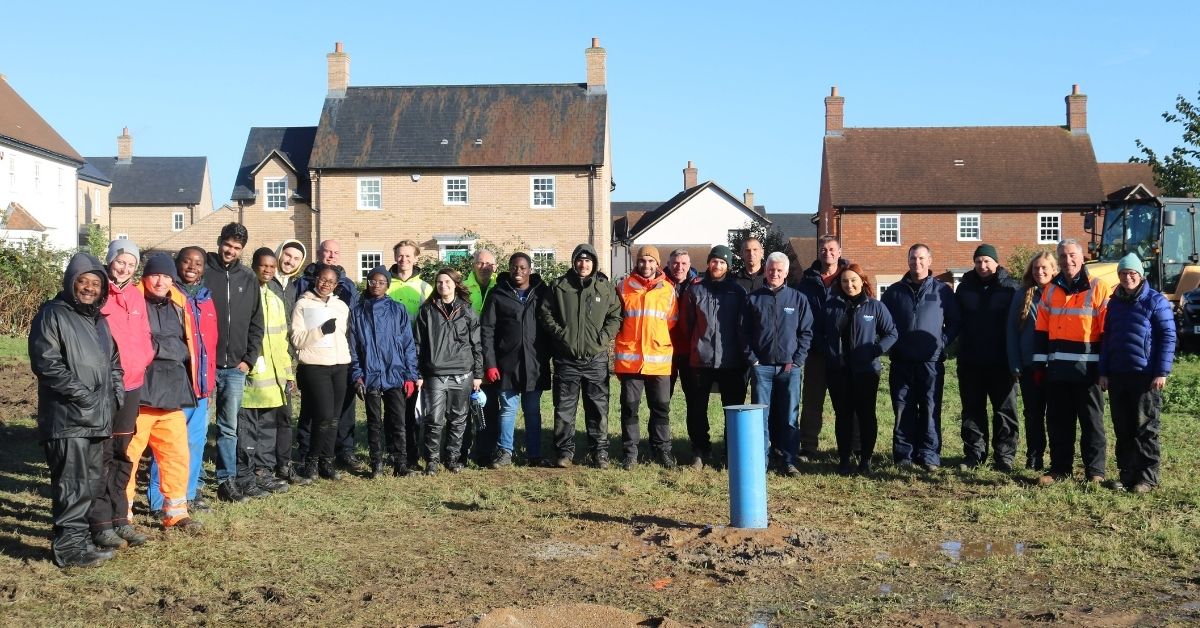
My name is Sam Butterworth and I am currently pursuing an MSc in Water and Sanitation for Development at Cranfield University as a British IWA & Cranfield University Excellence Scholar. I hold a Master’s degree in Civil Engineering with a focus on sustainability and I have over three years of experience working in the implementation of rural water infrastructure projects, specifically in East Africa. Access to water, sanitation and hygiene (WASH) is fundamental to public Health and has much wider socio‐economic impacts on society. My early professional experience has imparted a good understanding of these impacts in the context of both short-term humanitarian assistance and long term economic and societal development. Whilst living in Uganda, I saw the impact of poorly maintained infrastructure and spent three years working with local government and development partners to rehabilitate and maintain water points supplying rural communities all over the country. This experience formed the basis of my motivation to study this MSc as I have seen how applying professional expertise in these circumstances can result in significant positive outcomes for marginalised communities.
The diversity of knowledge and innovative teaching methodologies offered at Cranfield University allows you to select, design and implement water and sanitation solutions appropriate to the challenges facing the inhabitants of low and middle-income countries. Having just completed the taught modules of the course, the Water Resource Engineering module has consolidated my technical experience of the past three years, whilst the Public Health, Hygiene and Sanitation module has deepened my understanding of both the policy and practice necessary to promote a more prosperous and sustainable future for vulnerable communities in the developing world. As the majority of my professional experience has been focused on long-term development, the Resilience, Shocks and Emergencies module broadened my knowledge base and developed my understanding of humanitarian relief and emergency response in the context of water, sanitation and hygiene provision.
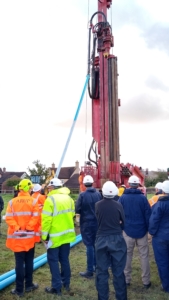
I have thoroughly enjoyed my time at time Cranfield and feel as though I have made significant progress towards my career goal of becoming a field-based WASH engineer. The RedR UK integrated drilling course, which took place during a week in October, has been a particular highlight for me as we were given first-hand experience of how a borehole is drilled and installed. A professional drilling company was contracted for the course and several WASH experts guided us through the entire construction process. Throughout all of the taught modules, sector professionals were brought in to support the theory we were learning during lectures with practical experience from the field. I found this incredibly beneficial in grounding my understanding of complicated WASH topics. I believe both the academic teaching staff and facilities at Cranfield are world-class and promote an excellent learning environment and I look forward to the Group Project and individual thesis work.

Categories & Tags:
Leave a comment on this post:
You might also like…

Engineering Tomorrow. Part two: Can we move around the world without emissions?
Moving people and goods around the world is essential to modern life. But every journey has an environmental cost, and reducing the emissions associated with transport is one of the major engineering challenges of ...

Following in the footsteps of aerospace pioneers
I came to Cranfield to understand how aircraft stay in the sky. Months later, I was measuring the performance of aircraft engines in flight aboard the National Flying Laboratory Centre's Saab 340B. My ...

From looking up at jet engines to powering the future of flight
From flying aboard Cranfield's Saab 340B flying classroom to rebuilding a gas turbine component by component, Jouni Kailouh's journey shows how specialist, hands-on experience can turn a fascination with propulsion into a future career ...
Engineering Tomorrow. Part one: Can we power the future without costing the Earth?
The world needs energy. To power homes, industries, transport and the technologies shaping our future. But as demand grows and the pressure to reduce emissions increases, how do we generate the energy we need ...

Looking ahead: Building foresight skills for a more sustainable future
As sustainability challenges become more complex and uncertain, organisations need people who can look beyond today's pressures and think strategically about the future. From changing regulations and emerging technologies to supply chain disruption and ...

Brazil to Cambridge: How Cranfield helped me build a career in data analytics
I was hungry for something bigger. Before Cranfield, I was living in São Paulo, Brazil, working as a Data and Market Intelligence Analyst in the trading division of Raízen. My background is actually ...
Comments are closed.