

Why Cranfield?
26/07/2018
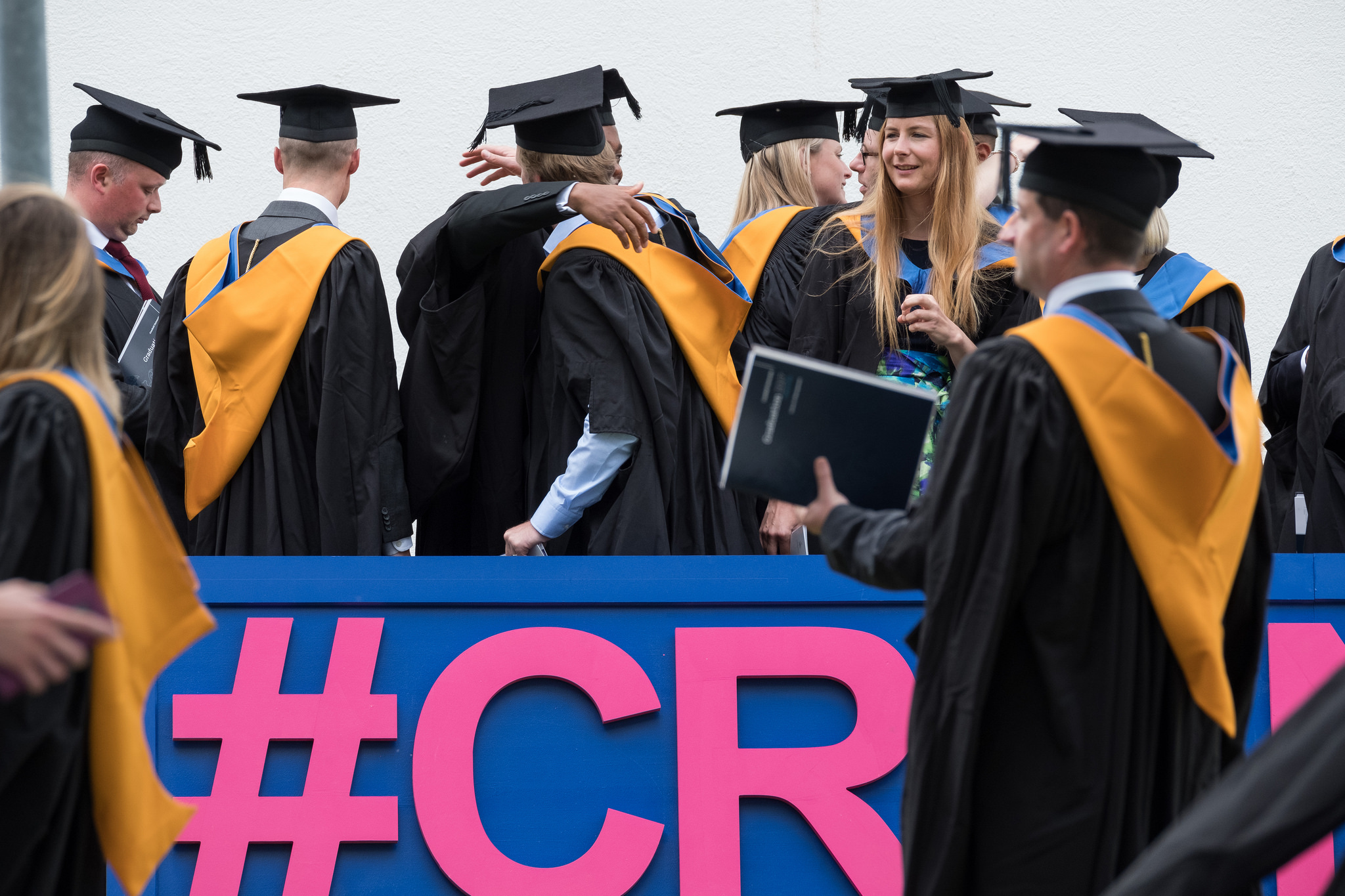
Under this title, you may expect to read a first-hand story from a Cranfield student or alumni. I’m sorry to disappoint you, but that’s not the case. How could I tell anyone about the experience of studying at Cranfield, you might ask? Well, I haven’t studied here but I’m currently working at Cranfield as a post-doctoral researcher (involved in teaching and supervision) and I have a long “career” as a student which I think, somehow, entitles me to have a say about education quality!
When I finished my BSc, MSc and PhD degrees, I had been studying most of my life and it was time to decide what to do next. I had the title “Dr” in front of my name, a bunch of degrees and interest in learning how things were done in other parts of the world. I found a job opportunity at Cranfield to study the impacts and adaptation to climate change in the Indian Himalayas. It was really something I would love to contribute to, so I took the job.
Once here, at Cranfield Water Science Institute, I found myself involved in the academic world from the other side. For the first time, I was part of the process of ‘cooking’ the courses to make sure that they provide our students with the best skills for their professional future. There is a lot of work and enthusiasm put into this task, and it is reflected in our unique course offer.
Our Water MSc courses are closely connected to industry, public institutions and NGOs, organisations that contribute to them with invited talks as well as sponsored group and individual MSc thesis projects, ensuring that courses cover the breadth of current challenges related to water. Those interactions also help students to start building a wide network of contacts, which frequently lead to professional opportunities as soon as they leave Cranfield. The cutting edge projects in which academics are involved also bring the latest science into the classrooms, while the diverse cultural background of academics and students brings together many different and enriching perspectives to problems and solutions.
I was amazed by how much care is put in the entire process, from admissions to graduation, to ensure our students take the most from that year of their lives that they put in our hands. There are many services that students can access too, from career advice or additional training courses, to sports and social activities.
But don’t get me wrong, a one-year MSc at Cranfield is intense and requires that you give your best. No one says it’s easy, but it’s certainly worth it! At least it’s worth it for me to be part of a university like this.
And just in case you don’t trust my judgment… I have asked some Water students to for their experience at Cranfield:
“Cranfield offers highly specialised courses in my field and the close link with industries offers great insights and networking opportunities. In addition, the opportunity to study abroad is really appealing. They offer thought provoking and interactive lectures, and integrate field trips, presentations group exercises and guest speakers, which is something unique in Cranfield.” Cyndi Lou
“The biggest difference in relation to my previous university is fairly direct contact with the teacher – student. I was also surprised by how much a student is taken care of, that they would be well prepared for everything, they understood everything, and that there are many institutions in which one can turn for help.” Barbara Benisiewicz
“I really enjoyed the group project. My MSc at Cranfield gave me the opportunity of working for a company in a multidisciplinary team, which I consider has been a very valuable experience for my future career.” Pablo Martínez Maldonado

Categories & Tags:
Leave a comment on this post:
You might also like…

Moving to the UK to study? How to plan for banking, exchange rates and transfers
Currency and banking are two of the most practical parts of financial planning for international students. They are also often the most overlooked. We asked Dr Lakshmy Subramanian, Course Director for Cranfield University's Banking, ...

Cranfield: an environment where innovation thrives
The latest Knowledge Exchange Framework rankings from UK Research and Innovation (UKRI) gives an insight into the real and meaningful impact that UK universities have. The seven categories that make up KEF6 cover everything ...
How Cranfield accelerated my career in Logistics and Supply Chain Management
After graduating from the MSc in Logistics and Supply Chain Management at Cranfield University, I've been reflecting on the experiences that made my journey so valuable and the impact it has had on my ...

Mendeley: a powerful tool to organise and manage your references
Are you looking for a way to manage your references, create in-text citations and reference lists for your assignments or thesis? If so, you may wish to consider using Mendeley. What is it? Mendeley is ...

Keen to develop your study skills?
Alongside the technical skills and academic knowledge that you will gain on your course, as a Cranfield student you have the opportunity to develop a range of other skills that can enhance your learning experience. ...

The V-conomy: powering the sixth wave of global economic growth
The world could be on the verge of a major surge in economic growth and development, driven by the convergence of AI and clean energy technology. Waiting to ride the K-wave The Russian ...