

Portable and safe water for all
23/02/2023

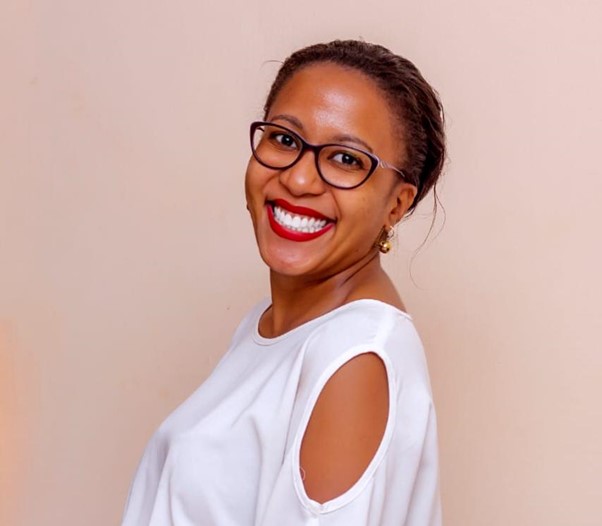
My name is Samantha Ayesigwa. I’m from Uganda (The Pearl of Africa). My undergraduate degree was in Environmental Engineering and Management from Uganda. I work with National Water and Sewerage Corporation, a company that provides water and Sewerage services to the people of Uganda. I am currently on study leave as I pursue my master’s degree in Water and Wastewater Engineering from Cranfield University.
My undergraduate degree covered a broad spectrum of topics and, when it came to water aspects, I was intrigued to know more because it’s a key natural resource – one we can’t survive without. My final year project at undergraduate was use of Moringa seeds as a coagulant; it worked for the water type I used but more research was needed to ascertain it as an alternative to chemical use and its various uses in rural communities where water supply is lacking or the water sources aren’t protected and are unsafe.
In Africa particularly Uganda, Water is very precious because it’s not accessible to most. Water is strongly linked to public health and wellbeing. There have been a couple of outbreaks of cholera and typhoid in the past, especially in rural areas and places that lack access to safe treated water. These same areas have substandard and poor sanitation facilities, hence the risk of associated illnesses is very high. There is open defecation that leads to water pollution especially for unprotected water sources. For example, our Wastewater Treatment Plant in Uganda treats the Sewage to Effluent quality standards and discharges to our largest surface water source, via a channel that passes through a wetland but, along the channel there are still issues of pollution. It’s a continuous fight to date, regardless of the awareness campaigns and different educative programs on sanitation and water source protection.
With the climate change initiative around the globe, I believe we need to address some of these issues with the utmost urgency. We are facing more drought and shorter rainfall periods, this is evidenced by the current drought in the UK that started last year in the year (2022). To the rest of the world, more and more of its water sources are getting depleted due to inadequate replenishing (both surface and Ground water sources) and this means that we need to use our water sparingly to avoid any nationwide emergencies in the future.
We are heading into times that require us to protect our water sources more jealously; otherwise we risk the unavailability of this scarce resource in the near future. We need to use water sparingly and greatly reduce pollution of the water sources. Instead embrace water reuse to achieve the circular economy drive. For example, one could argue why we use treated water to flush our toilets or water the lawn; it’s about perspective. If we could save some of that water for only drinking and a bath, how much would we actually save? Also, how we get everyone (the public) involved in the bigger picture, for example “The little water sensor” used in New Zealand by residents of a certain town to measure their river water quality. I found that interesting as it helps the residents to embrace the resource and they then feel like it’s theirs to protect (ownership). As we’re studying for this masters, we need to apply what we’ve learnt in the industry and the environment but also think about the customers and users of this resource. Water and Wastewater treatment are linked to this change and I regard these are the priority areas of concern because they feed into one another (circular economy)
I hope that when I’m done with this master’s, I’m able to pioneer some water-saving and reuse initiatives, especially in Uganda where this concept still seems to be fairly new. Right from the treatment of the water to the processes involved in the treatment, to distribution and supply then to wastewater treatment and discharge. I find myself lucky to work in a corporation where I will able to apply my new skills and experiences alongside those of my superiors and colleagues.
I’m very optimistic about the future. There’s so much more knowledge out there and with this era of social media and the Internet, there’s a pool of information around the world. I believe that the majority of the world better understands the crisis and climate change issues. There is so much collaboration in the industry around the world. Water experts are coming together and using their expertise to do more, they are also working with academics in the sector to find more innovative solutions to these issues. There’s so much to do, many places to benchmark from, and all we need is to work together to achieve the ultimate goal, Portable and Safe water for all.

Categories & Tags:
Leave a comment on this post:
You might also like…

Moving to the UK to study? How to plan for banking, exchange rates and transfers
Currency and banking are two of the most practical parts of financial planning for international students. They are also often the most overlooked. We asked Dr Lakshmy Subramanian, Course Director for Cranfield University's Banking, ...
Cranfield: an environment where innovation thrives
The latest Knowledge Exchange Framework rankings from UK Research and Innovation (UKRI) gives an insight into the real and meaningful impact that UK universities have. The seven categories that make up KEF6 cover everything ...
How Cranfield accelerated my career in Logistics and Supply Chain Management
After graduating from the MSc in Logistics and Supply Chain Management at Cranfield University, I've been reflecting on the experiences that made my journey so valuable and the impact it has had on my ...
Mendeley: a powerful tool to organise and manage your references
Are you looking for a way to manage your references, create in-text citations and reference lists for your assignments or thesis? If so, you may wish to consider using Mendeley. What is it? Mendeley is ...
Keen to develop your study skills?
Alongside the technical skills and academic knowledge that you will gain on your course, as a Cranfield student you have the opportunity to develop a range of other skills that can enhance your learning experience. ...
The V-conomy: powering the sixth wave of global economic growth
The world could be on the verge of a major surge in economic growth and development, driven by the convergence of AI and clean energy technology. Waiting to ride the K-wave The Russian ...
Comments are closed.