

New perspectives in WASH
05/11/2018
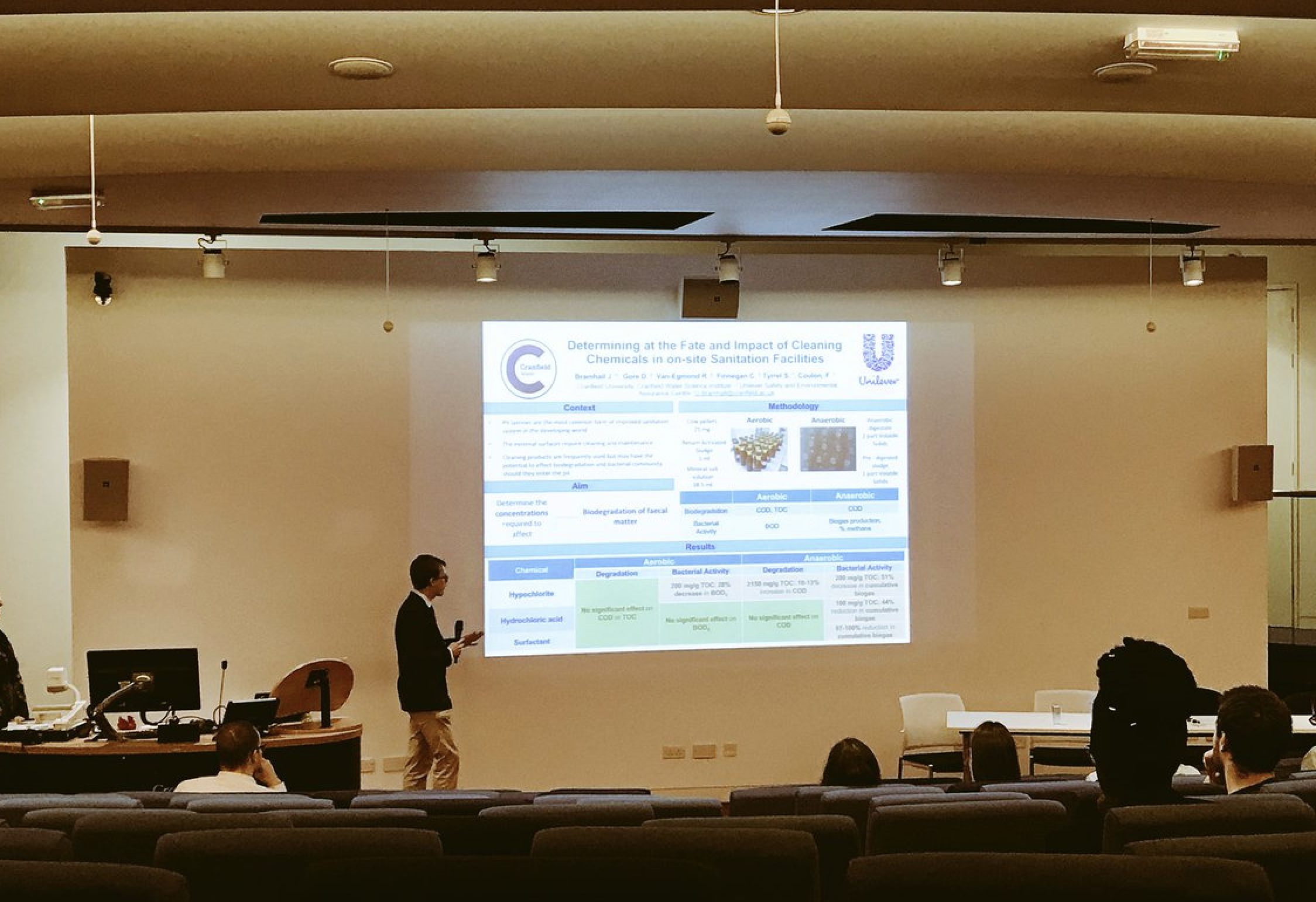
On the 20th September we hosted the 2nd ECR WASH conference: “New perspectives in WASH” at the Cranfield Campus. This conference was primarily organised by PhD students of the Water Science Institute. The conference as the title suggests was aimed at students and those who are within 10 years of starting their career in the WASH sector.
The conference had approximately 60 attendees and sponsors from across the UK and overseas with a wide range of specialisms and interests being covered. The speakers at the conference covered topics including, water treatment, the provision of drinking water in developing nations, resilience of water and sanitation systems, the circular economy, on-site sanitation systems, waterless toilets and infant bacterial exposure.
The conference had two keynote speakers; Dr Richard Carter and Dr Robert Dreibelbis. Dr Richard Carter opened proceedings with a comprehensive overview of the multi-disciplinary field of WASH, and recommended collaborating across fields to achieve the important goals of providing water and sanitation to those in need. Dr Robert Dreibelbis from the London School of Hygiene and Tropical Medicine lead the afternoon session with his presentation on WASH and public health. The presentation provided an interesting look into some of the challenges and limitations facing WASH research as well as the future of wash research and interventions.
As well as the presentations from the speakers the afternoon saw a panel discussion on “how to survive in academia”. The panel consisted of Professor Sean Tyrrel (Cranfield), Dr Dani Barrington (Leeds University), Dr Bruce Jefferson (Cranfield) and Dr Raffaella Villa (Cranfield). The panel faced multiple questions from the audience regarding their careers in academia including their progression to their current position and deciding where to publish.
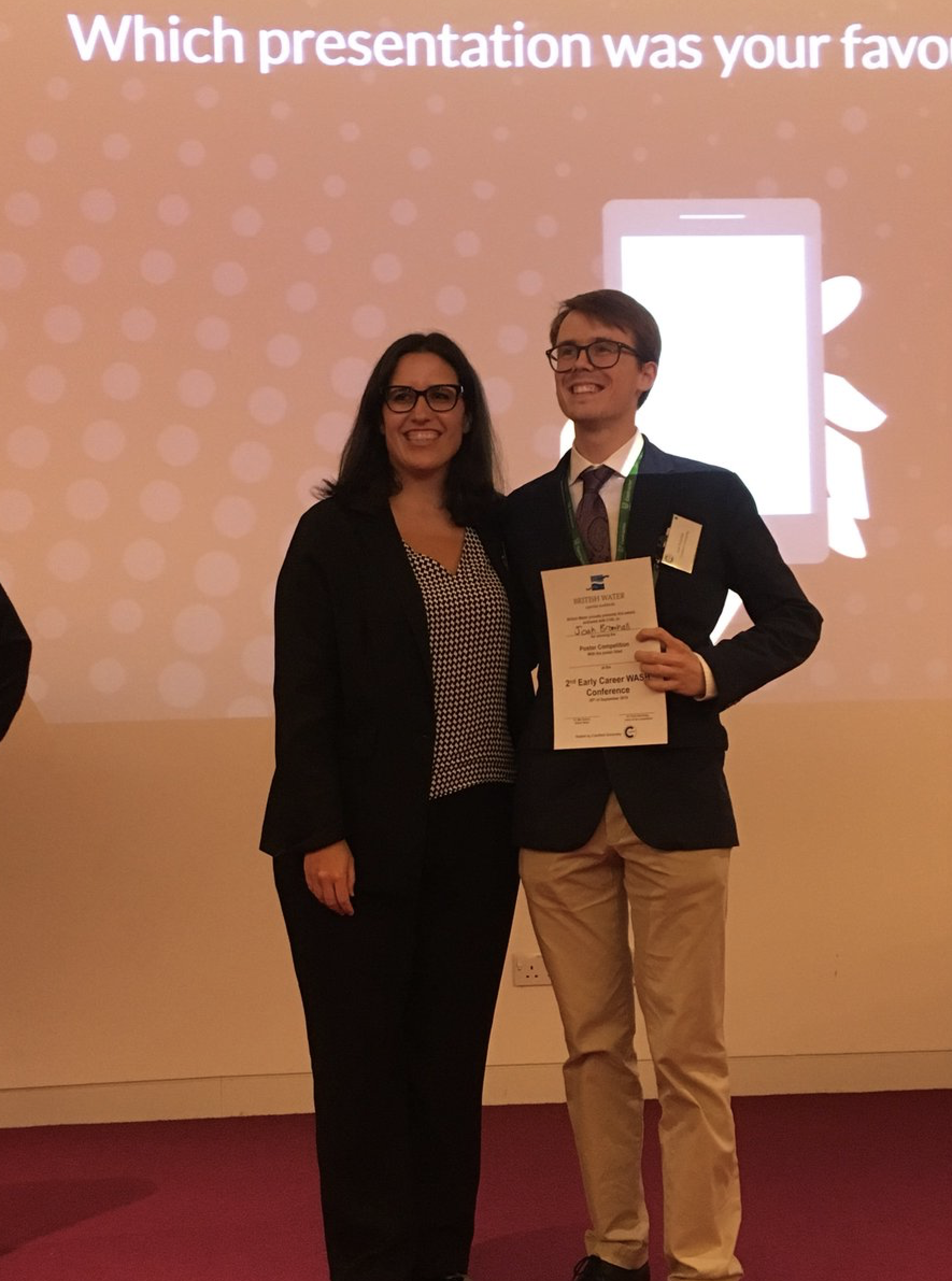
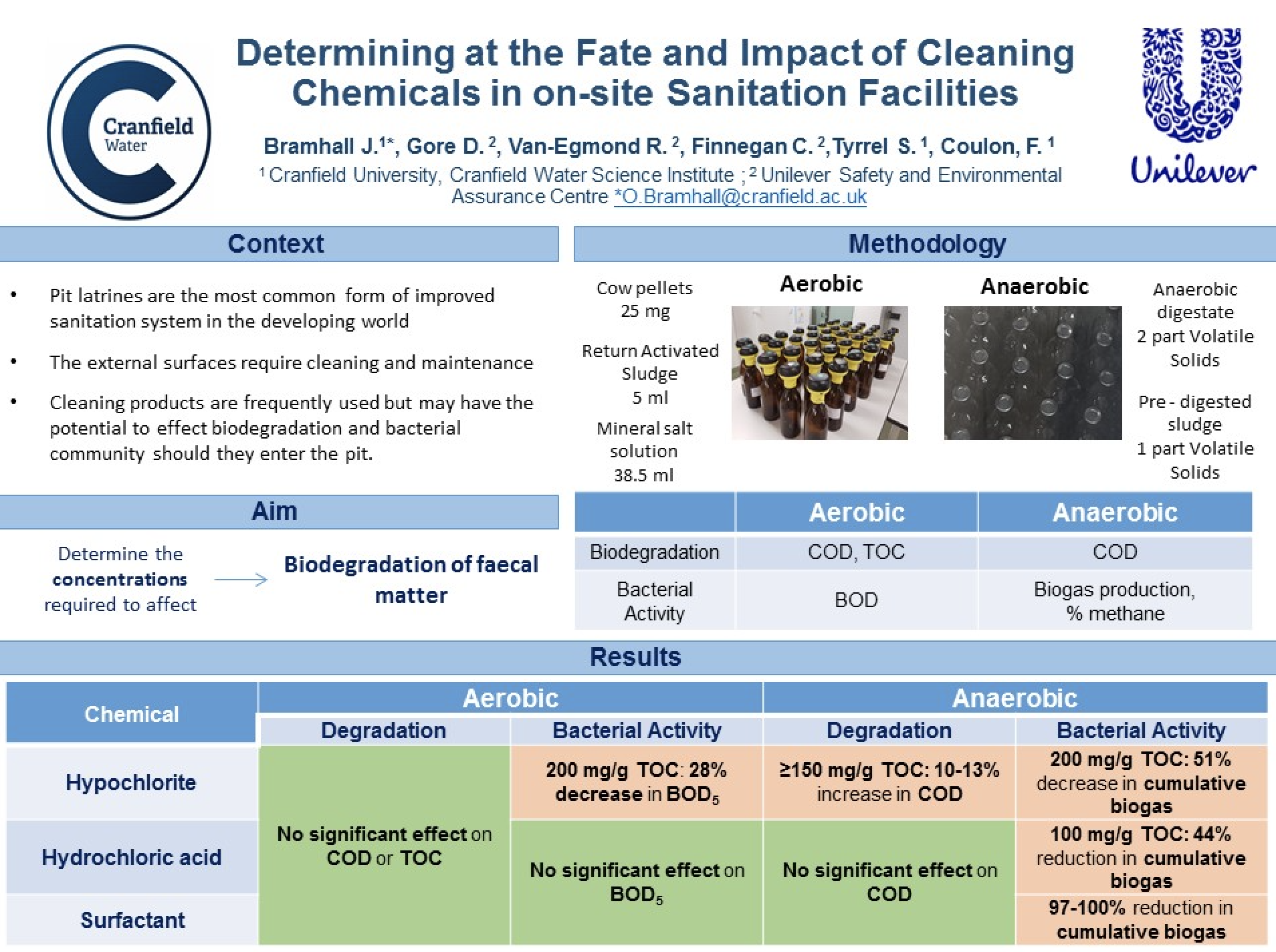
Throughout the conference posters presenting the research of students were displayed. This provided an opportunity for students to present and discuss their research and ideas with other attendees in an informal setting. A jury of academics chose the poster of Cranfield student Joah Bramhall as winner of the poster competition; a Cranfield PhD student sponsored by Unilever.
A three minute thesis competition was also held at the end of the day, during which the students taking part had to summarise their research in three minutes. Whilst challenging it was good practise in scientific communication and summarising the most important aspects of one’s research in a concise manner, whilst being fun at the same time. The winner of the competition was decided upon based on an audience vote. Anna Hulme, a PhD student of Cranfield University won the competition.
It is hoped that this conference will be held again next year and once again be student-lead in its organisation!

Categories & Tags:
Leave a comment on this post:
You might also like…

Moving to the UK to study? How to plan for banking, exchange rates and transfers
Currency and banking are two of the most practical parts of financial planning for international students. They are also often the most overlooked. We asked Dr Lakshmy Subramanian, Course Director for Cranfield University's Banking, ...

Cranfield: an environment where innovation thrives
The latest Knowledge Exchange Framework rankings from UK Research and Innovation (UKRI) gives an insight into the real and meaningful impact that UK universities have. The seven categories that make up KEF6 cover everything ...
How Cranfield accelerated my career in Logistics and Supply Chain Management
After graduating from the MSc in Logistics and Supply Chain Management at Cranfield University, I've been reflecting on the experiences that made my journey so valuable and the impact it has had on my ...

Mendeley: a powerful tool to organise and manage your references
Are you looking for a way to manage your references, create in-text citations and reference lists for your assignments or thesis? If so, you may wish to consider using Mendeley. What is it? Mendeley is ...

Keen to develop your study skills?
Alongside the technical skills and academic knowledge that you will gain on your course, as a Cranfield student you have the opportunity to develop a range of other skills that can enhance your learning experience. ...

The V-conomy: powering the sixth wave of global economic growth
The world could be on the verge of a major surge in economic growth and development, driven by the convergence of AI and clean energy technology. Waiting to ride the K-wave The Russian ...