


My First Semester at Cranfield
10/01/2022
Friends had warned me how hard postgraduate is in comparison to undergraduate. I had previously studied Physical Geography, so I was just excited for the opportunity to focus solely on hydrology. After the first semester, I can confirm they were right. It is hard. It requires far more of your time, energy, and dedication. However, I’d argue that it is all worth it
I chose Advanced Water Management MSc, as I have an interest in water resources and management. This has been confirmed throughout the semester. I’ve enjoyed learning about groundwater abstraction, pharmaceutical elements found within waterbodies, and even fun facts about dragonflies (they die within 56 days in their adult stage). Each week we are developing different and new skills, from using ArcGIS software to kick sampling techniques within the field. In addition, there is a field trip or practical every other week, which highlights the resources and facilities available at Cranfield, alongside the care and consideration the course leaders have towards the students’ academic development.
Our course cohort is relatively small, which is lovely as it has allowed everyone to bond, and it feels like a small community. And with the University being so diverse with international students, it has been really interesting listening to other backgrounds and stories, alongside finding out some British traditions. My favourite so far is avid bird watching and the love of tea. Which I can’t dispute, I do enjoy watching the robins in the garden with my morning brew.
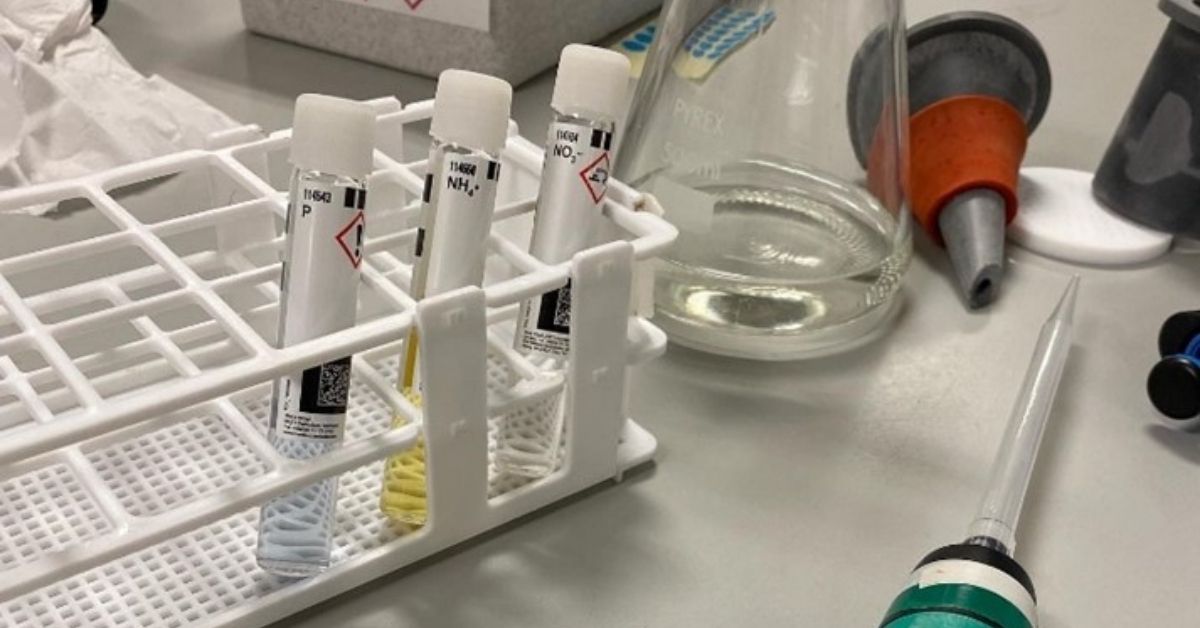
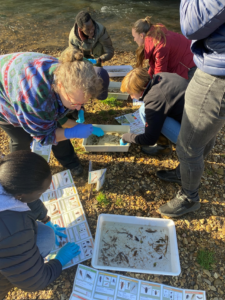
Reflecting on my favourite activity across the semester, it has to be the water quality analysis practical. We spent a day in the field at the Ouse Valley Park, Milton Keynes, where we collected a litre of water from the Great River Ouse. In addition, we also learnt invertebrate sampling methods (more dragonflies) and toured the park location. The following lab practical, we sampled the collected river water for its phosphorus, nitrate and ammonia concentrations using a spectrophotometer, and took a measuring weight of the suspended solids. These techniques were all new to me, and it was super interesting having the opportunity to test water chemistry. In the end, the results did show the river water to be of good quality.
Overall, the first semester has been tough but completely worth it. I personally feel like I’ve made the right decision in the course and university, and excited to begin the next semester. There is just so much to the course, and whilst it has been hard, it’s been incredibly rewarding so far. All the extra time and energy required feels minimal.

Categories & Tags:
Leave a comment on this post:
You might also like…
How Cranfield accelerated my career in Logistics and Supply Chain Management
After graduating from the MSc in Logistics and Supply Chain Management at Cranfield University, I've been reflecting on the experiences that made my journey so valuable and the impact it has had on my ...
Mendeley: a powerful tool to organise and manage your references
Are you looking for a way to manage your references, create in-text citations and reference lists for your assignments or thesis? If so, you may wish to consider using Mendeley. What is it? Mendeley is ...

Keen to develop your study skills?
Alongside the technical skills and academic knowledge that you will gain on your course, as a Cranfield student you have the opportunity to develop a range of other skills that can enhance your learning experience. ...

The V-conomy: powering the sixth wave of global economic growth
The world could be on the verge of a major surge in economic growth and development, driven by the convergence of AI and clean energy technology. Waiting to ride the K-wave The Russian ...

Need help using the Python programming language?
We know some of our students are currently trying to learn Python, so we wanted to make you aware of some great LinkedIn Learning videos that can help. But don't you have to pay for ...
What does it really take to become a Chevening Scholar?
Say “Turkmenistan” to most people and you’ll get a blank look. That was true when I left Ashgabat for the UK to study an MSc in Logistics and Supply Chain Management at Cranfield University ...
Comments are closed.