

Launching the Brian Meredith Net Zero Scholarships
09/01/2023
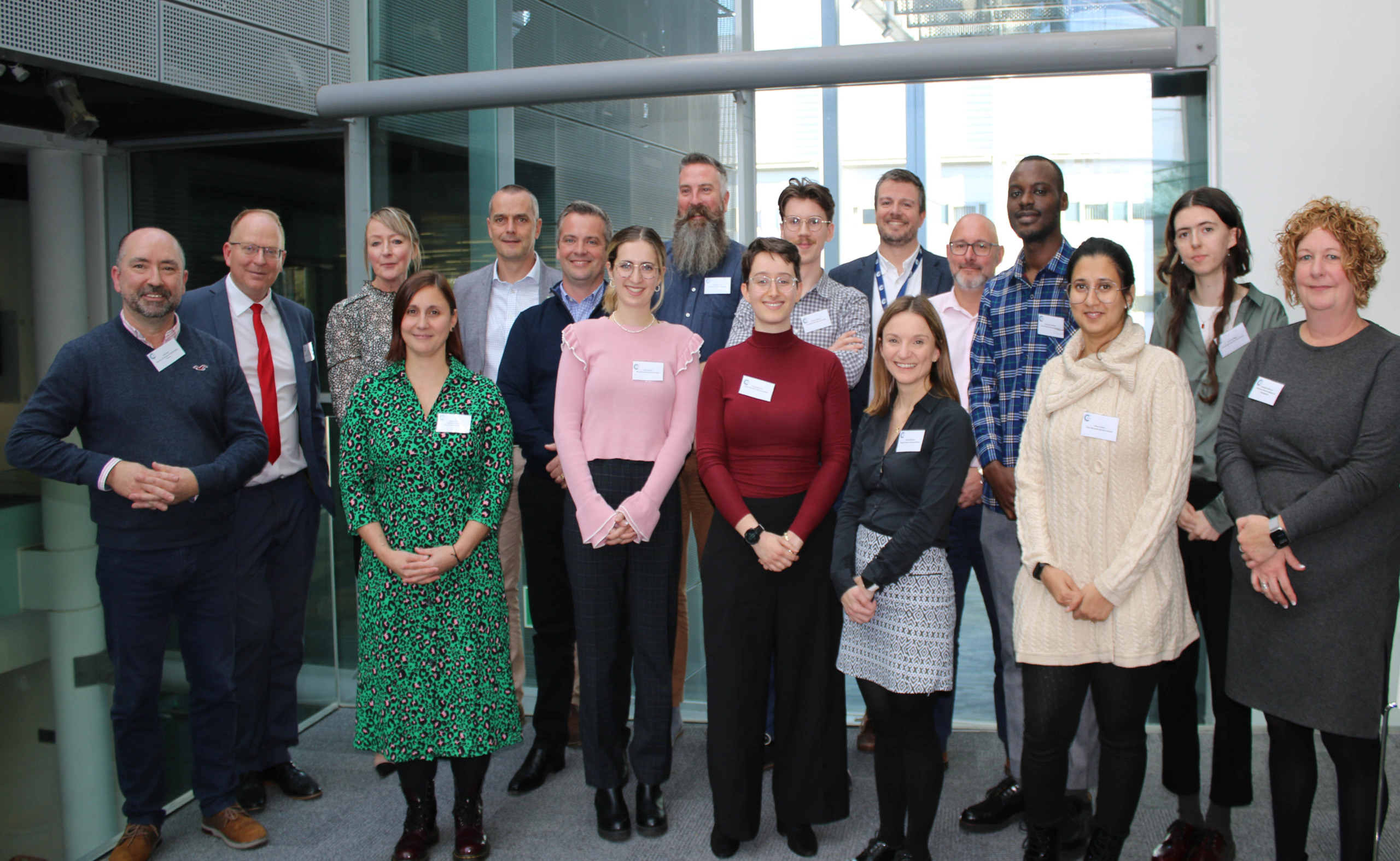
The late Brian Meredith was passionate about the environment and effecting change. The Brian Meredith Net Zero eponymous scholarships are his legacy, designed to fund talented and passionate graduates; enabling them to develop into scientists, engineers and managers who will change the world we live in.
We were delighted recently to be able to introduce our Brian Meredith Net Zero Scholars to the team from Green Future Investments Ltd (GFIL) who have made these vital scholarships possible. Our first cohort were welcomed by leading Cranfield academics and the GFIL team, all united in a common purpose of making a difference in the world. We spoke to one of them, Brendan Woolcock, about his journey to Cranfield and how the Brian Meredith Net Zero Scholarship has already impacted his life.
What motivated you to want to progress in the Water industry?
My journey into the Water industry has taken a bit of a strange and unusual path. I did my undergraduate and Master’s in Biomedical Material Science six years ago and, once I completed my degree, I worked for Southwest Water for five years.
As a mechanical design engineer, I did some innovative stuff with the company, and that sparked my appetite to do more, to really make a difference.
Why did you choose Cranfield?
My line manager and company director completed a similar course here. Their advice was that if you want to progress and work in the water industry to make a change, management is the same to a certain degree, but by doing design, you have the potential to implement real change within a company. Change that extends to every area, including how they operate.
So, I started looking at Cranfield and I did some online courses with the Chartered Institute of Water Environmental Management, which also credits Cranfield. If you talk to anyone within the Water industry and mention Cranfield, eyes open wide; everyone knows about Cranfield‘s reputation for research and teaching for water.
Also, being from Cornwall, I love the countryside. After five years of city-living, doing my undergraduate and master’s at the University of Manchester, in a post-covid world I really didn’t miss the city.
Why did you apply for the Brian Meredith Net Zero Scholarship?
I started looking at how can I progress and how can I move to the next level in design within the Water industry through two paths. The water management side, and the process engineering side. For the water industry to be net zero by 2030 for all operational CO2 emissions, it will take new thinking and knowledge to be brought into these companies.
That’s where my aspiration really comes into this. I want to take the knowledge that I gain from Cranfield to go out to water companies and implement and design new wastewater and clean water treatment work. Work that takes account of CO2 emissions both from the operation, from construction, and decommission of these works.
How did it feel to be awarded the Scholarship?
When I originally applied to Cranfield, I couldn’t make the numbers work. It was learning about the Brian Meredith Net Zero Scholarship which enabled me to change my path, so, I really am thankful for it.
What do you hope to achieve once you have completed the course?
My real aim is to do process engineering and, during that time, mentor new people because I have a reasonable amount of experience within the water industry already, and then look at doing electrical five years down the line.
I’m aspiring to be able the lead technical designer within a water company, consulting to achieve net zero. I want to be able to combine my experience with my ongoing learning, putting it to good future use in applying a holistic approach to design.
The Brian Meredith Net Zero Scholarship is funded by Cranfield University and Green Future Investments Ltd for individuals with a passion for helping the world achieve net zero.

Categories & Tags:
Leave a comment on this post:
You might also like…

Moving to the UK to study? How to plan for banking, exchange rates and transfers
Currency and banking are two of the most practical parts of financial planning for international students. They are also often the most overlooked. We asked Dr Lakshmy Subramanian, Course Director for Cranfield University's Banking, ...

Cranfield: an environment where innovation thrives
The latest Knowledge Exchange Framework rankings from UK Research and Innovation (UKRI) gives an insight into the real and meaningful impact that UK universities have. The seven categories that make up KEF6 cover everything ...
How Cranfield accelerated my career in Logistics and Supply Chain Management
After graduating from the MSc in Logistics and Supply Chain Management at Cranfield University, I've been reflecting on the experiences that made my journey so valuable and the impact it has had on my ...

Mendeley: a powerful tool to organise and manage your references
Are you looking for a way to manage your references, create in-text citations and reference lists for your assignments or thesis? If so, you may wish to consider using Mendeley. What is it? Mendeley is ...

Keen to develop your study skills?
Alongside the technical skills and academic knowledge that you will gain on your course, as a Cranfield student you have the opportunity to develop a range of other skills that can enhance your learning experience. ...

The V-conomy: powering the sixth wave of global economic growth
The world could be on the verge of a major surge in economic growth and development, driven by the convergence of AI and clean energy technology. Waiting to ride the K-wave The Russian ...