

Field trip – 4 water treatment facilities in 3 days
19/12/2018
Scotland is a place I have always wanted to visit; although it is supposed to be colder than Mediterranean countries, I always felt there is something special to it. Maybe it was for its graphic landscapes, the stunning buildings or even the Scottish accent which I strangely find attractive; whichever the reason, I was really happy our programme director announced that we were having a field trip there. The purpose of this trip was to visit specific wastewater treatment facilities and have a really deep look at what we had learnt in previous lectures. There were four facilities in total, all placed around Edinburgh.
Although there was a slight delay for our departure, we had a fast flight to Edinburgh. First day was a free day so we had the chance to go for a walk in the centre of the city and have a look around in the old town, which I had long anticipated.
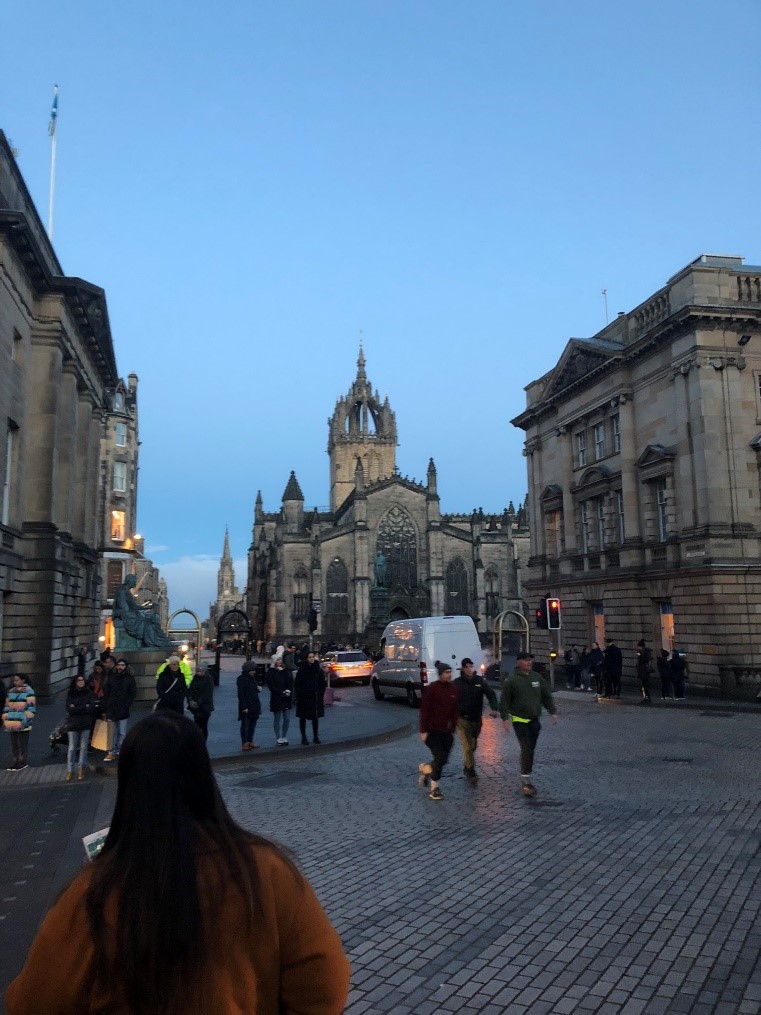
A view of St. Giles’ Cathedral
On the second day we first visited Glencorse Water Treatment Works, which is a top notch and fairly new facility, located in the outskirts of Edinburgh. Glencorse WTW is one of the largest water supply projects undertaken by Scottish Water, a government owned company responsible for providing water and wastewater services in Scotland. The quality of this structure was stunning as everything was perfectly designed down to the smallest detail. The people there walked us around the whole site and were really informative about every aspect of it. Unfortunately, we weren’t allowed to take any pictures but the positive impressions made up for it.
After Glencorse we headed for a smaller water treatment plant, Bonnycraig WTW, which was placed outside Peebles, a small town south of Edinburgh. There we had the opportunity to see an old facility up close, and the problems it may have due to being outdated. Visiting this place after Glencorse helped in realising that there is a variety of aspects of every wastewater treatment plant and that operating conditions are not always ideal. Nevertheless, this experience was quite enlightening as well, as the people there were genuinely talkative.
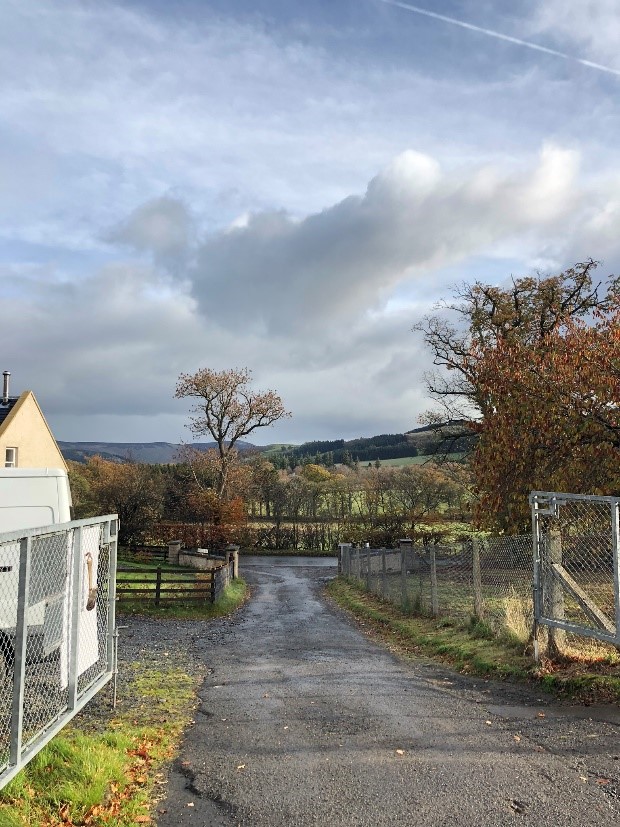 The view exiting Bonnycraig treatment plant.
Having a slightly exhausting day, we got back at the hotel where we had dinner all together and then some of us headed to the old town of Edinburgh for a couple of pints. Luckily it was the day before Halloween, so we got to see some funny dressed people walking around the streets and pubs.
For the last day of this trip, the schedule was full; initially we headed to Dunbar, a seaside town located approximately 30km East of Edinburgh, where a Sewerage Treatment Works facility is located. This facility is pretty compact but totally efficient using a perfectly managed MBR process which contributes to the optimum discharge levels of the treated water for the past ten years.
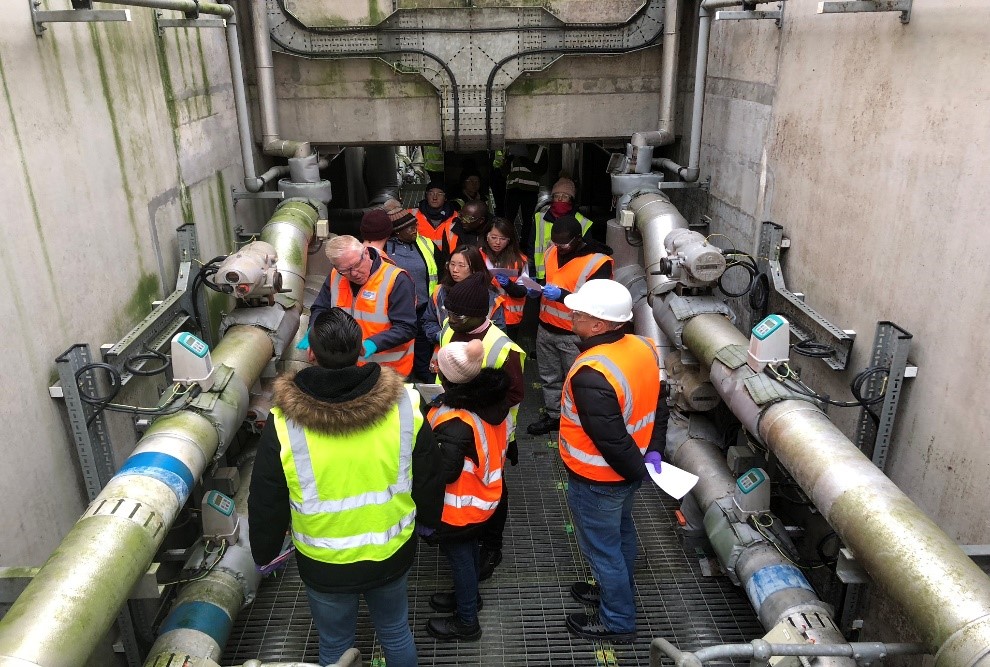
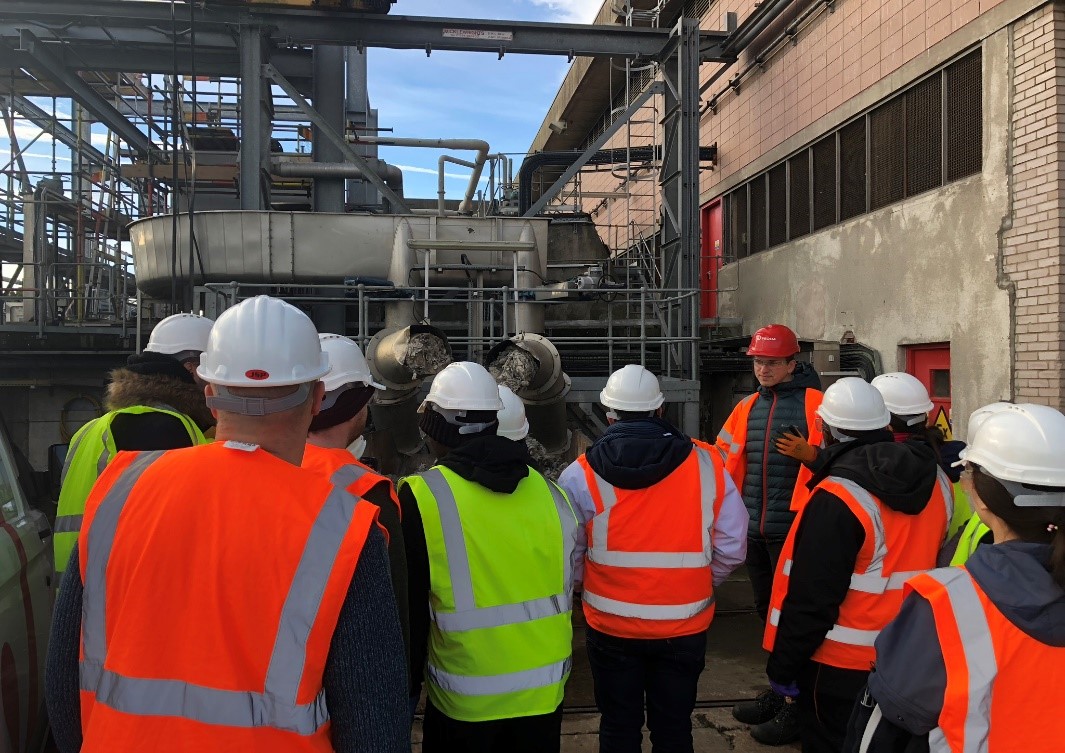
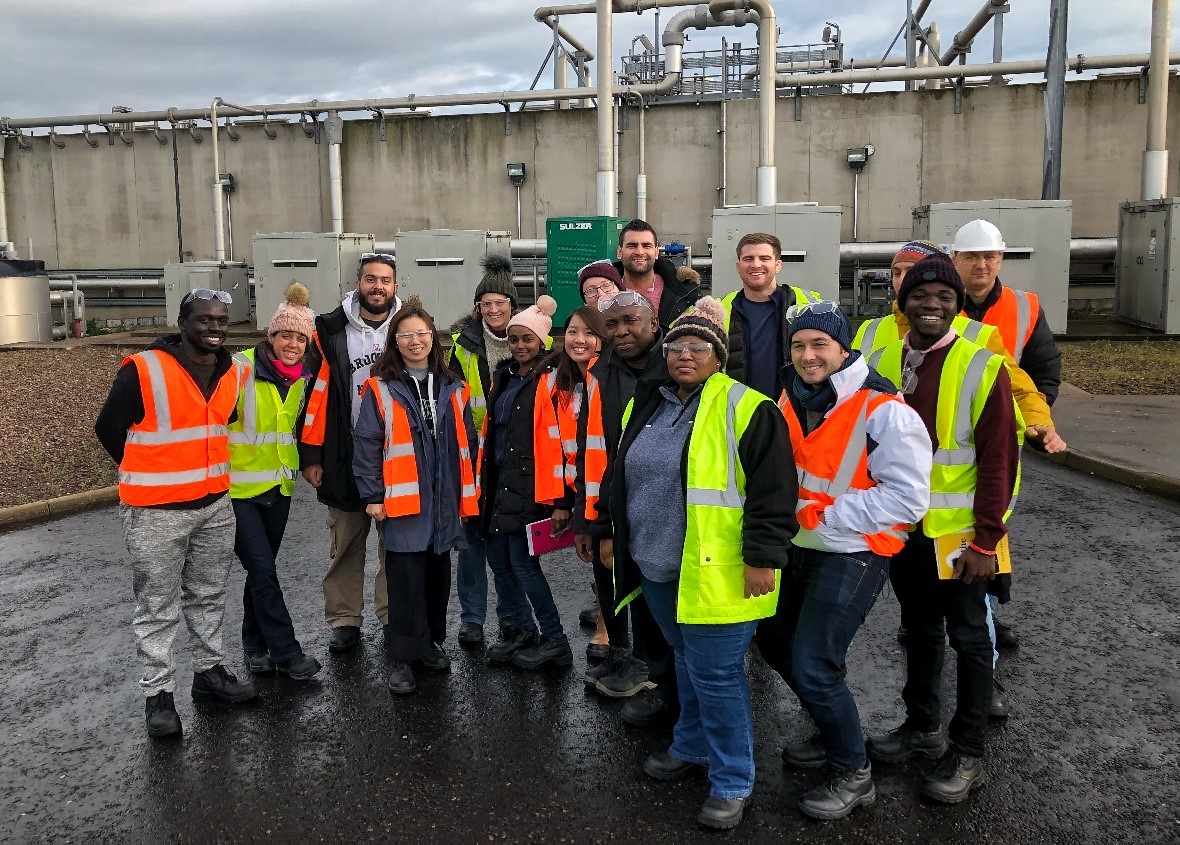
WWE students watching several processes
Last but not least, we visited the biggest facility of the trip, Seafield STW, placed on the coast of northeastern Edinburgh, which is handling sewage water for a population of 800,000. Seafield treatment works is operated by both Scottish Water and Veolia Water UK and managed by the latter; this site was of particular importance due to its odour improvement project, as it is placed next to a residential area. All students were impressed by the size of this facility and all the processes we got to see up close.
After having a long walk around that site, sadly it was time for us to get back to the airport. Luckily there was no delay this time and we had a great flight. It was when I sat in the plane I realised how many things I had learnt over the past few days. Being able to have a close look at all the processes in these enormous facilities and to actually understand what is going on at every step, was a unique and amazing experience I couldn’t have had elsewhere. Although returning from such a trip always gives you a bittersweet feeling, it is that very feeling which indicates that you had a great time that you will surely remember!

Categories & Tags:
Leave a comment on this post:
You might also like…

Moving to the UK to study? How to plan for banking, exchange rates and transfers
Currency and banking are two of the most practical parts of financial planning for international students. They are also often the most overlooked. We asked Dr Lakshmy Subramanian, Course Director for Cranfield University's Banking, ...
Cranfield: an environment where innovation thrives
The latest Knowledge Exchange Framework rankings from UK Research and Innovation (UKRI) gives an insight into the real and meaningful impact that UK universities have. The seven categories that make up KEF6 cover everything ...
How Cranfield accelerated my career in Logistics and Supply Chain Management
After graduating from the MSc in Logistics and Supply Chain Management at Cranfield University, I've been reflecting on the experiences that made my journey so valuable and the impact it has had on my ...
Mendeley: a powerful tool to organise and manage your references
Are you looking for a way to manage your references, create in-text citations and reference lists for your assignments or thesis? If so, you may wish to consider using Mendeley. What is it? Mendeley is ...
Keen to develop your study skills?
Alongside the technical skills and academic knowledge that you will gain on your course, as a Cranfield student you have the opportunity to develop a range of other skills that can enhance your learning experience. ...
The V-conomy: powering the sixth wave of global economic growth
The world could be on the verge of a major surge in economic growth and development, driven by the convergence of AI and clean energy technology. Waiting to ride the K-wave The Russian ...