

Commonwealth, Cranfield and my journey so far
10/05/2022
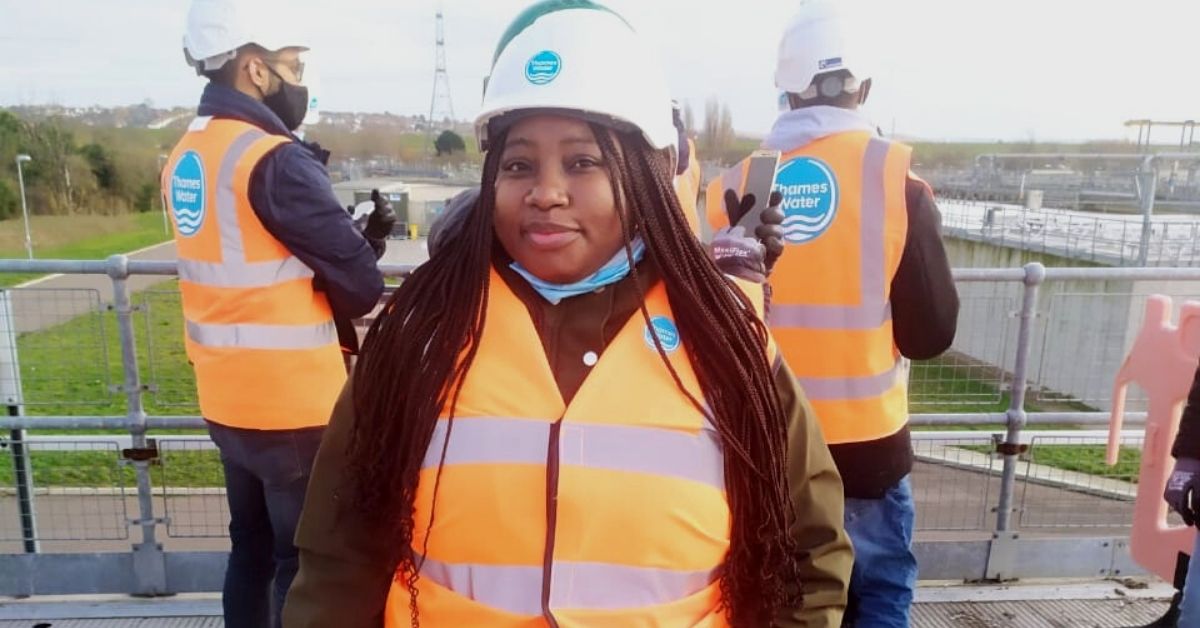
I have worked in the water treatment plant of a hospital, as a biochemist, for over a decade, and therefore have first-hand experience of managing water quality and the challenges faced by a low-income country in the delivery of safe water. I see the struggle to keep up with sewage treatment in the hospital and the need for change. These daily experiences became a motivation for me to study a water and wastewater course, develop relevant skills in the field, and in turn facilitate the required developmental changes in my organisation. This drove me to a relentless search for funded opportunities as it was a critical step towards my personal career goal, which is to be a force of change in policies regarding water and wastewater management in my country.
I came across the Commonwealth Shared Scholarship on Twitter and I was delighted to discover that Water and Wastewater Engineering MSc, was one of the funded courses. Cranfield University easily stood out as a postgraduate only institution with research excellence and industry partnership. I was in fact, fascinated by the course structure and modular content that I desired to be a part of a community with such a high reputation in the water sector. I read so many intriguing blog posts by Cranfield students and watched YouTube videos where I discovered the University has its own sewage plant, and more intriguingly, a National Research Facility Pilot Testing Hall, the only one in the UK, for testing laboratory research findings, studying practicality before transforming to large scale processes. I could see myself at Cranfield University and nowhere else.
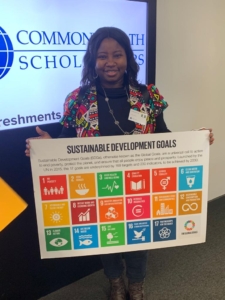
I chose to study the Water and Wastewater Engineering MSc despite not having any engineering background because it was in total alliance with my initial motivation, which is to bring solutions to my organisation’s challenges with both water and wastewater, and my country in the long term. I was ready for the excitement and the challenges that may come with it; therefore it was not difficult to translate my passion and motivation into words for the scholarship application.
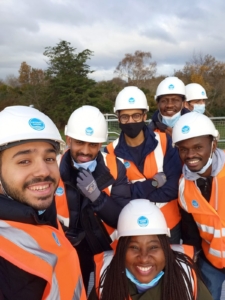
Upon starting the course at Cranfield University, it was easy to settle in, as the University well understood that transition may be a little difficult, especially for international students – so ensured a welcoming environment. My experience in the course has been rewarding because not only have I developed knowledge and skills in water and wastewater engineering, but the course also integrates the development of soft and transferrable skills needed in the workplace. Coming from a low-income country, I now well appreciate the difference in water and wastewater treatment in a high-income country and I can use these skills to make a difference in my country. Studying at Cranfield stirs up even more curiosity for further research, as this has been both my experience and those I have met on other courses. This for me is because the courses teach both current and future trends, challenging me to think about future possibilities and be creative and critical.
Volunteering as the representative of my course has also given me access to the Cranfield University operations, as I frequently meet with the course directors and the University management to represent the interest of my coursemates. I was delighted to be one of the student representatives at the Cooperate Planning Session, held with the Pro-Vice-Chancellor (Education). I found it rather humbling, that the University values the opinions of students in decision making. This is just one of the ways the University listens to student voices.
I am immensely grateful to be a recipient of the Commonwealth Shared Scholarship, one of the most prestigious scholarships of the UK Government. This opportunity has changed my life in many ways, the most important being giving me an education that I couldn’t afford, and the opportunity to make an impact in a sector I am passionate about. I have also been privileged to attend training and workshops organised by the Commonwealth Scholarship Commission. Through this scholarship, I have had the rare chance of meeting and connecting with people of diverse educational, religious, and ethnic backgrounds, sharing food, and ideas, travelling, and still creating beautiful memories, enjoying the British experience while building friendships and networks.

Categories & Tags:
Leave a comment on this post:
You might also like…

How do I access the full-text of Harvard Business Review (HBR)?
This is a frequently asked question, and it's worth knowing how to access this key management journal. So, how do you access HBR in full-text? The short answer is via our eJournals finder. You can find ...

Engineering problem to solve? Let Knovel help you find a solution
Did you know that Knovel provides you with more than just eBooks? Knovel is a key database for many engineering, mechanical and materials courses here at Cranfield University, and contains content from an extensive range ...
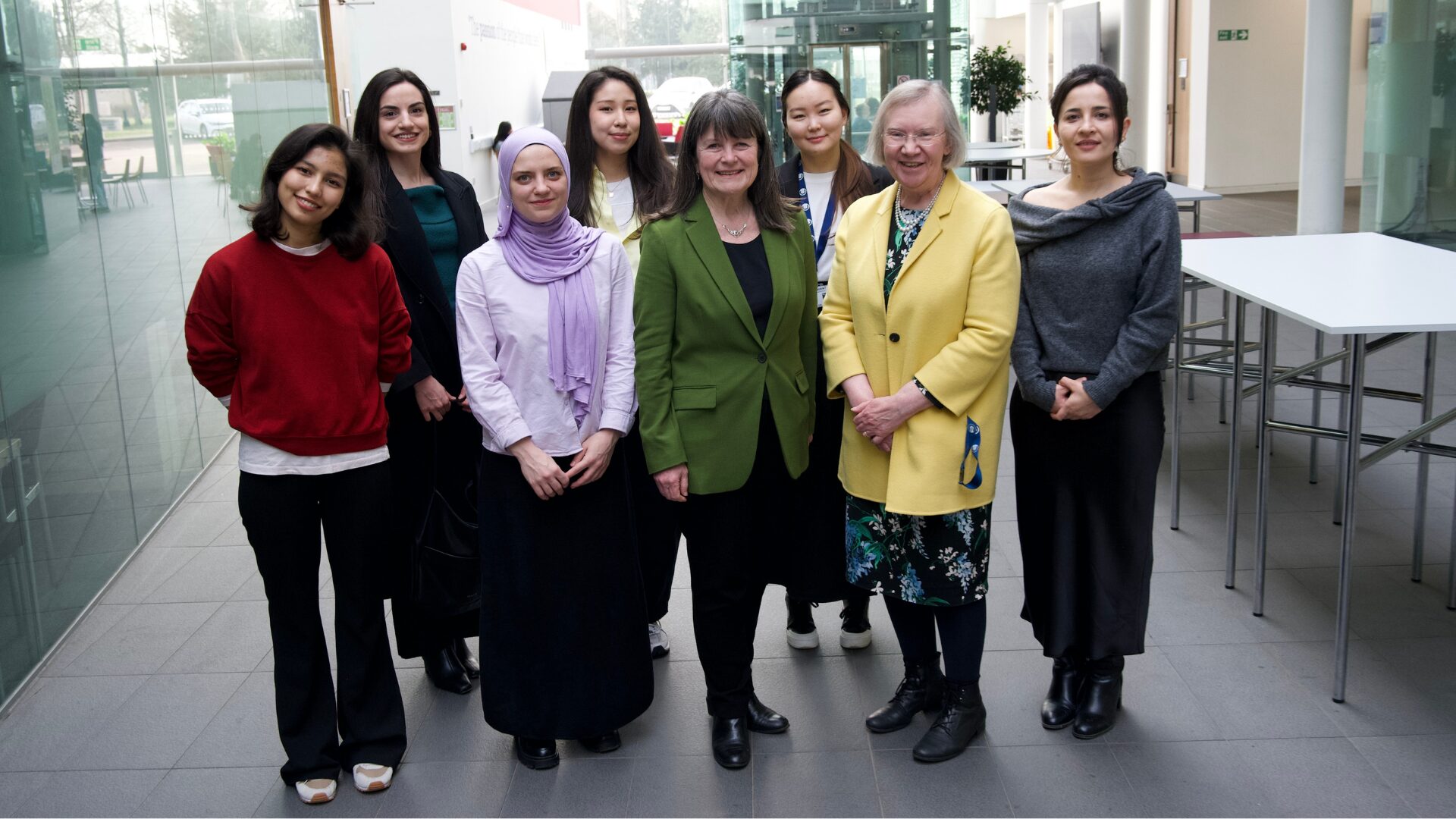
What happens when female scholars meet influential leaders?
On the 5 March 2026, our British Council Women in STEM Scholars had the privilege of sitting down with two excellent role models of industry and academia: Professor Dame Karen Holford, ...
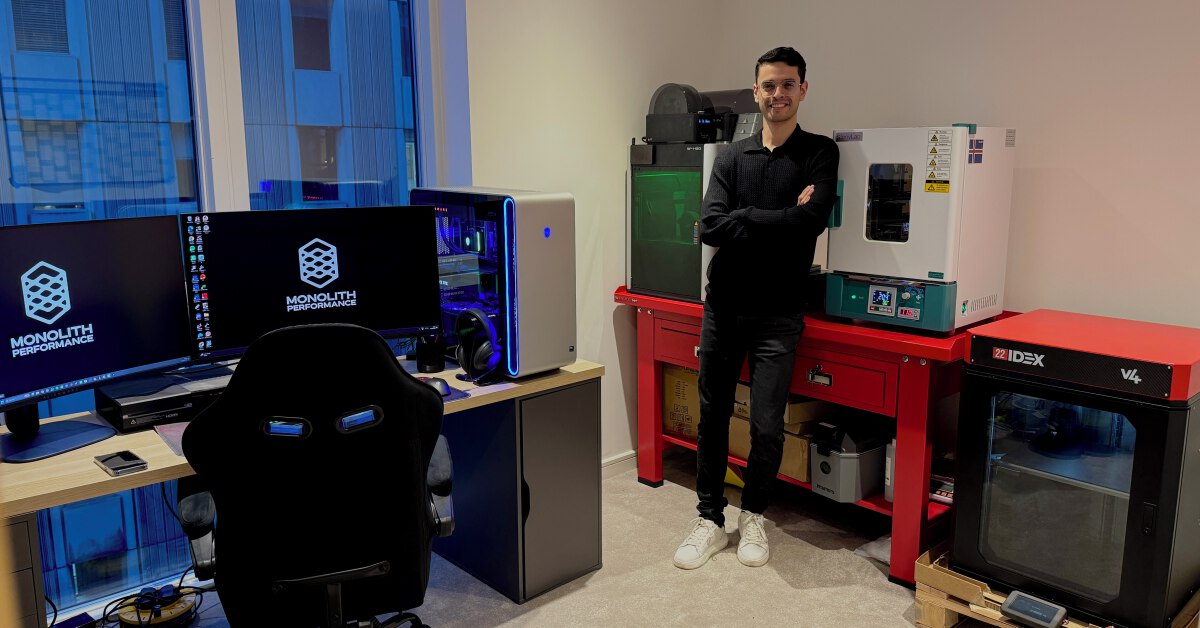
From MSc to CEO: Igniting a research revolution
For many, a master’s degree is achieving a big milestone. Kilyan Ocampo, Computational Fluid Dynamics alumni shares how studying at Cranfield helped launch his career in the energy sector. Today, Kilyan ...
Commuting, collaborating and growing: My first term experience at Cranfield
My first term at Cranfield University has been an extremely positive and rewarding experience. While the course has been intense at times, it has pushed me in the best possible way and allowed me ...

Sourcing country analysis – a guide to Library sources
For those researching a country, you will find that country information tends to take two forms: Analysis - country reports are descriptive reports covering most areas of interest on a country. They contain an analysis ...