


Life on campus and studying an Advanced Water Management MSc at Cranfield
01/02/2023
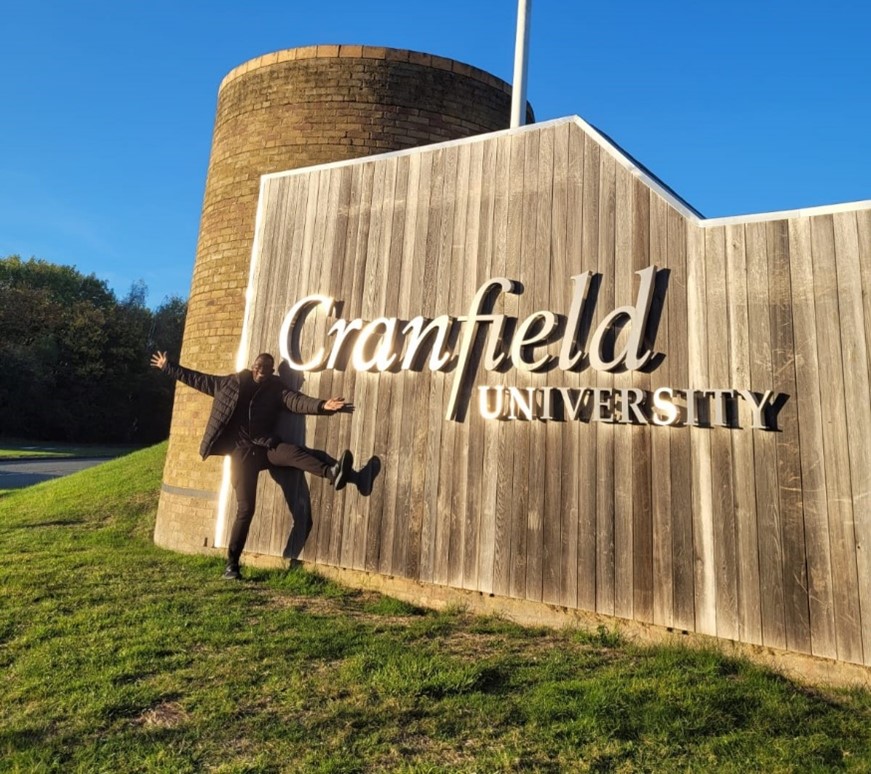
After a year of working in the water, sanitation, and hygiene sector, I started to look for opportunities to further my knowledge about water resources. Researching water organisations on LinkedIn led me to find two short courses offered by CapNet UNDP and UNEP and Global Water Partnership. These online courses covered nature-based solutions, nature-based solutions for disaster and climate resilience and IWRM for climate resilience. They encouraged my desire to pursue further studies into water management.
One day, whilst scrolling through my LinkedIn feed, I came across a post by the International Water Association (IWA) about a scholarship opportunity to study a water MSc at Cranfield University. Before seeing this post, I knew about Cranfield University and what a great choice it was to study a master’s degree in a water-related field, especially the strong links to industrial partners for whom they have championed ground-breaking research. I felt there was no better place to get a relevant education. A few of my former work colleagues had completed their master’s at Cranfield. You could tell they viewed water problems and solutions from a different, more integrated perspective that none of us had. And now, here was my chance to acquire an excellent education.
I received my acceptance email and offer letter in less than a week of my application in February 2021. I was overjoyed that I could move on to the next step of applying for the IWA and Cranfield University Excellence Scholarship. A few months later, I received an email asking me to attend an oral interview for the scholarship and fortunately I was awarded the full tuition fees for the Advanced Water Management MSc, and I would start in September 2021. Unfortunately, I couldn’t make it to the UK that year, so I differed my admission offer but that meant forfeiting the scholarship. When the scholarship re-opened in 2022, I was eager to re-apply and thankfully I was successful again.
Over the past four months, my time at Cranfield has been nothing short of amazing. Primarily, the course is everything I hoped for and more. It has opened my eyes to the various water challenges and possible solutions and how they relate to other sectors in agriculture and energy. The course is hands-on both in the laboratories and field work. I have learnt how to use software programmes relevant to managing water challenges and I’ve been on various field trips to see real-world implementation of solutions to improving water quality, mitigating flood risk of cities and catchments. The style of assessment has also availed me with the opportunity to grow my research and writing skills and the Kings Norton Library on campus is open 24hrs for 365 days a year (even on Christmas!) The course is also designed in such a way that we receive guest lectures from reputable industry experts. The Water Science Institute has been a great opportunity for building our networks by introducing us to professional bodies in the water sector such as the International Water Association, the Institute of Water, the British Hydrological Society and the Chartered Institution of Water and Environmental Management (CIWEM).
For my time at Cranfield, I am staying in one of the on-campus Halls of Residence. It feels like home and is very safe and secure. Lots of memories have already been created in shared spaces like the kitchen. I have been able to host some of my friends and share Christmas dinner with my classmates. The accommodation and facilities teams have been great at responding to any concerns or challenges I have had during my stay. 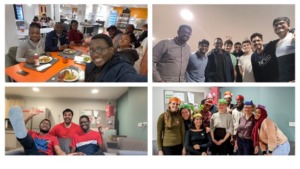
Outside the academic environment, Cranfield has provided spaces to grow my network and indulge in a range of interests with the various societies that exist under the Cranfield Student Association. I got an opportunity to join Silsoe Aid for Appropriate Development (SAFAD) which is one of the charities run by Cranfield students. I also serve on the SAFAD committee as President (2022 – 2023). It is a great opportunity to harness my people and project management skills in a way that is still relevant to my career prospects. Also, I managed to go on one of the coach trips organised by the CSA to Kensington, London. It was exhilarating to visit the Victoria and Albert Museum, the Natural History Museum, and the Science Museum.
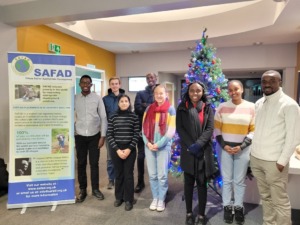 As I complete my final taught module and prepare to start my group project and eventually my individual thesis, I am utilising the Cranfield Careers and Employability Service resources to prepare myself for the job market. I hope to pursue a career that contributes to integrated water resources management, especially in the wake of climate change. I believe the good education and opportunities I have been exposed to so far at Cranfield University are setting me well on the path towards my career goal.

Categories & Tags:
Leave a comment on this post:
You might also like…

Engineering Tomorrow. Part two: Can we move around the world without emissions?
Moving people and goods around the world is essential to modern life. But every journey has an environmental cost, and reducing the emissions associated with transport is one of the major engineering challenges of ...
Following in the footsteps of aerospace pioneers
I came to Cranfield to understand how aircraft stay in the sky. Months later, I was measuring the performance of aircraft engines in flight aboard the National Flying Laboratory Centre's Saab 340B. My ...
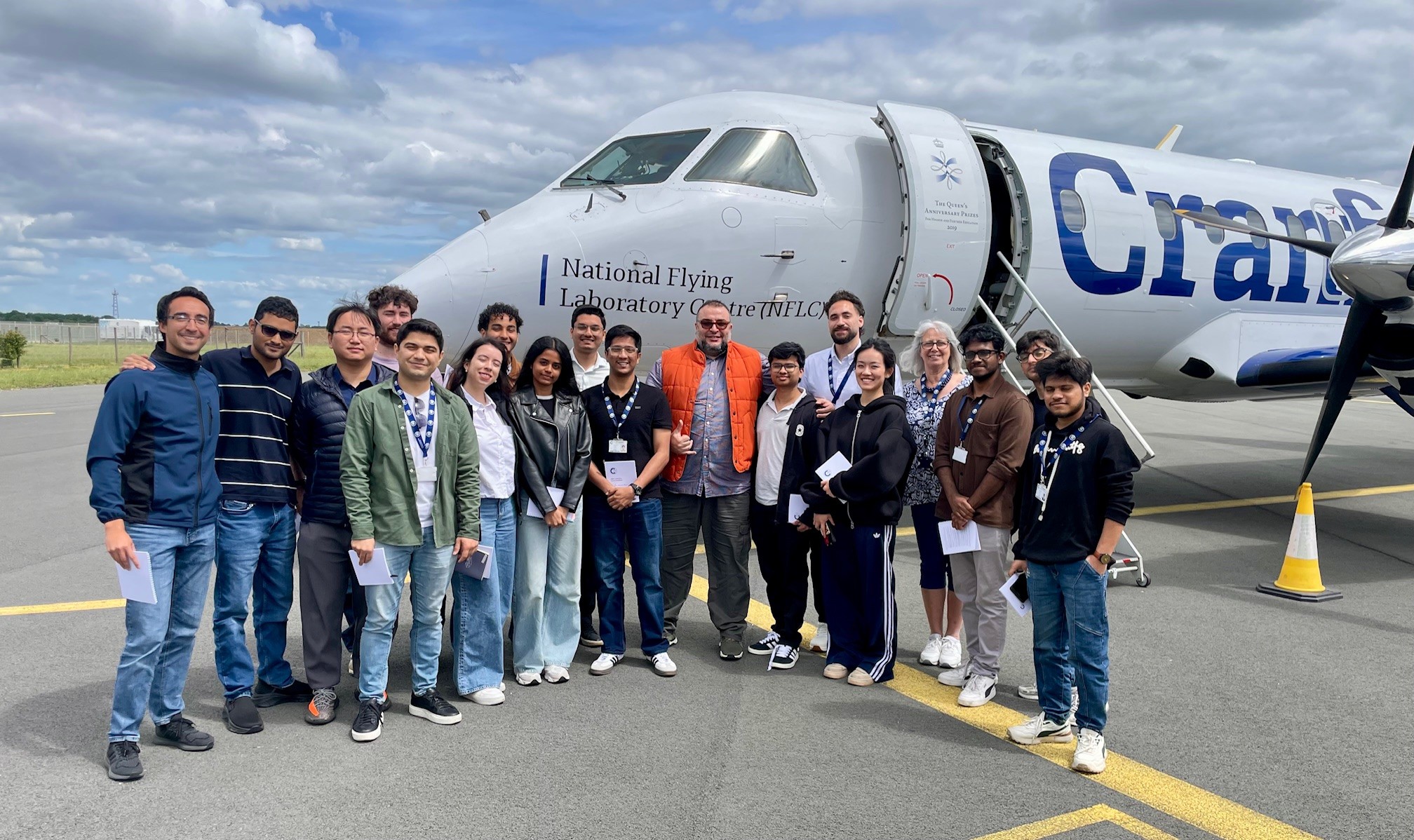
From looking up at jet engines to powering the future of flight
From flying aboard Cranfield's Saab 340B flying classroom to rebuilding a gas turbine component by component, Jouni Kailouh's journey shows how specialist, hands-on experience can turn a fascination with propulsion into a future career ...
Engineering Tomorrow. Part one: Can we power the future without costing the Earth?
The world needs energy. To power homes, industries, transport and the technologies shaping our future. But as demand grows and the pressure to reduce emissions increases, how do we generate the energy we need ...
Looking ahead: Building foresight skills for a more sustainable future
As sustainability challenges become more complex and uncertain, organisations need people who can look beyond today's pressures and think strategically about the future. From changing regulations and emerging technologies to supply chain disruption and ...
Brazil to Cambridge: How Cranfield helped me build a career in data analytics
I was hungry for something bigger. Before Cranfield, I was living in São Paulo, Brazil, working as a Data and Market Intelligence Analyst in the trading division of Raízen. My background is actually ...
Comments are closed.