


The fast track to supercar engineering: My Cranfield journey
18/12/2025
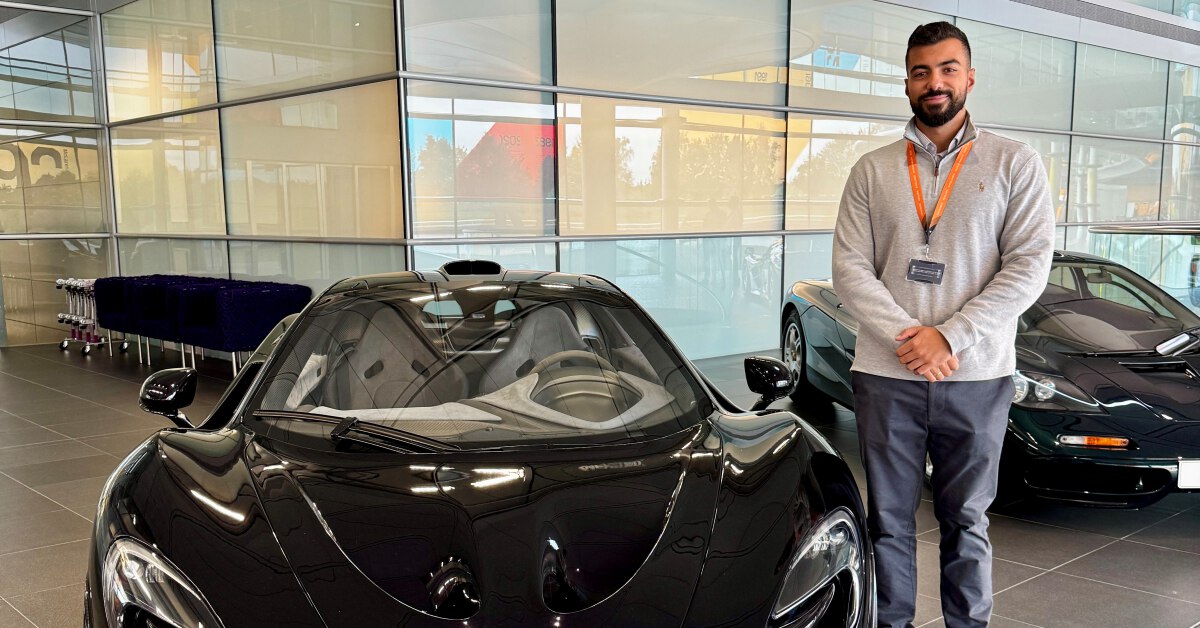
It’s been a dream come true to work on some of the world’s most prestigious supercars – the Aston Martin Valhalla, McLaren 750 & Artura, the GMA T.33. But every successful journey has a starting line. For me, that line was at Cranfield University, studying the Automotive Engineering MSc.
Hi, I’m Daniel Guirgis and I graduated from the course in 2022. Here’s the story of how Cranfield University didn’t just give me a qualification but handed me the blueprint for a career in elite automotive design.
Why Cranfield University? The connection to the real world
Choosing Cranfield was an easy decision. It’s one of the leading universities for Automotive Engineering, known for its high reputation and, crucially, its unique connection to the automotive sector. I wasn’t just looking for theoretical knowledge; I wanted real-world engineering capability.
The Automotive Engineering MSc course structure aligned perfectly with this goal. I was instantly attracted to the access to specialist facilities, industry-leading equipment, and, most importantly, lecturers who had strong, practical engineering backgrounds. It promised technical depth with hands-on application.
The course: Challenging, fast-paced and invaluable
The course was, I won’t lie, extremely challenging and fast-paced but nothing in life comes easy! It was a very thorough and intensive programme but challenging in the best possible way.
What made it exceptional was the course structure. We had modules with lectures for core learning, but this was constantly balanced with practical elements: access to Cranfield’s test tracks, dedicated workshops, and advanced simulation facilities.
My highlights:
- Real-world insight: Guest lectures and workshops were delivered directly by industry professionals, which felt incredibly ‘real-world’ and aspirational.
- Supportive environment: The academic environment was hugely supportive. Lecturers were approachable, deeply knowledgeable, and genuinely invested in student success.
- Diversity in design: Working on group design projects with students from diverse engineering backgrounds was a massive learning curve, preparing me for collaborative industry work.
The composite structures edge
Cranfield’s strong research focus on areas like smart materials, embedded sensors, and the design/integration of advanced composite structures wasn’t just a side note it kickstarted my career because of the amazing thesis options available.
This focus piqued my interest so much that I chose a thesis in industry surrounding the composite strain rate topic. I can confidently say that without that specific research direction and the resulting thesis, I wouldn’t have landed my first role in the automotive industry.
“Getting your feet into the industry is the most difficult and important hurdle, and Cranfield helped me clear it.”
From campus to career: My typical day
The MSc was built around practical, industry-aligned learning. From day one, the expectations and workflow resembled a professional engineering environment: tight deadlines, collaborative problem-solving, structured design reviews, and, yes, lots of coffee!
A typical day started with lots of lectures and note-taking. Afternoons were often spent in further lectures, group design meetings, practical workshops, or self-study. The campus is very community-based, creating a mature and professional atmosphere. Evenings were often dedicated to project work and coursework in the library.
The mix of learning theory and hands-on application meant that by graduation, I felt ready to step into an engineering role with confidence. I truly believe no other course could have prepared me more.
Living the dream: Working on iconic supercars
Today, I am proudly working in the automotive industry. The transition from university to full-time employment felt natural because of the skills I gained. I opted for an industry-based thesis, which meant I was supervised by my professor while working full-time at a British automotive interior supplier (designing and manufacturing interiors for prestigious OEMs like McLaren and Aston Martin).
After completing my MSc, I joined that company as a full-time Design Engineer. Since then, I’ve moved on to work at McLaren Automotive and most recently Gordon Murray Automotive.
It has been a dream come true to contribute to the creation of truly iconic, world-renowned cars. My MSc and thesis prepared me to contribute meaningfully from the very beginning, whether it’s in detailed design discussions or technical problem-solving.
My advice to prospective students
My long-term goal is to continue advancing within the automotive sector, ideally developing into roles that blend engineering, product strategy, and design direction. I want to continue to add value and innovation to extraordinary supercars.
For prospective students interested in specialising in smart technology within automotive engineering, my most crucial piece of advice is threefold: firstly, pick a thesis you are genuinely interested in as passion will drive the quality of your work; secondly, stay curious and proactive – the more you put in, the more you’ll get out of the course; and finally, network! Engage actively with lecturers and industry speakers, as these connections can often position you for your first job or open up real opportunities later on.
Good luck and enjoy the ride! It’s the best way to accelerate your career.



Categories & Tags:
Leave a comment on this post:
You might also like…

How do I access the full-text of Harvard Business Review (HBR)?
This is a frequently asked question, and it's worth knowing how to access this key management journal. So, how do you access HBR in full-text? The short answer is via our eJournals finder. You can find ...

Engineering problem to solve? Let Knovel help you find a solution
Did you know that Knovel provides you with more than just eBooks? Knovel is a key database for many engineering, mechanical and materials courses here at Cranfield University, and contains content from an extensive range ...
What happens when female scholars meet influential leaders?
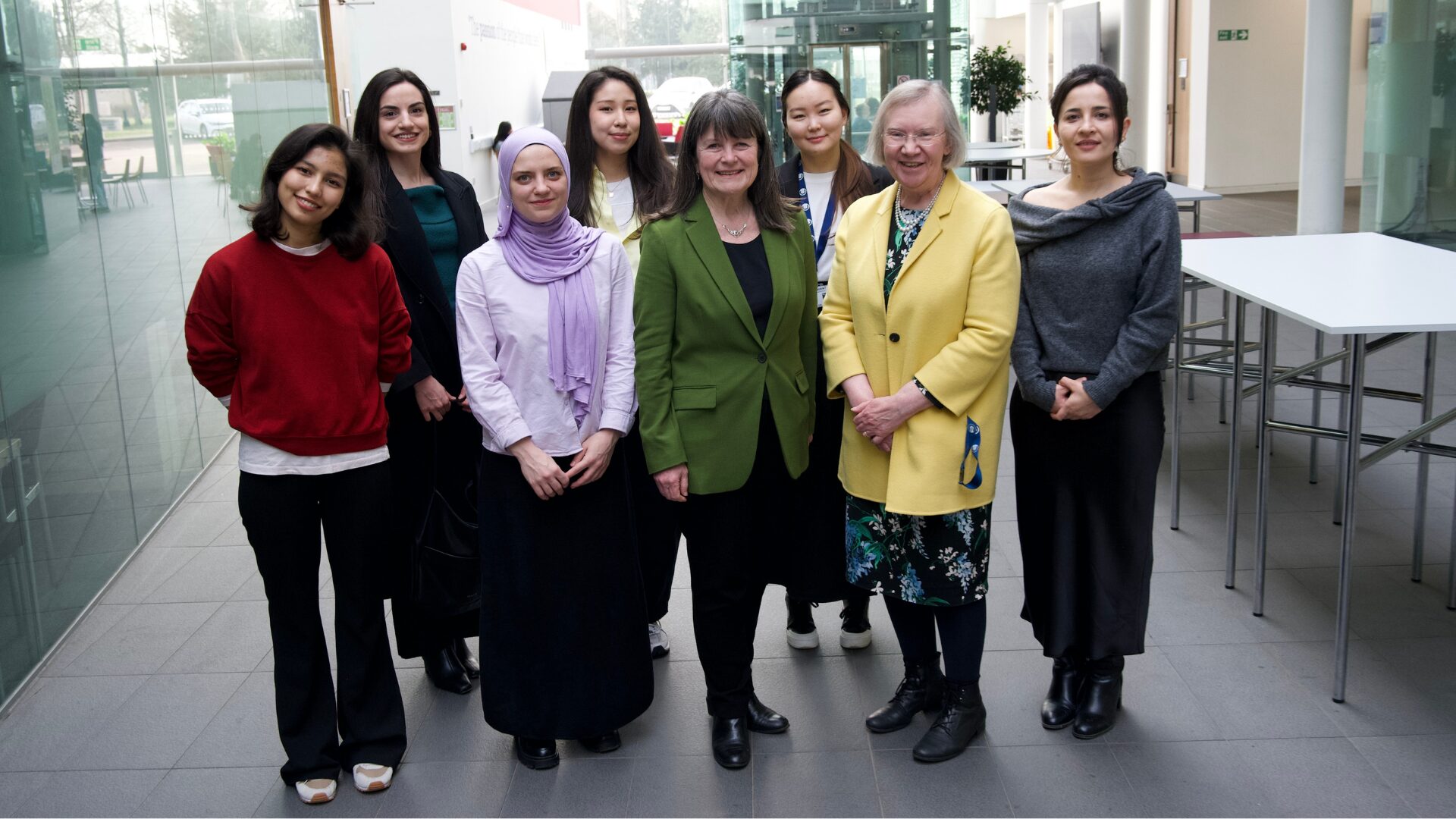
On the 5 March 2026, our British Council Women in STEM Scholars had the privilege of sitting down with two excellent role models of industry and academia: Professor Dame Karen Holford, ...
From MSc to CEO: Igniting a research revolution
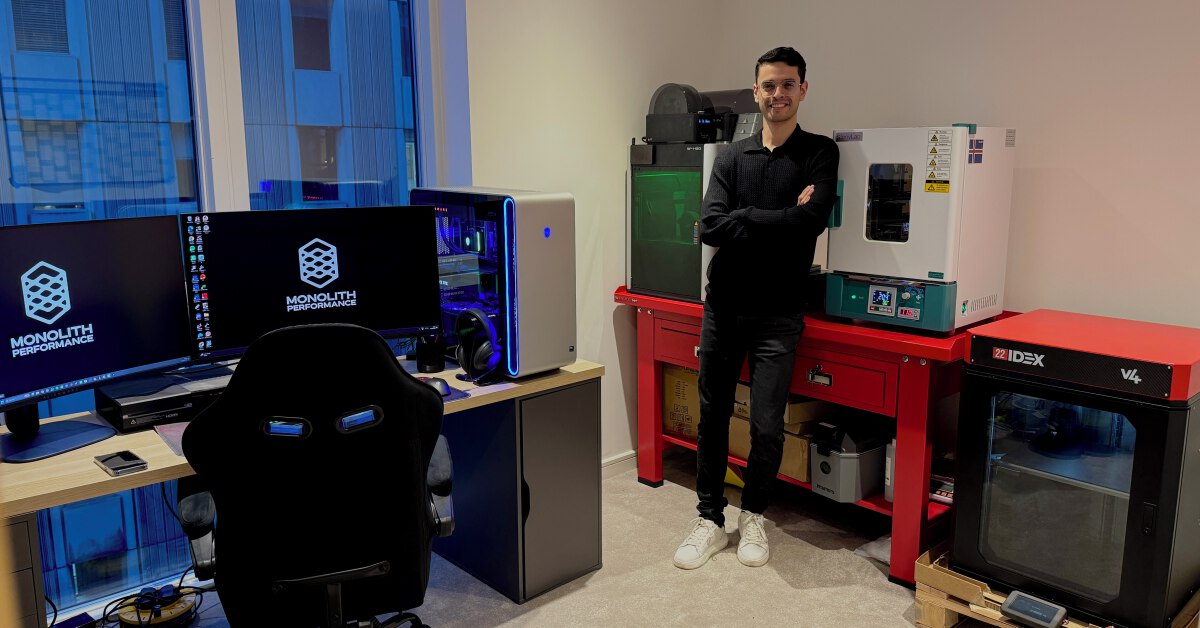
For many, a master’s degree is achieving a big milestone. Kilyan Ocampo, Computational Fluid Dynamics alumni shares how studying at Cranfield helped launch his career in the energy sector. Today, Kilyan ...

Commuting, collaborating and growing: My first term experience at Cranfield
My first term at Cranfield University has been an extremely positive and rewarding experience. While the course has been intense at times, it has pushed me in the best possible way and allowed me ...

Sourcing country analysis – a guide to Library sources
For those researching a country, you will find that country information tends to take two forms: Analysis - country reports are descriptive reports covering most areas of interest on a country. They contain an analysis ...
Comments are closed.