


Becoming a British Council Women In STEM Scholar
10/02/2022
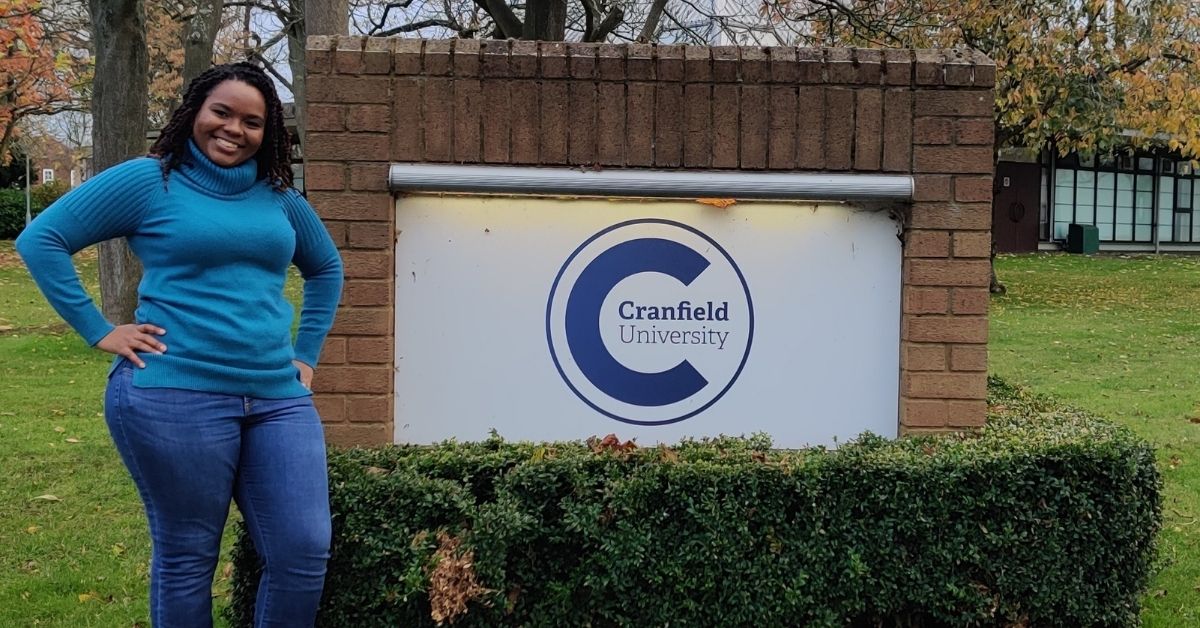
Hello, I am Delta Wright, a 2021 British Council Women in STEM Scholarship awardee studying Environmental Engineering MSc at Cranfield University. Since completing my undergraduate studies in Science Education with a dual concentration in Biology and Chemistry in 2015, I dreamt of pursuing an international postgraduate degree. In 2016, I turned that dream into a goal and ever since made small steps towards achieving it.
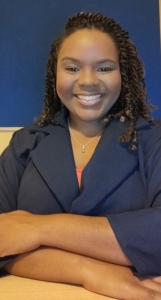 I embody the Japanese word “Kaizen” meaning “continuous improvement”. For many people including myself the COVID-19 pandemic brought sorrow, difficulties and unprecedented changes in our daily lives. Particularly, what it gave me was tenacious determination to finally achieve the goal I set in 2016- to pursue master’s study in the United Kingdom. I applied to many funding agencies during my quest to achieve my goal and failed miserably. It was at this juncture, the point of feeling utter and complete disappointment that my tenacious determination sprung up and I told myself that this is the time to press on and not give up. A simple Google search led me to the British Council website where I saw the scholarship opportunity and I did not hesitate to apply. Interestingly, during the application process I had a strong feeling that the scholarship was created and designed just for me; that my life’s work thus far in STEM education was the epitome of an individual deserving of the scholarship opportunity. Today, I can proudly write this blog post as a British Council Women in STEM scholar at Cranfield University and say to you that although my journey was not short of challenges, my tenacious determination allowed me to achieve my goal.
A question I often ask myself is what does it mean to BE a British Council Women in STEM Scholar? Globally, women are underrepresented in careers that focus on Science, Technology, Engineering and Mathematics. In some cases, it is cultural and in others it is simply a matter of negative social perceptions. Being a woman in STEM means being bold and fearless, being strategic and being a mentor and role model inspiring other women and girls. For me being bold means taking risks, being confident and knowing what you are about. These characteristics are key for staying on the path of goal achievement. Being strategic means setting long-term goals and taking specific actions towards achieving those goals. Also, it means being adaptable and resilient to change as the journey to your goals can be riddled with obstacles. Finally, being a mentor and role model for other girls and women to emulate is paramount to increasing the global percentage of women in STEM careers. One of my ultimate aims in life is to become a giant of a mentor, enabling other girls to stand on my shoulders to reach further that I ever can. Being a selfless, fearless, strategic, creative and innovative role model is what being a Women in STEM Scholar is all about.
My journey to Cranfield University started in 2016. The British Council Women in STEM scholarship has provided me with a platform to not only be a STEM ambassador but to also be a role model for females across the globe. Cranfield is a great place for females who have a passion for STEM and want to contribute to making the world a better place, as there are so many inspirational females that work and study here. I am passionate and enthusiastic about being a Women in STEM Scholar, but I am even more excited to use the scholarship opportunity to make a lasting impact in the lives of females globally.

Categories & Tags:
Leave a comment on this post:
You might also like…

Keen to develop your study skills?
Alongside the technical skills and academic knowledge that you will gain on your course, as a Cranfield student you have the opportunity to develop a range of other skills that can enhance your learning experience. ...

The V-conomy: powering the sixth wave of global economic growth
The world could be on the verge of a major surge in economic growth and development, driven by the convergence of AI and clean energy technology. Waiting to ride the K-wave The Russian ...

Need help using the Python programming language?
We know some of our students are currently trying to learn Python, so we wanted to make you aware of some great LinkedIn Learning videos that can help. But don't you have to pay for ...

What does it really take to become a Chevening Scholar?
Say “Turkmenistan” to most people and you’ll get a blank look. That was true when I left Ashgabat for the UK to study an MSc in Logistics and Supply Chain Management at Cranfield University ...

Get a head start on referencing and plagiarism
We offer a module on Referencing And Avoiding Plagiarism which you can find on your Canvas dashboard. It explains the role and importance of citing references and how to incorporate the work of other authors ...

How Cranfield shaped my journey as an Aerospace Engineer
If I'm being specific about the moment it clicked, it was reading a paper called "On the Role and Challenges of Computational Fluid Dynamics (CFD) in the Aerospace Industry" by two Boeing engineers, P. ...
Comments are closed.