


The one certainty of manufacturing in 2075
12/11/2019
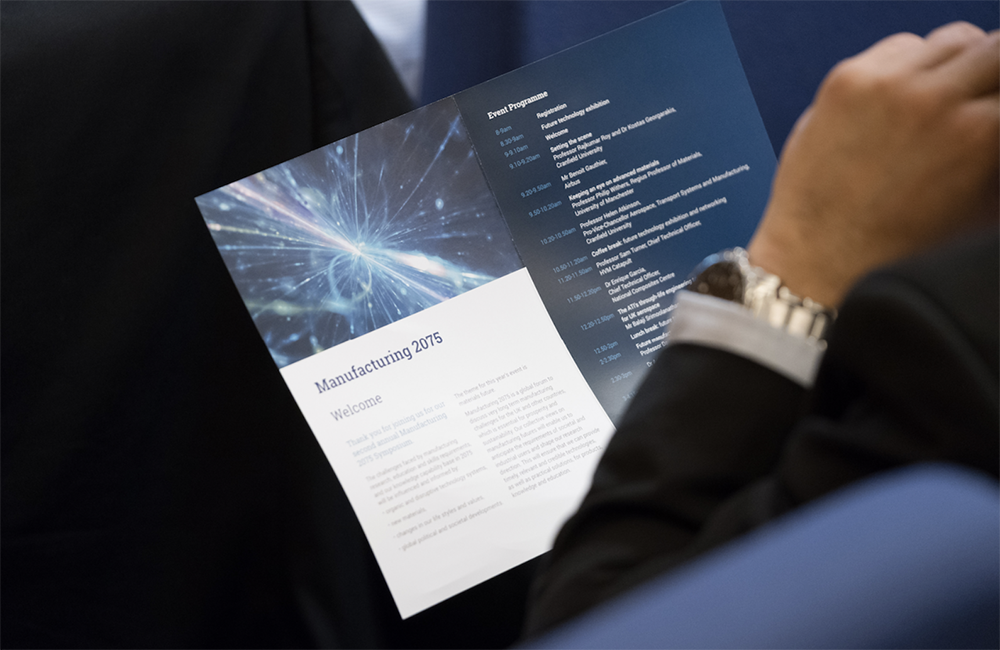
Predicting the future of manufacturing, backing specific technologies, is full of risks. But there’s one area we can be certain about, that has to happen, and that’s sustainability: use of sustainable materials, reducing energy use, ensuring zero carbon emissions.
There’s no value in ‘greenwash’ anymore, token nods to being environmentally friendly – the whole system of investors, shareholders, partners, clients and consumers is looking for real change in business models. All manufacturers need to make sure they are part of the new world, not written off as a dinosaur and dragging down the reputation of the sector.
Governor of the Bank of England, Mark Carney, has this year said that bankruptcy is a likely outcome for companies and industries that don’t show progress towards zero carbon status. They’ll be punished by investors for their lack of action.
It’s a universal message. Larry Fink, CEO of the world’s largest money management firm with $6.5 trillion in assets, says every business now has to have a social purpose. The UK Government’s Net Zero by 2050 legislation means mandatory pressure for transformation of operations. The groundswell of awareness of the issues, particularly among the young, means customers and employees of the future aren’t going to allow manufacturing to be a ‘fossil fuels’-type industry, the enemy, just the producer of stuff no matter the cost.
This year, Manufacturing 2075 (4th December 2019) is about the practical, operational issues around sustainable manufacturing that have to be faced and how we can go about it.
That means looking at the full picture in terms of materials used and the environmental cost of manufacture. Much of the focus on the shift to sustainability has been on the ‘use’ phase of products, the performance of products, the recycling opportunities, not what’s gone into their actual making. New green technologies – like farms of wind turbines and solar panels – they will also come to end of their life and need to be replaced as sustainably as possible, components need to be re-used where possible, waste minimised.
Confirmed speakers include Professor Richard Herrington at the Natural History Museum, whose work has highlighted the implications to natural resources from the switch to electric vehicles; Professor Steve Yearley from Edinburgh University on the social implications of the circular economy.
The Manufacturing 2075 event is part of an ongoing conversation about sustainability and Manufacturing Futures: sharing thinking and ideas between industry, researchers and other sector stakeholders – steering the direction of research in the short and long term to where it’s most needed, and ensuring tailored and timely practical solutions.
Mark Jolly, Professor and Director of Manufacturing.
Industry and thinkers come together for Manufacturing 2075 at Cranfield University on 4th December 2019 – a full list of speakers is here: www.cranfield.ac.uk/events/manufacturing-2075-landing

Categories & Tags:
Leave a comment on this post:
You might also like…

Moving to the UK to study? How to plan for banking, exchange rates and transfers
Currency and banking are two of the most practical parts of financial planning for international students. They are also often the most overlooked. We asked Dr Lakshmy Subramanian, Course Director for Cranfield University's Banking, ...

Cranfield: an environment where innovation thrives
The latest Knowledge Exchange Framework rankings from UK Research and Innovation (UKRI) gives an insight into the real and meaningful impact that UK universities have. The seven categories that make up KEF6 cover everything ...
How Cranfield accelerated my career in Logistics and Supply Chain Management
After graduating from the MSc in Logistics and Supply Chain Management at Cranfield University, I've been reflecting on the experiences that made my journey so valuable and the impact it has had on my ...
Mendeley: a powerful tool to organise and manage your references
Are you looking for a way to manage your references, create in-text citations and reference lists for your assignments or thesis? If so, you may wish to consider using Mendeley. What is it? Mendeley is ...

Keen to develop your study skills?
Alongside the technical skills and academic knowledge that you will gain on your course, as a Cranfield student you have the opportunity to develop a range of other skills that can enhance your learning experience. ...

The V-conomy: powering the sixth wave of global economic growth
The world could be on the verge of a major surge in economic growth and development, driven by the convergence of AI and clean energy technology. Waiting to ride the K-wave The Russian ...