


Thinking about your literature review?
07/04/2025

As part of your PhD or Master’s thesis, you will probably have to write a literature review. A successful literature review will offer an analysis of the existing research in your field, demonstrating your understanding of the subject area and any gaps in current knowledge. It’s an essential step in the research process that may influence the direction of your study.
There are different approaches and methods to literature reviews, and you may have heard them described as narrative, structured, scoping or systematic.
This blog post will explain the different types of literature review and some of the main things you’ll need to know. Some of the main differences are:
| Narrative literature review | Systematic or structured literature review |
| Provides background information or discussion | Attempts to answer a specific question from evidence in the literature |
| Doesn’t usually attempt to be exhaustive | Attempts to include all relevant studies |
| May not specifically aim to eliminate bias | Uses inclusion/exclusion criteria to avoid bias |
| Doesn’t document the search process in detail | Documents and justifies the search process rigorously to enable replication |
| Doesn’t explain why the studies included were selected | Applies quality control to ensure that only high quality articles are included |
Types of literature review
A traditional literature review or narrative review is a critical review of the literature on a particular topic, usually taking a thematic approach. The aim is to identify key research, demonstrate an understanding of the subject, and evaluate the quality and relevance of the literature. It should help to find a unique angle on the topic, prevent duplication of previous research, and identify any errors or mistakes to avoid. It will not be exhaustive and will probably have uncontrolled bias.
A structured literature review involves bringing many research studies together to answer a clearly formulated research question. It does not involve primary research, such as creating surveys and questionnaires. A structured review typically does not fulfil all the criteria of a full systematic review but may take a similar approach, following a set protocol for determining the research studies to be included and documenting every stage. The results and conclusions are based on the evidence found, not on the author’s own views.
A positioning study or scoping review is designed to help identify the scope of a topic before conducting a systematic review. It can indicate where proposed research fits with the existing literature and identify key concepts. A positioning study can help to focus a research topic, supporting a strong understanding of the field.
A systematic literature review is a research methodology to identify, select, evaluate, and synthesise all of the relevant literature on a topic to answer a specific research question. It should be transparent and replicable, follow a predetermined set of criteria to select studies and help minimise bias, and is carefully documented throughout. It can take several years to complete, and is usually conducted by a team, rather than by an individual.
Defining a research question
You will probably have an idea of a research topic that you would like to investigate. Make sure that you chose an area that interests you as you will be spending a lot of time on it!
A good starting place is to run a scoping or exploratory search. This should give you an overview of the key issues, helping you to discover how much research exists and develop your aims and objectives. It should also help you to identify any key authors or subject terms. Depending on what you find you may need to amend your research topic.
Once you have decided on your topic you will need to determine your research question. Your question should be clear and focused, but also answerable and searchable. A well formulated question provides the foundations for good research.
Searching for literature
You will need to carry out in-depth searches to find relevant and quality literature for your literature review, using keywords and search strings. Your Librarian can help with this.
Most high-quality, scholarly research is published in academic journals. Cranfield has access to nearly 200 databases, containing journal articles and other scholarly publications.
You may also find useful information in grey literature, including documents not produced by traditional commercial or academic publishers, such as books, theses, conference papers, reports and working papers.
Academic searching is different to everyday searching. Often the questions are complex and do not have a simple answer. Searching and finalising keywords and search strings is an iterative process that takes a lot of time.
Your search will generate many results. Not all the articles retrieved will be relevant and you will need to filter your initial results according to your inclusion and exclusion criteria. The first step is to remove any duplicate articles, then review the titles and abstracts, and finally read the full text of the remaining articles to identify which to include in your study.
Writing your literature review
When you have identified the studies you are going to use, you need to read them thoroughly to identify the main themes. The discussion should be structured around the themes, and what the literature you have found demonstrates. Every article does not need to address every theme, but each article you choose should cover at least one of your themes.
Do not simply describe each study without relating it to the themes or the other literature. Your literature review should give an overall picture of the topic, as shown in the material you have found.
Further information
For more extensive, detailed information about this topic, please see our Conducting your literature review pages on the Library Services website. We also have a range of additional support for writing systematic literature reviews in a series of blog posts.
Finally, please don’t forget that your Librarian is more than happy to help with any questions you may have. Please get in touch with us!

Categories & Tags:
Leave a comment on this post:
You might also like…
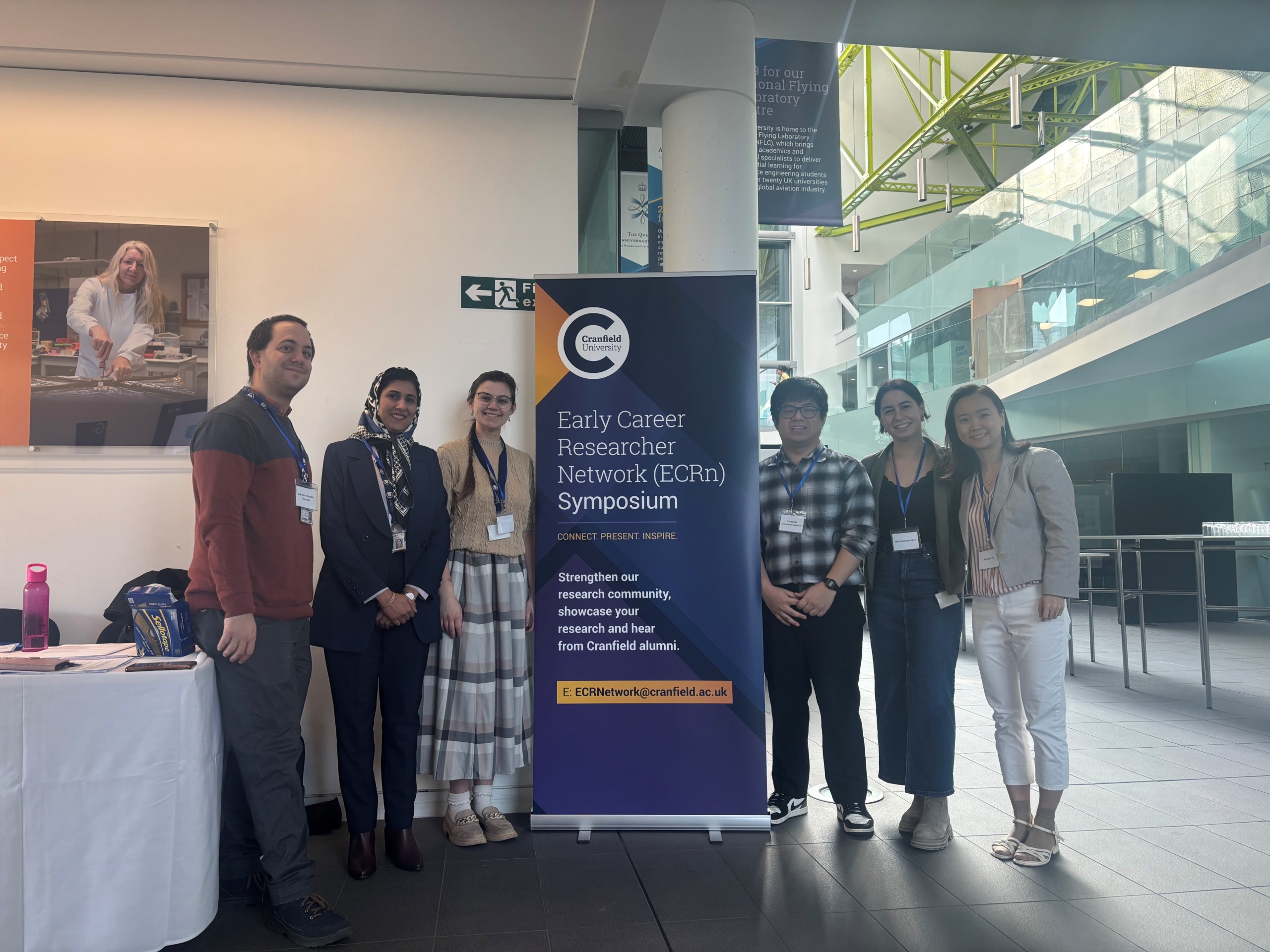
Building more than research: Reflections from the ECRn Symposium 2026
There’s something quietly powerful about a room full of early career researchers. Not just the ideas, although there were plenty of those—but the conversations, the curiosity, and the sense that everyone is figuring things ...

Library services over Easter, 3-6 April
Kings Norton Library will remain open for study 24/7. You will need your University ID card to enter the building and can use the self-service machines to borrow and return items as usual. Barrington Library ...

How do I access the full-text of Harvard Business Review (HBR)?
This is a frequently asked question, and it's worth knowing how to access this key management journal. So, how do you access HBR in full-text? The short answer is via our eJournals finder. You can find ...

Engineering problem to solve? Let Knovel help you find a solution
Did you know that Knovel provides you with more than just eBooks? Knovel is a key database for many engineering, mechanical and materials courses here at Cranfield University, and contains content from an extensive range ...

What happens when female scholars meet influential leaders?
On the 5 March 2026, our British Council Women in STEM Scholars had the privilege of sitting down with two excellent role models of industry and academia: Professor Dame Karen Holford, ...

From MSc to CEO: Igniting a research revolution
For many, a master’s degree is achieving a big milestone. Kilyan Ocampo, Computational Fluid Dynamics alumni shares how studying at Cranfield helped launch his career in the energy sector. Today, Kilyan ...
Comments are closed.