


Introducing… Datastream
07/06/2024

Datastream is one of the world’s largest and most respected financial databases. It provides access to historical data across the full range of financial instruments globally – from companies, markets and economic indicators to commodities and derivatives. It also offers a wide range of reporting and charting tools.
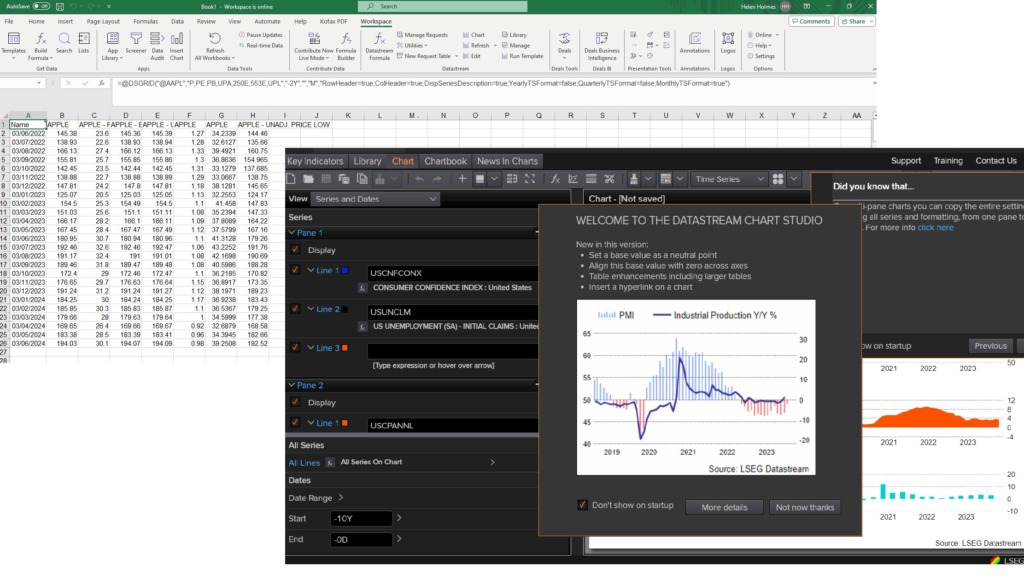
Datastream is now available via Workspace from LSEG. Register for a Workspace licence using these instructions Registering for a Workspace account and you can choose Datastream as an add-in. Once you have an account, you can use Workspace (and Datastream) on your own PC/laptop.
To have full Datastream access, you will need to download the Workspace software which will give you the Excel add-in. The software should be available in your welcome email but, if not, you will find it here >Download LSEG Workspace | LSEG
You will see that they mention a version of the software for Macs, but unfortunately this is not fully compatible. Please check that your PC has enough space, etc, so you can download the software. The downloaded software is also available on the PCs in the Library, should you have any problems downloading it on to your own device.
LSEG provides video and Teams training on Datastream via their Help pages.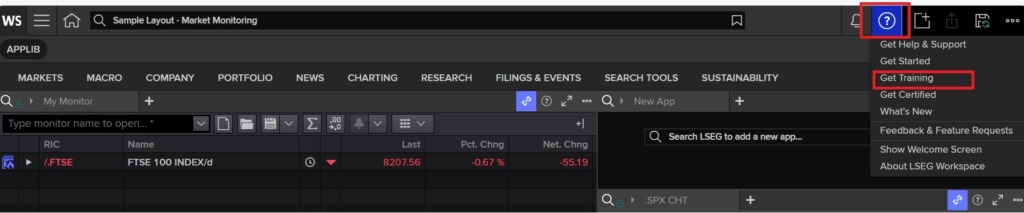
You can also contact the Library if you need any help to get started.
If you would like to discuss whether Datastream would meet your research needs or to arrange a demonstration, please feel free to contact us.
Feature image from Pixabay. Available at: https://pixabay.com/photos/business-stock-finance-market-1730089/

Categories & Tags:
Leave a comment on this post:
You might also like…

Mendeley: a powerful tool to organise and manage your references
Are you looking for a way to manage your references, create in-text citations and reference lists for your assignments or thesis? If so, you may wish to consider using Mendeley. What is it? Mendeley is ...

Keen to develop your study skills?
Alongside the technical skills and academic knowledge that you will gain on your course, as a Cranfield student you have the opportunity to develop a range of other skills that can enhance your learning experience. ...

The V-conomy: powering the sixth wave of global economic growth
The world could be on the verge of a major surge in economic growth and development, driven by the convergence of AI and clean energy technology. Waiting to ride the K-wave The Russian ...

Need help using the Python programming language?
We know some of our students are currently trying to learn Python, so we wanted to make you aware of some great LinkedIn Learning videos that can help. But don't you have to pay for ...

What does it really take to become a Chevening Scholar?
Say “Turkmenistan” to most people and you’ll get a blank look. That was true when I left Ashgabat for the UK to study an MSc in Logistics and Supply Chain Management at Cranfield University ...

Get a head start on referencing and plagiarism
We offer a module on Referencing And Avoiding Plagiarism which you can find on your Canvas dashboard. It explains the role and importance of citing references and how to incorporate the work of other authors ...
Comments are closed.