


Sourcing ESG data in Workspace
09/02/2024

Are you looking for ESG data? You may have already tried Bloomberg, but Workspace is also a really good place to look. The term ESG covers the environmental, social and governance data filed by companies. Workspace provides access to 630+ standardized ESG data points and 70+ analytics for 15,000+ companies globally. Data goes as far back as 2002. More information on their ESG Scores methodology can be found here.
Accessing Workspace
Registered users of Workspace can access it here.
Not registered for Workspace? Register here.
Sourcing ESG data
Type ESG in the Workspace command bar to read the introductory page on Workspace ESG data. For ESG data on a particular company, type the company name in the Workspace command bar and, from the Company overview page, click on the ‘ESG’ tab. Or you can type a company identifier, followed by a space and then ESG (e.g. LSEG ESG) into the command bar.
ESG statement view provides the ESG details for the individual company.
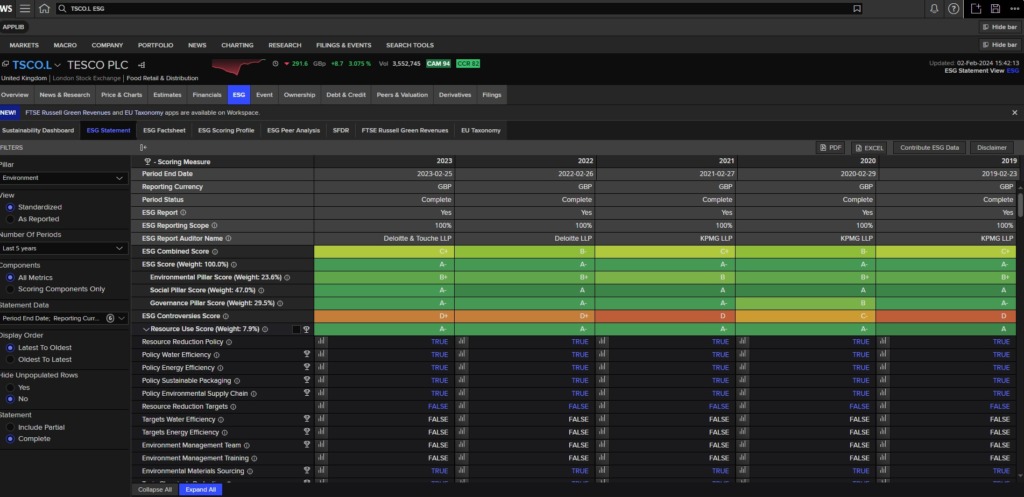
ESG Statement View
A comparison with the company’s industry peers can be found by selecting ESG Peer Analysis from the tabs. This can be downloaded to Excel or saved as a PDF document.
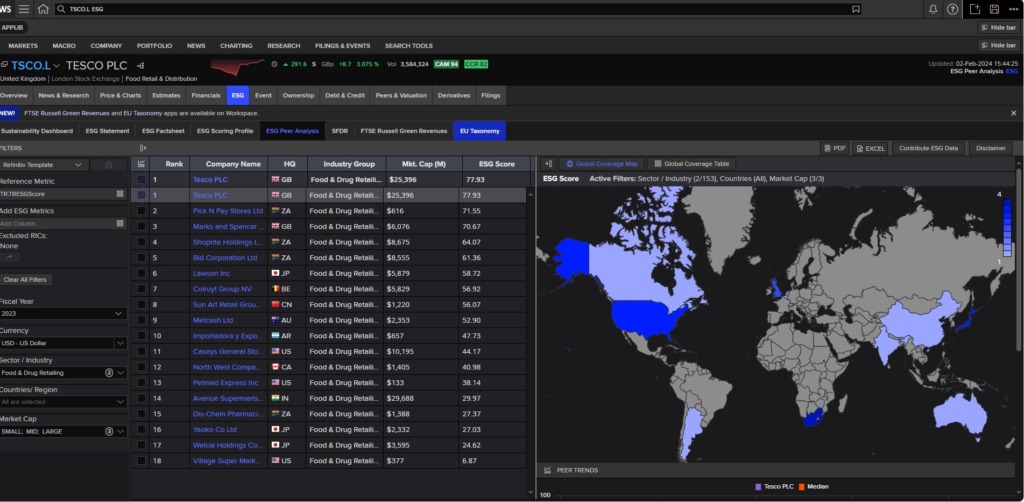
ESG peer analysis
ESG Factsheet provides a good overview of the company’s current ESG performance.
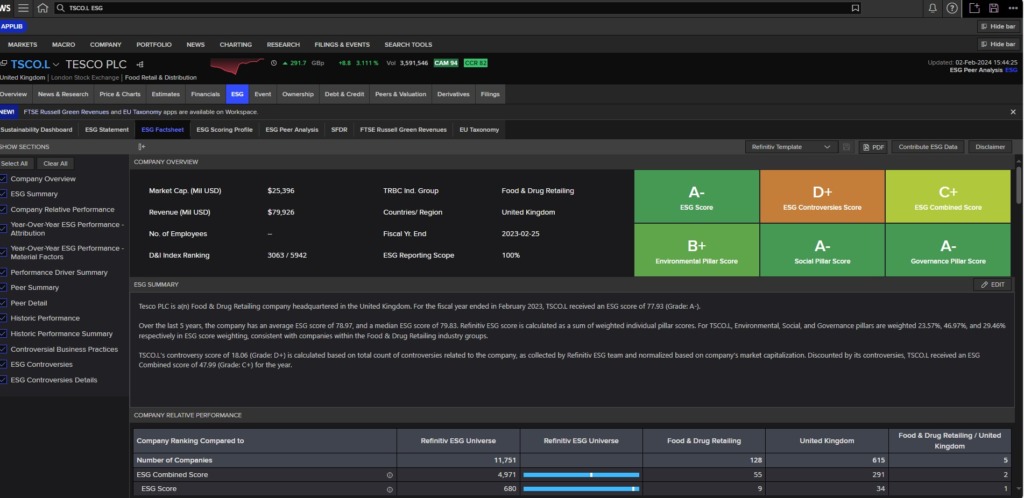
ESG factsheet
There is also a ESG Scoring Profile view which shows ESG scores alongside a pie chart containing a breakdown with the option to have a full chart shown.
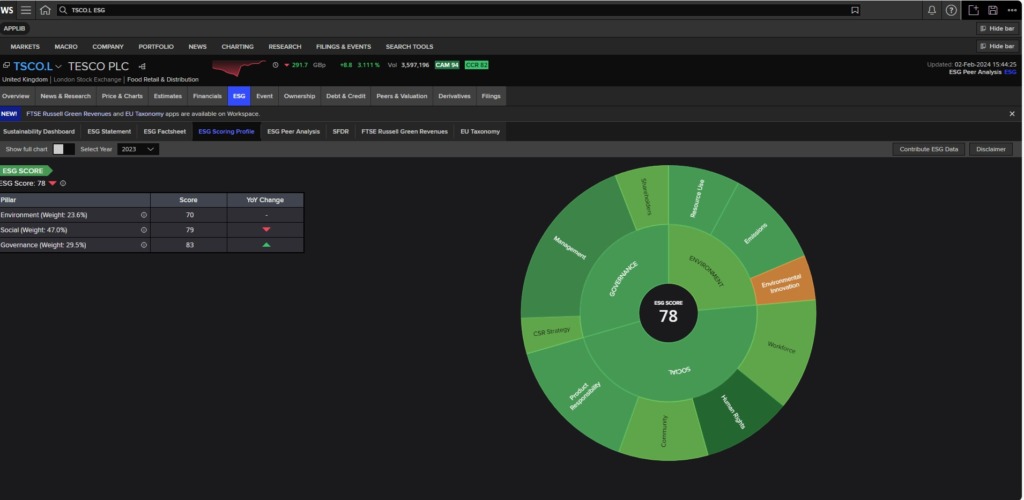
ESG scoring profile
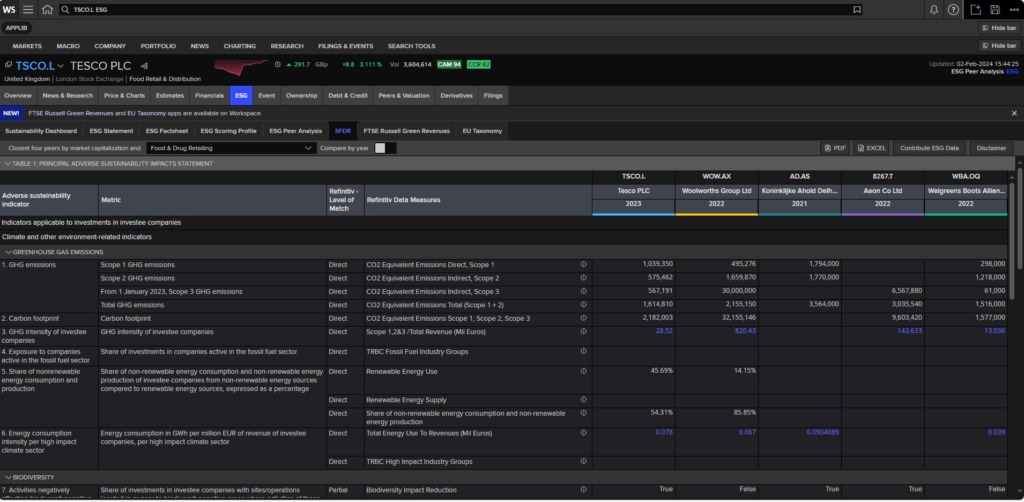
Finally there is a SFDR view which provides all the mapping of Pie level indicators and relates the ESG data to the Sustainable Finance Disclosure Regulations standard.
SFDR View
A detailed explanation of the LSEG ESG methodology is also available from their website here.
As ever, any questions, please contact the Library.
Feature image from Pixabay. Available at:
https://pixabay.com/photos/money-profit-finance-business-2696219/

Categories & Tags:
Leave a comment on this post:
You might also like…

How do I access the full-text of Harvard Business Review (HBR)?
This is a frequently asked question, and it's worth knowing how to access this key management journal. So, how do you access HBR in full-text? The short answer is via our eJournals finder. You can find ...

Engineering problem to solve? Let Knovel help you find a solution
Did you know that Knovel provides you with more than just eBooks? Knovel is a key database for many engineering, mechanical and materials courses here at Cranfield University, and contains content from an extensive range ...

What happens when female scholars meet influential leaders?
On the 5 March 2026, our British Council Women in STEM Scholars had the privilege of sitting down with two excellent role models of industry and academia: Professor Dame Karen Holford, ...
From MSc to CEO: Igniting a research revolution
For many, a master’s degree is achieving a big milestone. Kilyan Ocampo, Computational Fluid Dynamics alumni shares how studying at Cranfield helped launch his career in the energy sector. Today, Kilyan ...

Commuting, collaborating and growing: My first term experience at Cranfield
My first term at Cranfield University has been an extremely positive and rewarding experience. While the course has been intense at times, it has pushed me in the best possible way and allowed me ...

Sourcing country analysis – a guide to Library sources
For those researching a country, you will find that country information tends to take two forms: Analysis - country reports are descriptive reports covering most areas of interest on a country. They contain an analysis ...
I would love to see such reporting and comparisons made available as fact sheets for SME’s to review larger businesses and their ESG agendas. ESG needs to not only be at the the corporate elite, but also pushed by grassroot business. If this data was more widely available and benchmarking discussed, I think it would stimulate such discussions.