

1,000th Cranfield Defence and Security staff publication added to CERES!
26/05/2022

We are very excited and proud to announce that the 1,000th Cranfield Defence and Security (CDS) staff publication has been uploaded to CERES, our institutional repository.
Dicken L, Knock C, Carr D, Beckett S. (2022) The effect of reactive dyeing of fabric on the morphology of passive bloodstains, Forensic Science International, Volume 336, July 2022, Article number 111317. https://doi.org/10.1016/j.forsciint.2022.111317
When asked for her thoughts on reaching this milestone, corresponding author Clare Knock wrote:
“It was great to hear how many papers Cranfield Defence and Security has been publishing in recent years and how they reflect on the research we are carrying out. Our paper on “The effect of reactive dyeing of fabric on the morphology of passive bloodstains” is one of several to come out of Lisa Dicken’s PhD on blood stain analysis on fabrics. Lisa wrote two papers during her PhD and wrote up her thesis using the thesis by paper format. This meant that as her supervisor it was easy for me to publish the papers once Lisa had finished. The work is multi-disciplinary using Cranfield’s CT scanner to study the physics of fluid flow when blood impacts and penetrates fabrics. Earlier papers were published in Forensic Science International but I wanted to try to increase the readership of the work by publishing in a textile journal. The reviewers’ comments from the textile journal included “The importance of the study and the scientific contribution are not explained” and “Please, try to rewrite in an more understandable form” the latter comment from a reviewer who stated “I am not familiar with this topic”. Making no changes to the paper other than to the formatting, I then submitted the paper to Forensic Science International and the reviewer’s comments were “Manuscript is well written with good detail of work done and justification of conclusions” plus the need for 5 minor changes and to rewrite the Highlights. If at first you don’t succeed it sure pays to try again.”
What makes this milestone even more special is that Clare published the paper gold open access in ‘Forensic Science International’ which makes it available for all to read. You may be interested to know that this journal is part of a read and publish deal we have with Elsevier, which means a Cranfield corresponding author can publish gold open access with the article processing charge (APC) waived.
We also have read and publish deals with other publishers, details of which can be viewed on our publisher deals web page. This is constantly being updated, with ACS (American Chemical Society) the latest publisher to be added to the list.
A word of caution – beware the small print! Before submitting a paper to one of these publishers it’s best to check with your Research Information Specialist to ensure that the journal you wish to publish in is included in the deal. There is a more in-depth blog post about using our deals to publish gold open access for free which you might find helpful.
Image by Shad0wfall from Pixabay

Categories & Tags:
Leave a comment on this post:
You might also like…
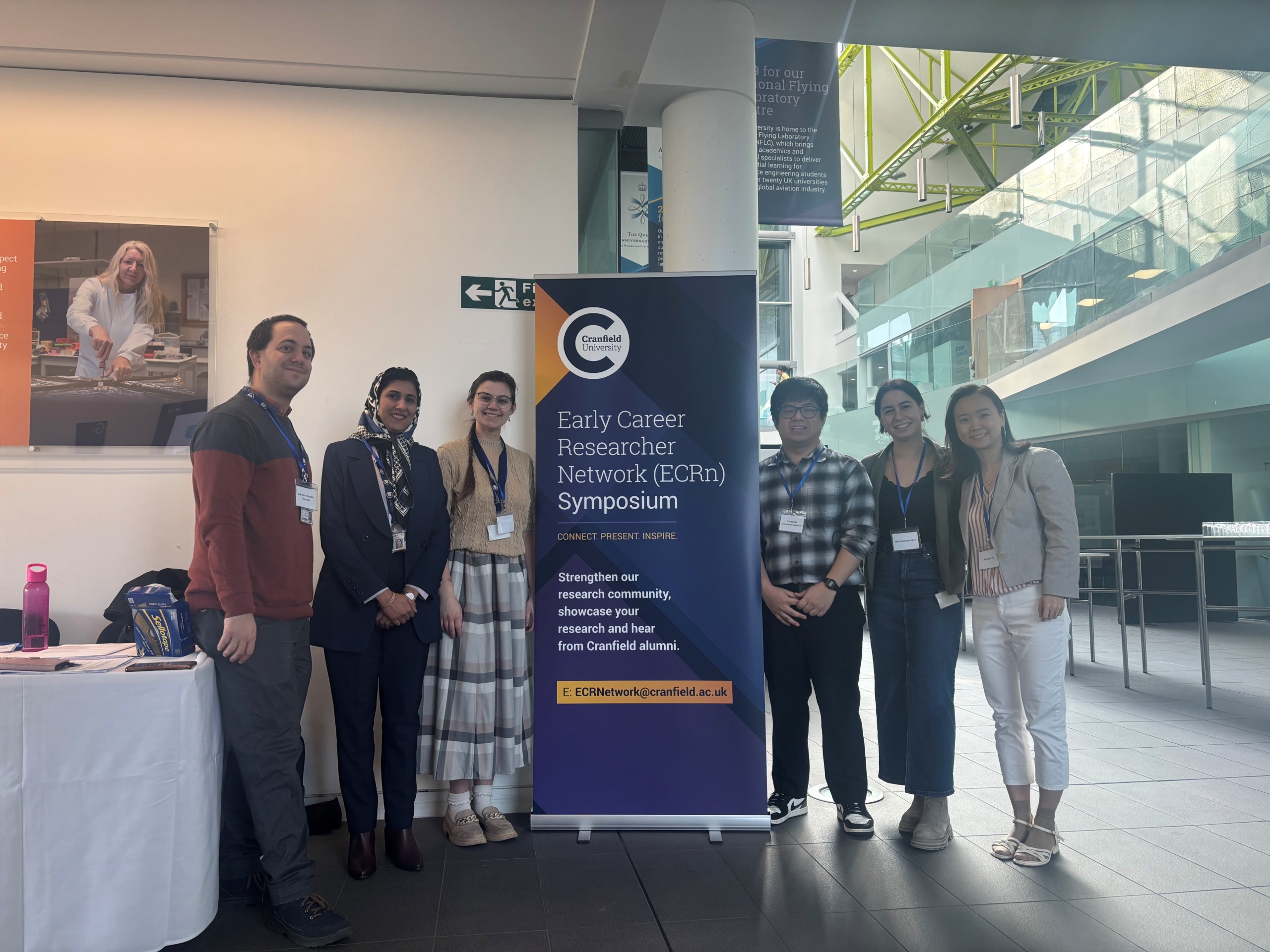
Building more than research: Reflections from the ECRn Symposium 2026
There’s something quietly powerful about a room full of early career researchers. Not just the ideas, although there were plenty of those—but the conversations, the curiosity, and the sense that everyone is figuring things ...
Library services over Easter, 3-6 April
Kings Norton Library will remain open for study 24/7. You will need your University ID card to enter the building and can use the self-service machines to borrow and return items as usual. Barrington Library ...

How do I access the full-text of Harvard Business Review (HBR)?
This is a frequently asked question, and it's worth knowing how to access this key management journal. So, how do you access HBR in full-text? The short answer is via our eJournals finder. You can find ...
Engineering problem to solve? Let Knovel help you find a solution
Did you know that Knovel provides you with more than just eBooks? Knovel is a key database for many engineering, mechanical and materials courses here at Cranfield University, and contains content from an extensive range ...
What happens when female scholars meet influential leaders?
On the 5 March 2026, our British Council Women in STEM Scholars had the privilege of sitting down with two excellent role models of industry and academia: Professor Dame Karen Holford, ...
From MSc to CEO: Igniting a research revolution
For many, a master’s degree is achieving a big milestone. Kilyan Ocampo, Computational Fluid Dynamics alumni shares how studying at Cranfield helped launch his career in the energy sector. Today, Kilyan ...