

10,000 Cranfield journal articles available via open access!
06/02/2019

We are delighted to announce that the 10,000th journal article has been added to CERES, the publicly accessible repository of the University’s research outputs. It includes journal articles, PhD theses, book chapters, working papers and technical reports.
The article helping us to achieve this target is:
Alexander G. Rumson and Stephen H. Hallett. Innovations in the use of data facilitating insurance as a resilience mechanism for coastal flood risk. Science of the Total Environment, Volume 661, 15 April 2019, Pages 598-612.
How it became number 10,000
As soon as Alexander and Stephen had their paper accepted by the journal on 10 January 2019, they sent the details and their author accepted manuscript to the Library’s accepted@ mailbox. Library staff then swiftly processed it, and as it was a Gold article it was made publicly available straight away on CERES.
Stephen says:
“For us as authors, having our work made Open Access and placed through CERES greatly increases the impact of the research, making the work easily accessible to the wide range of stakeholders and interested parties associated with the project, and beyond. We are delighted to have this recognition for our paper, and thank library staff for their advice and guidance in the process.”
About CERES and Open Access
CERES was launched in January 2004 and was originally called QuePrints. Since then, it has averaged over 52,000 downloads per month, placing it amongst the top ten of all institutional repositories in the UK.
Making Cranfield’s research open access (available publicly with no paywall) is essential, not only for the REF, and as a fulfilment of funding requirements, but also as a showcase for Cranfield’s expertise to the outside world.
“CERES is a great resource providing free access to the results of research carried out at Cranfield for more than a decade. It will play a key role in our contribution to the REF 2021 exercise, providing open access to our best research.” (Andrew Kirchner, REF Delivery Manager, Research and Innovation Office)
Could your paper help us achieve the next milestone?
Please help us to continue building CERES by ensuring you deposit your research effectively. All you need to do is:
- As soon as you receive it, forward your acceptance email from the publisher to researchsupport@cranfield.ac.uk. It is important to do this as soon as possible.
- Attach a copy of your Author Accepted Manuscript.
- Our Open Access Team will then process it in CRIS for inclusion in CERES as soon as any embargoes allow.
*What exactly IS an Author Accepted Manuscript?
The author accepted manuscript (AAM) is the final draft manuscript, as accepted for publication by a journal, including modifications based on referees’ suggestions, before it has undergone copyediting, typesetting and proof correction from the publisher. Please ensure it is a ‘clean’ copy – no highlighted or crossed-out text – as the article will be public and therefore needs to look as professional as possible.
Questions?
If you have any questions about the open access process please contact us via researchsupport@cranfield.ac.uk
You can also sign up for the “Ask a research support expert” webinar on ‘Making your work Open Access’, Wednesday 22 May 1-2pm. Book your place from the webinars page on the intranet.
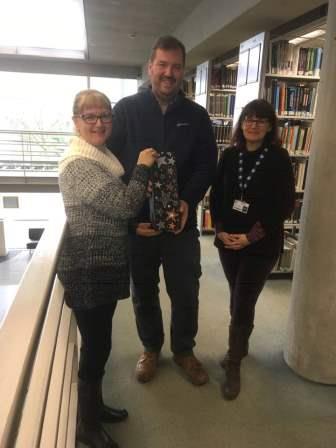
Steve Hallett collecting his prize from Sharon and Mel in our Open Access Team

Al Rumson

Categories & Tags:
Leave a comment on this post:
You might also like…
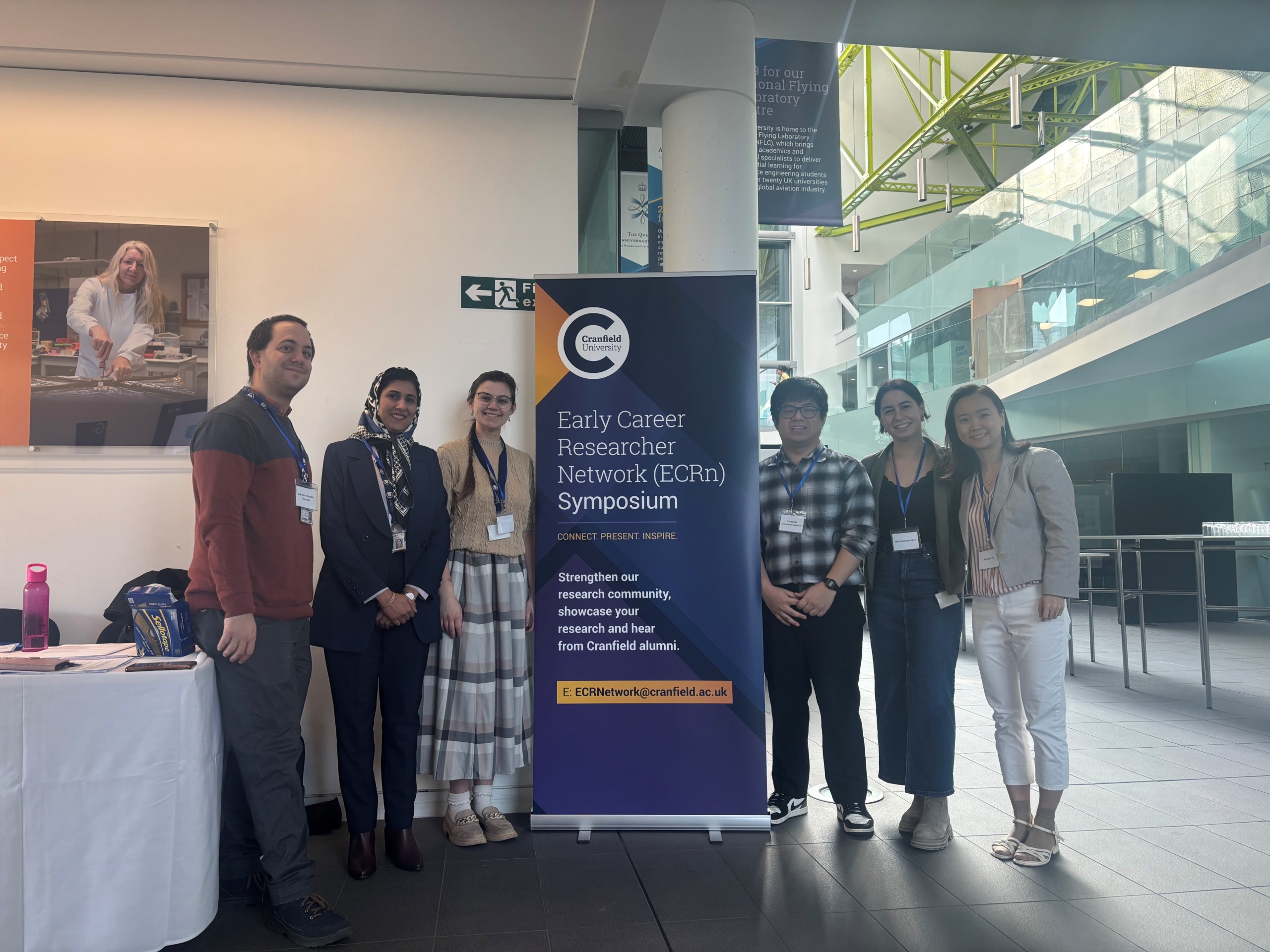
Building more than research: Reflections from the ECRn Symposium 2026
There’s something quietly powerful about a room full of early career researchers. Not just the ideas, although there were plenty of those—but the conversations, the curiosity, and the sense that everyone is figuring things ...
Library services over Easter, 3-6 April
Kings Norton Library will remain open for study 24/7. You will need your University ID card to enter the building and can use the self-service machines to borrow and return items as usual. Barrington Library ...

How do I access the full-text of Harvard Business Review (HBR)?
This is a frequently asked question, and it's worth knowing how to access this key management journal. So, how do you access HBR in full-text? The short answer is via our eJournals finder. You can find ...

Engineering problem to solve? Let Knovel help you find a solution
Did you know that Knovel provides you with more than just eBooks? Knovel is a key database for many engineering, mechanical and materials courses here at Cranfield University, and contains content from an extensive range ...
What happens when female scholars meet influential leaders?
On the 5 March 2026, our British Council Women in STEM Scholars had the privilege of sitting down with two excellent role models of industry and academia: Professor Dame Karen Holford, ...
From MSc to CEO: Igniting a research revolution
For many, a master’s degree is achieving a big milestone. Kilyan Ocampo, Computational Fluid Dynamics alumni shares how studying at Cranfield helped launch his career in the energy sector. Today, Kilyan ...