

Supply chain management students’ warehouse visits
25/01/2017
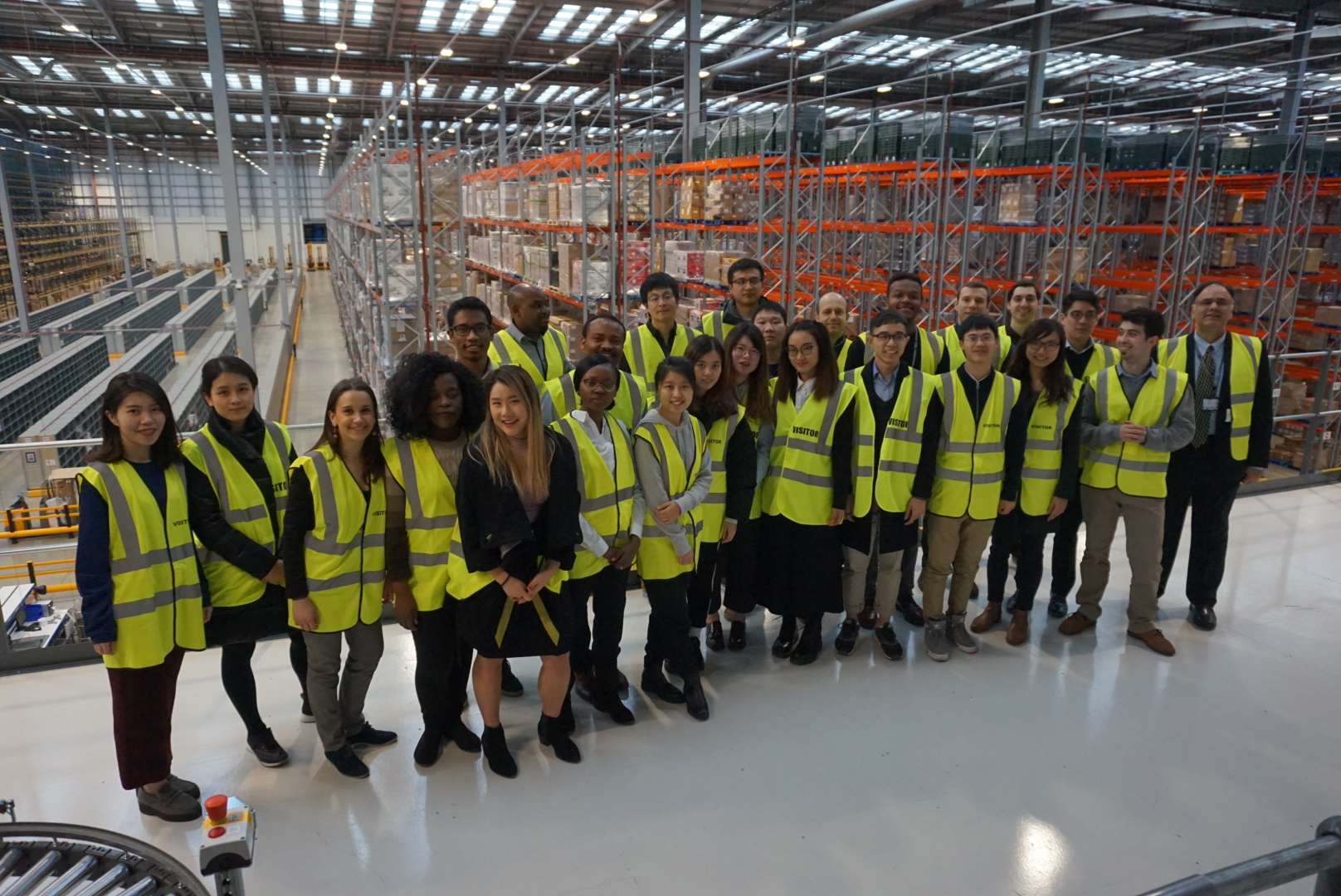
This was an absolutely wonderful experience! Before I came to Cranfield, I knew that the university offered a warehouse visit for both Procurement and Supply Chain Management and Logistics and Supply Chain Management students. So, let me tell you something truthful! To be honest, it was the warehouse visit opportunity drove me to choose this university.
I’ve been to logistics centres before, while I was working as a consultant specialising in the logistics sector. Well-equipped warehouse centres amazed me! I could not imagine how warehouses could include high-tech facilities and equipment before I experienced it for myself.
There are five main steps in the warehouse process: Goods in – Storage – Picking – Packing – Goods out
Every step can be automated (but of course, it requires a load of money!) Plus, logistics centres include a lot of internal information about the company. In other words, many companies do not really offer warehouse visits since it is part of their internal ‘intellectual property’.
But back to our warehouse visit. We divided into three groups. Some of them went to Waitrose (UK grocery company), River Island (clothing company) and John Lewis (British department store). I went to the John Lewis main hub in Milton Keynes. John Lewis is a department store with online shopping which includes fashion, homeware, sports and electrical items.
Basically, they handle many products and work in both business to consumer and business to business markets. Plus, the centre I visited is the main hub distribution centre, which means I could see many things! I cannot really mention specifically what I’ve seen at the centre since it is part of their internal information. But I can say that was clean, neat, tidy, high-technology, warm (most of centres I visited in the past were very cold) and had high security!
Visiting warehouse is very special experience, and seeing an automated distribution centre in particular is a very unique opportunity. The best course offers the best opportunities to the students! That’s our course!
[su_custom_gallery source=”media: 5302,5303,5304″ width=”808″ height=”540″ title=”never”]

Categories & Tags:
Leave a comment on this post:
You might also like…

Keen to develop your study skills?
Alongside the technical skills and academic knowledge that you will gain on your course, as a Cranfield student you have the opportunity to develop a range of other skills that can enhance your learning experience. ...

The V-conomy: powering the sixth wave of global economic growth
The world could be on the verge of a major surge in economic growth and development, driven by the convergence of AI and clean energy technology. Waiting to ride the K-wave The Russian ...

Need help using the Python programming language?
We know some of our students are currently trying to learn Python, so we wanted to make you aware of some great LinkedIn Learning videos that can help. But don't you have to pay for ...

What does it really take to become a Chevening Scholar?
Say “Turkmenistan” to most people and you’ll get a blank look. That was true when I left Ashgabat for the UK to study an MSc in Logistics and Supply Chain Management at Cranfield University ...

Get a head start on referencing and plagiarism
We offer a module on Referencing And Avoiding Plagiarism which you can find on your Canvas dashboard. It explains the role and importance of citing references and how to incorporate the work of other authors ...

How Cranfield shaped my journey as an Aerospace Engineer
If I'm being specific about the moment it clicked, it was reading a paper called "On the Role and Challenges of Computational Fluid Dynamics (CFD) in the Aerospace Industry" by two Boeing engineers, P. ...