


The Cranfield Experience: Management and Corporate Sustainability MSc
24/06/2021
As a professional, taking a break from work to go back into higher education abroad is a critical decision. While a Master’s degree is always useful, the resources and commitment required to do well academically make the choice of course, university and future career path extremely important. The Management and Corporate Sustainability MSc (MCS) from Cranfield School of Management turned out to be a rational choice and the perfect platform to launch my international career from.
To me, the best thing about MCS is our faculty and staff who turned adversity into advantage during the COVID-19 pandemic. Our professors took the opportunity to arrange a series of online lectures by renowned sustainability experts from prestigious organisations across the globe. As a small group, we had a wonderful time networking directly with eminent personalities, who we otherwise might not have had access to. In retrospect, I feel connecting with so many experts may not have been possible through face-to-face classes. Our cohort of 12 students from seven nationalities, proved to be incredibly diverse, talented, friendly, and competitive, each with our own unique perspectives. The lessons came alive during our discussions, through application in real life situations from around the world. Such cross-cultural exposure helped me gain a deeper understanding of complex sustainability issues, potential solutions and leadership skills required. The faculty and staff were able to bring together such an international group of students and experts, while maintaining a highly interactive and encouraging learning environment, which I found highly commendable.
We had the opportunity to rub shoulders with students from other disciplines as well. In the Leading Corporate Sustainability module, I had teammates from the School of Water, Energy and Environment, and together we developed sustainability recommendations for the footwear giant – Adidas Group. In the Social Entrepreneurship module, with teammates from the Management and Entrepreneurship MSc, we developed recommendations for Water and Sanitation for the Urban Poor (WSUP) and the Southern Water and Sanitation Company (SWSC) in Zambia, to launch strategic behaviour change initiatives to encourage low-income communities in peri-urban areas to connect to the Livingstone’s water services. We shared many modules with the Management MSc, where we learnt the ropes of managing businesses, with some of the brightest minds in the School of Management. Such intense interaction developed into friendships, which is an advantage because we learnt exactly how to navigate different business scenarios, contexts, and mindsets to lead collective efforts culminating into a series of sustainable solutions. We had great fun playing the “Exploring Sustainable Futures” game which is a simulation to sensitise students to the inter-linked behaviours of businesses, NGOs, governments and individuals during crisis situations and their response to sustainability-related issues. As a result, the learning spilled over from classrooms and online sessions, into socially distanced get-togethers (whenever allowed) and enabled us to emerge from a chaotic time with a treasure trove of fond memories.
The Cranfield experience extends far beyond conventional learning. I got to participate in competitions like the Unilever Challenge and the PRME writing competition, handled the official MCS Instagram account as the Social Media Representative, organised events as the Vice President of the Cranfield Consulting Club, became a part of the Green Team and helped the Cranfield Sustainability Network publicise one event. At our request, our professors even arranged a three-day workshop on the Global Reporting Initiative (GRI) framework. We also cheered together proudly when the world’s first zero-emission aircraft, by Zero Avia, test-flew successfully from the Cranfield Airport. A great balance between studies and extra-curricular activities kept our motivation and confidence levels high throughout all semesters, especially with the staff and faculty taking adequate care to support students’ mental health.
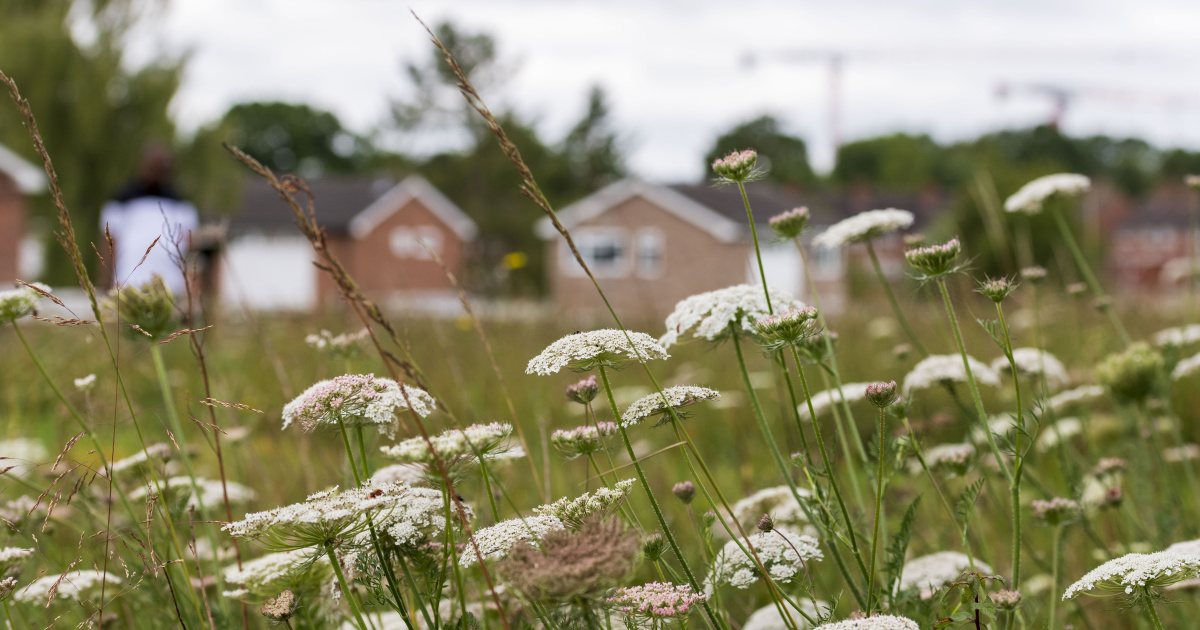
At the university, perhaps my biggest learning was to remind myself to be in touch with nature. The beautiful campus and surroundings rekindled my passion for sustainable development.
The Cranfield experience helped me evolve as a professional ready to take on complex sustainability challenges anywhere in the world. As I write this blog, I realise that like all good things in life, this experience too has opened new avenues for exploration and opportunities. My technical knowledge is now complemented by managerial and corporate sustainability leadership skills, which make me capable of shouldering bigger responsibilities. As corporates slowly but surely embrace sustainability to stay competitive, I feel confident in my abilities to ensure business growth while conserving the natural environment, thus ensuring sustainable development.

Categories & Tags:
Leave a comment on this post:
Comments are closed.
You might also like…
Cranfield: an environment where innovation thrives
The latest Knowledge Exchange Framework rankings from UK Research and Innovation (UKRI) gives an insight into the real and meaningful impact that UK universities have. The seven categories that make up KEF6 cover everything ...
How Cranfield accelerated my career in Logistics and Supply Chain Management
After graduating from the MSc in Logistics and Supply Chain Management at Cranfield University, I've been reflecting on the experiences that made my journey so valuable and the impact it has had on my ...

Mendeley: a powerful tool to organise and manage your references
Are you looking for a way to manage your references, create in-text citations and reference lists for your assignments or thesis? If so, you may wish to consider using Mendeley. What is it? Mendeley is ...

Keen to develop your study skills?
Alongside the technical skills and academic knowledge that you will gain on your course, as a Cranfield student you have the opportunity to develop a range of other skills that can enhance your learning experience. ...

The V-conomy: powering the sixth wave of global economic growth
The world could be on the verge of a major surge in economic growth and development, driven by the convergence of AI and clean energy technology. Waiting to ride the K-wave The Russian ...

Need help using the Python programming language?
We know some of our students are currently trying to learn Python, so we wanted to make you aware of some great LinkedIn Learning videos that can help. But don't you have to pay for ...
Interesting and marvelous writing !