


Playing games at work? Why business simulations can help you to run your business without wasting money or resources
04/08/2017

What can help you to run a business without wasting money or resources?
Thirty two years ago in 1985, an article appeared in the Financial Times crowning the latest winners of the UK’s National Management Championship, a simulation competition that challenged teams from businesses across the country to make the biggest profit with a fictional enterprise. At the time, the government secretary presenting the prizes said “’in survey after survey, British managers at almost all levels have been shown to be less well qualified, less well trained, display less technological aptitude and to have less grasp of the essential requirements of good industrial relations than their counterparts abroad.” For a variety of reasons (one imagines), the National Management Championship came to an end in the 90s, as businesses preferred to enter more glamorous industry awards which arguably have more PR impact with customers.
But, as we move into industry 4.0 and grapple with the implications and potential of digital technologies, big data, cyber-security and artificial intelligence – not to mention good old-fashioned customer expectations – are we confident that managers in the UK and around the world have developed the ‘technological aptitude and the essential requirements of good industrial relations’ that we felt were lacking three decades ago?
Practice makes perfect: what’s the point of business simulation?
The challenges we face now might be different (at least ostensibly) but the capacity to address them is still underpinned by the same core skills: strategic ability, financial acumen and an ability to manage team dynamics. And what about the need for a simulated competition? Does that belong in the past? Don’t we get enough ‘on the job’ challenges to make this kind of format redundant?
Well, the simple difference is that a simulation provides an opportunity to fail in a risk-free environment. It also gives senior managers the chance to see how their teams behave when they are in the ‘flow’ state, to use a term coined by psychologist Mihály Csíkszentmihályi, also known as ‘being in the zone’. Research has shown that simulations build 20% more confidence for on-the-job application of learned knowledge than classroom instruction. Retention of procedural knowledge was also 14% higher than in classroom instruction. Not only is retention superior, but the dynamic nature of simulations allow organisations to accelerate understanding and practical application of complex theory to large audiences – and fast.
My colleague who has helped in the development of our simulations over the years reminded me recently that “our mission has always been to enhance the management culture to help people to live in a safer and better world where everyone knows how to run a business without wasting money and resources.” But the truly valuable thing about simulations is that they don’t just focus on managers, they also develop business management knowledge at every level of the organisation. It’s a way to allow better or freer flowing conversations through the organisation. Where resilience and making change happen in an organisation is a priority, simulations can contribute to how one can influence change positively from the ground up. Just as marketing is not the sole responsibility of marketers, understanding business, strategy and connecting the different parts of the company should be understood and owned by all levels of the organisation.
The value of strategic ability, financial acumen and positive management of team dynamics
We’re often approached by businesses who want to design bespoke training based on their perceived challenges. But, in many cases, through talking to the teams, we find that many of the problems can be addressed through refocusing on strategic ability, financial acumen and how to manage team dynamics. As obvious as it sounds, these things often get lost in the daily grind of ‘doing stuff’ and without proper attention being paid to them, it’s surprising how quickly they can wither and die!
Simulations are now widely used across many industries and here in the Centre for Customised Executive Development we design our programmes to turn knowledge into action, to help towards preparedness to learn, to break down barriers, to see and understand the bigger picture, to help individuals understand the role they play and have a voice and to celebrate achievements.
The new Executive Business Challenge – a bigger, better reincarnation of the National Management Championship
Our revival of the National Management Championship was conceived to engage organisations around the world in a simple opportunity of competition. The competition is designed to help in developing high-performing teams and every part is linked to faculty experts who will help all participants take their learning back into the work place. In short, it’s all about the application.
Overview of the Executive Business Challenge*
- The competition runs over a 10 week period which includes individual pre-work, two webinars, and the teamwork business simulation (data analysis, running of the virtual business and submission of six sets of decisions)
- Enter an unlimited number of teams of five – directors, graduates, managers, high potentials, executives
- First prize is a Centre for Customised Executive Development Masterclass of your choice for up to 30 people in your company (UK based or international webinar) with a Virtual Reality experience on the same day (UK based companies only) and a Cranfield School of Management Open Executive Programme for each winning team member (each programme up to the value of £5,000)
- Second prize is a Centre for Customised Executive Development Masterclass of your choice for up to 30 people in your company (UK based or international webinar)
- The deadline for registration is 15 September 2017
Our experience shows that engagement is not only incredibly strong during and after the business simulation but also remains an overarching thread within the culture of the organisation. The cohorts that have been through this experience form strong networks, feel more empowered and understand their business environment better.
Using a virtual simulation as a pre-programme engagement solution – getting to know one another, identifying knowledge and sharing that knowledge in a risk-free environment – can be especially important in today’s world, where teams are often spread across multiple locations, sometimes globally, operating in different time zones, cultural climates and facing their own local challenges.
What is the future for business games?
With social and mobile learning growing in popularity, business games continue to have a part to play. At a conference a couple of years ago, it was still felt that 2D imaging for a business simulation or game is more powerful than 3D gaming type environments with avatars. The question being: what value do these technologies add when the real value is in the discussions that the participants have between them? It’s important to remember that the business game or simulation is really just a vehicle to stimulate conversations.
The pace of change and the digital bombardment of the world in which we exist mean it’s never been more important to train our brains. Firstly, the methods developed during the repeated practices of a simulation enable us to reproduce that behaviour in the workplace. Secondly, witnessing the full creative and productive potential of staff is genuinely revolutionary for managers – it helps to reinforce the value of personal development over re-recruitment. Finally, any good simulation will create a capacity for reflection (which may or may not have existed beforehand) and that is the most valuable way in which to make a connection between the simulated experience and its application in real life.
—
Find out more about the international Executive Business Challenge…

Categories & Tags:
Leave a comment on this post:
You might also like…
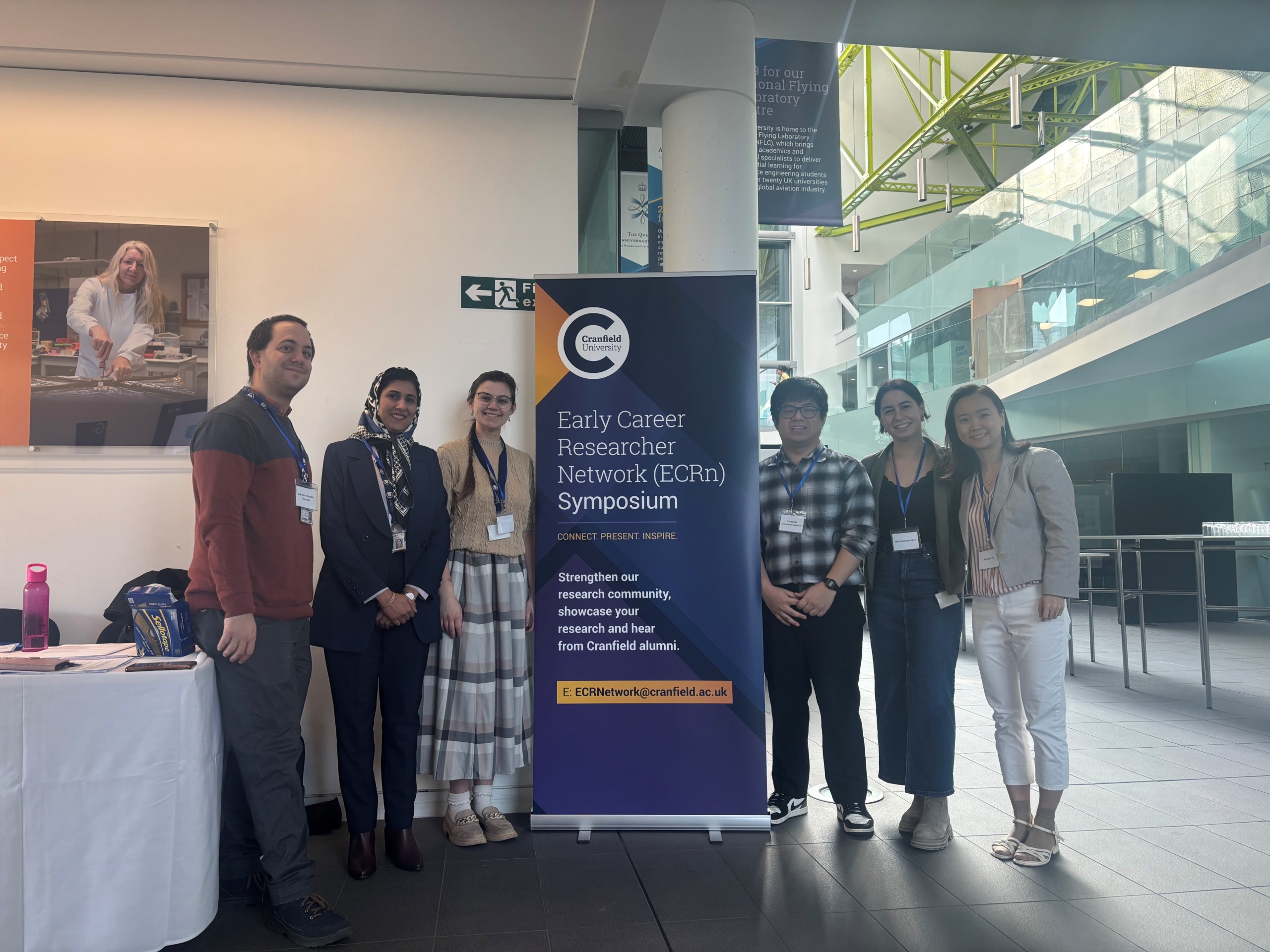
Building more than research: Reflections from the ECRn Symposium 2026
There’s something quietly powerful about a room full of early career researchers. Not just the ideas, although there were plenty of those—but the conversations, the curiosity, and the sense that everyone is figuring things ...

Library services over Easter, 3-6 April
Kings Norton Library will remain open for study 24/7. You will need your University ID card to enter the building and can use the self-service machines to borrow and return items as usual. Barrington Library ...

How do I access the full-text of Harvard Business Review (HBR)?
This is a frequently asked question, and it's worth knowing how to access this key management journal. So, how do you access HBR in full-text? The short answer is via our eJournals finder. You can find ...
Engineering problem to solve? Let Knovel help you find a solution
Did you know that Knovel provides you with more than just eBooks? Knovel is a key database for many engineering, mechanical and materials courses here at Cranfield University, and contains content from an extensive range ...
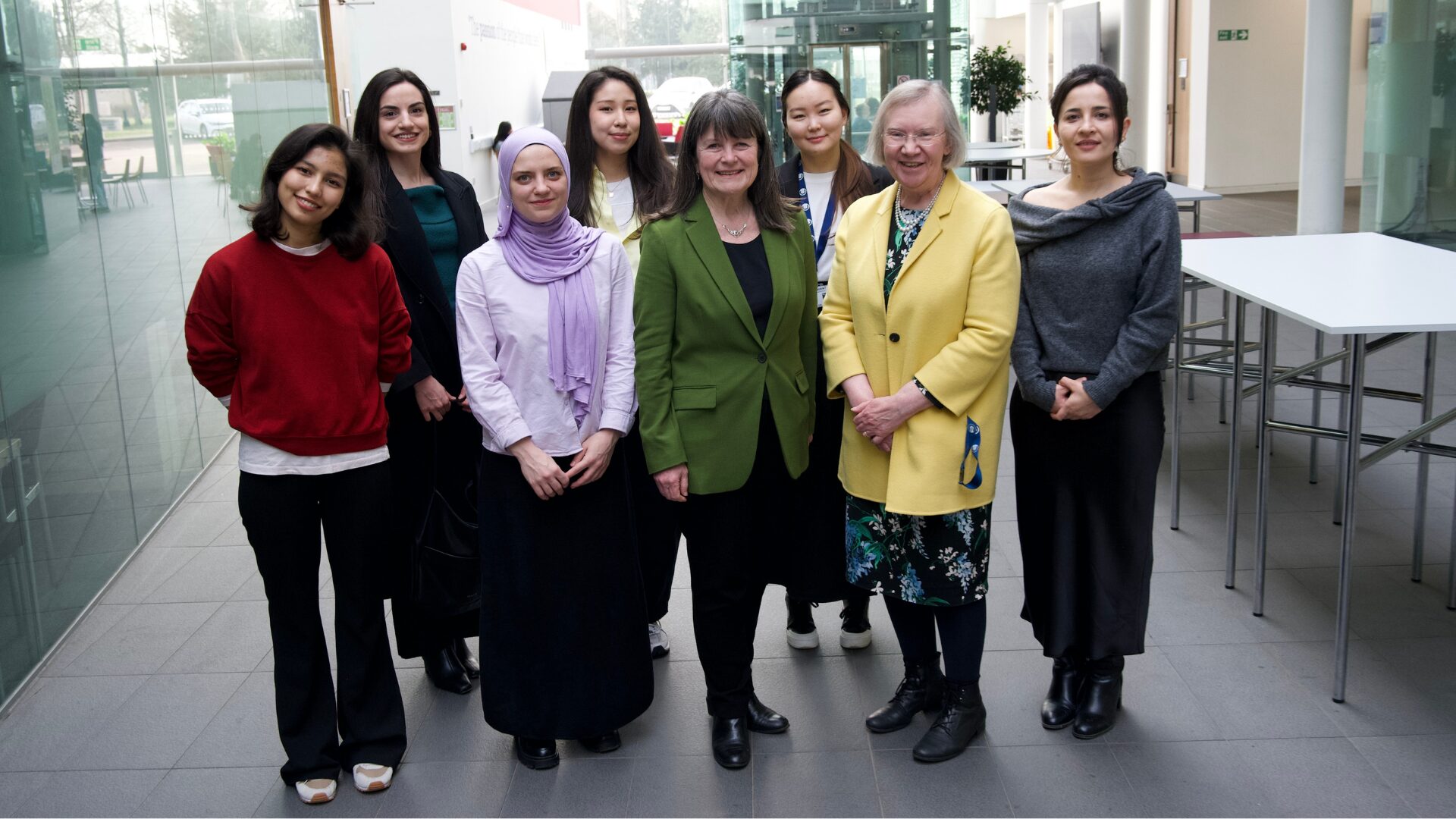
What happens when female scholars meet influential leaders?
On the 5 March 2026, our British Council Women in STEM Scholars had the privilege of sitting down with two excellent role models of industry and academia: Professor Dame Karen Holford, ...
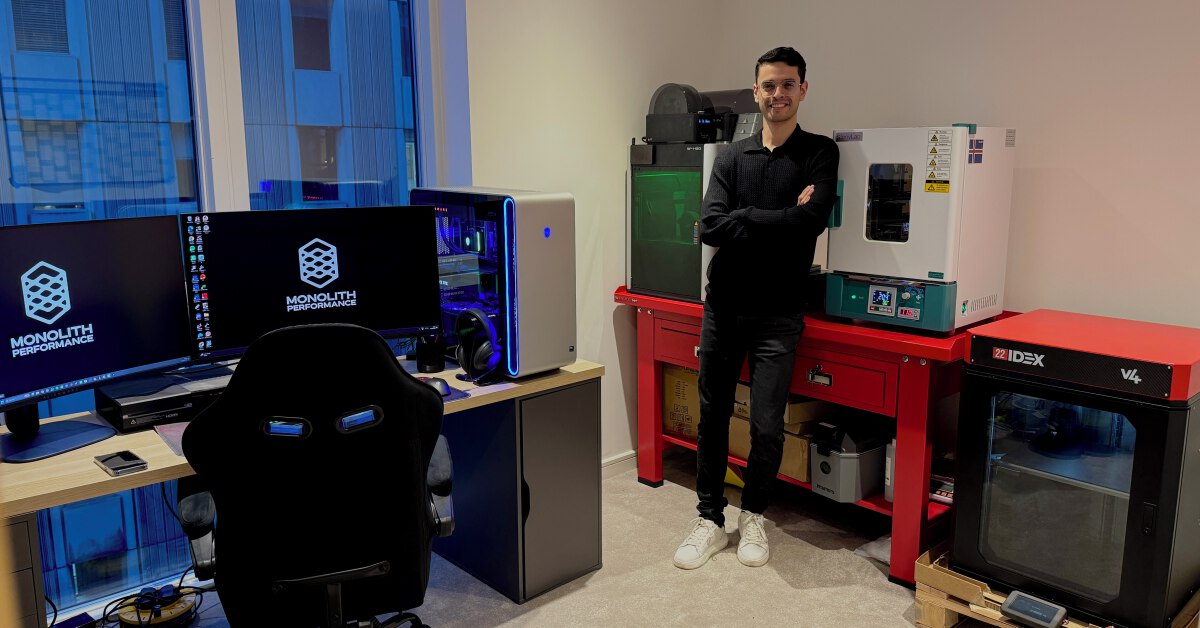
From MSc to CEO: Igniting a research revolution
For many, a master’s degree is achieving a big milestone. Kilyan Ocampo, Computational Fluid Dynamics alumni shares how studying at Cranfield helped launch his career in the energy sector. Today, Kilyan ...