

L’ORÉAL: “a pure player in beauty for 105 years”
10/05/2017
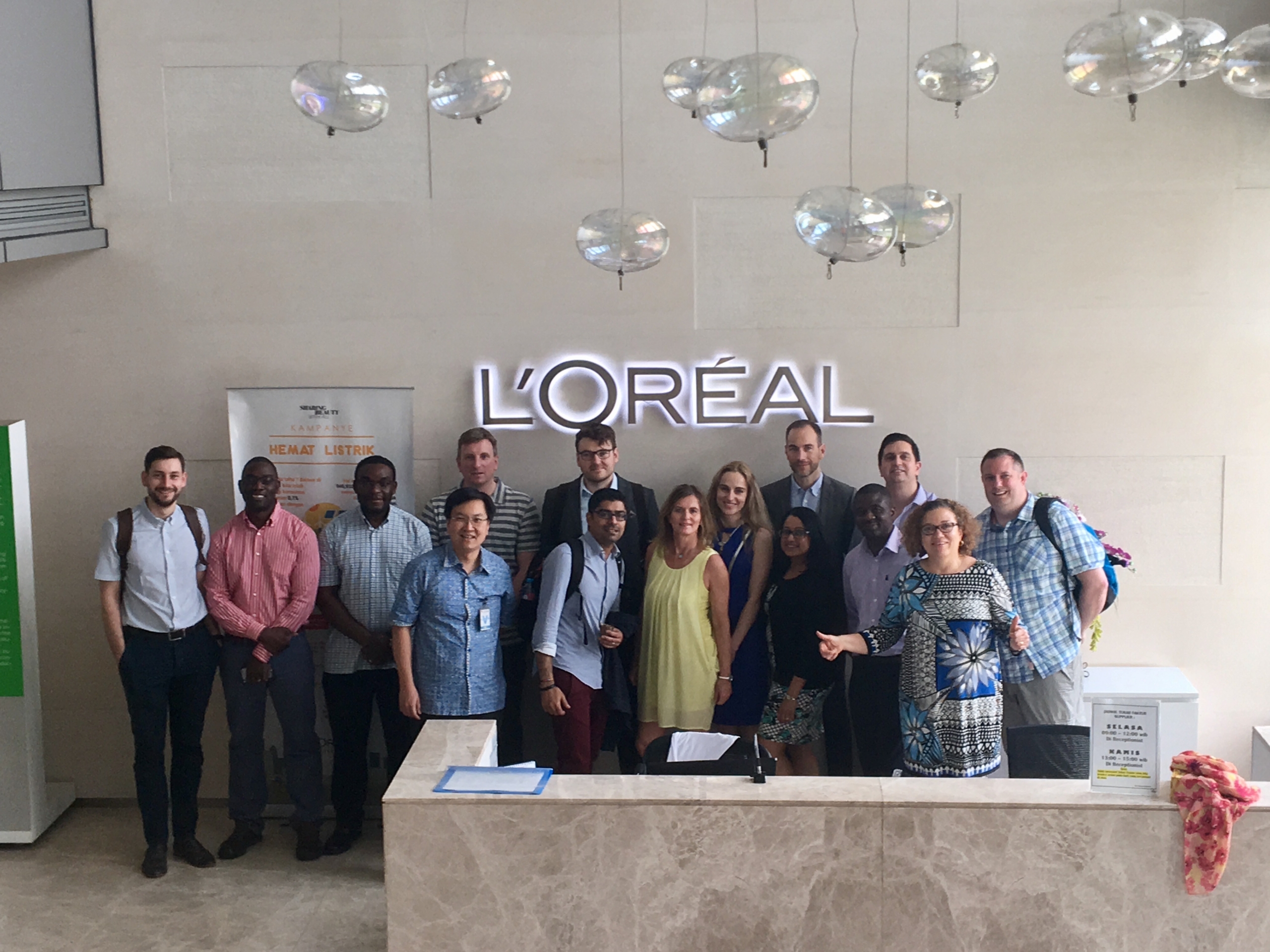
 Tuesday afternoon was dedicated to the world of beauty with a visit to the L’ORÉAL plant in Jababeka. The factory is producing skin and haircare products for south-east Asia. It was opened in 2012, employs around 450 employees and with the size of premises, 220 000m², it is the biggest in the entire L’ORÉAL group. Concerning the final sales, 46% of production is made for the local Indonesian market, 35% goes to Thailand and the rest of 19% is exported to other ASEAN countries.
After the plant director Mr. Guillaume Delaplace gave us an introduction to the L’ORÉAL story and supply chain practices, we were taken on a tour around the production lines. They contain weighing, processing and filling. What impressed us most was the filling and packaging section for cosmetics; not only for the state-of-the-art equipment but also for the subtle, sweet, fruity smells of perfumes used in the creams. Today the process is partly manual and partly robotic. The plan is to make this section fully automated with no need for human work besides workers in the control room and machine settings. One of such fully robotic stations produces 2,000,000 units (imagine cream pots) a month. Recently the total face care production accounts for around 12,000,000 units per month and hair care around 2,000,000 units per month. Just to show how cosmetics are popular in Indonesia, there are 500 of new products introduced by L’ORÉAL every year.
Written by Alena Laskova, Matthew Heaford and Levan Merkviladze

Categories & Tags:
Leave a comment on this post:
You might also like…

Keen to develop your study skills?
Alongside the technical skills and academic knowledge that you will gain on your course, as a Cranfield student you have the opportunity to develop a range of other skills that can enhance your learning experience. ...
The V-conomy: powering the sixth wave of global economic growth
The world could be on the verge of a major surge in economic growth and development, driven by the convergence of AI and clean energy technology. Waiting to ride the K-wave The Russian ...

Need help using the Python programming language?
We know some of our students are currently trying to learn Python, so we wanted to make you aware of some great LinkedIn Learning videos that can help. But don't you have to pay for ...

What does it really take to become a Chevening Scholar?
Say “Turkmenistan” to most people and you’ll get a blank look. That was true when I left Ashgabat for the UK to study an MSc in Logistics and Supply Chain Management at Cranfield University ...

Get a head start on referencing and plagiarism
We offer a module on Referencing And Avoiding Plagiarism which you can find on your Canvas dashboard. It explains the role and importance of citing references and how to incorporate the work of other authors ...
How Cranfield shaped my journey as an Aerospace Engineer
If I'm being specific about the moment it clicked, it was reading a paper called "On the Role and Challenges of Computational Fluid Dynamics (CFD) in the Aerospace Industry" by two Boeing engineers, P. ...