


Want an update on my PhD all about jellyfish?
04/03/2021
Could you tell me about your PhD?
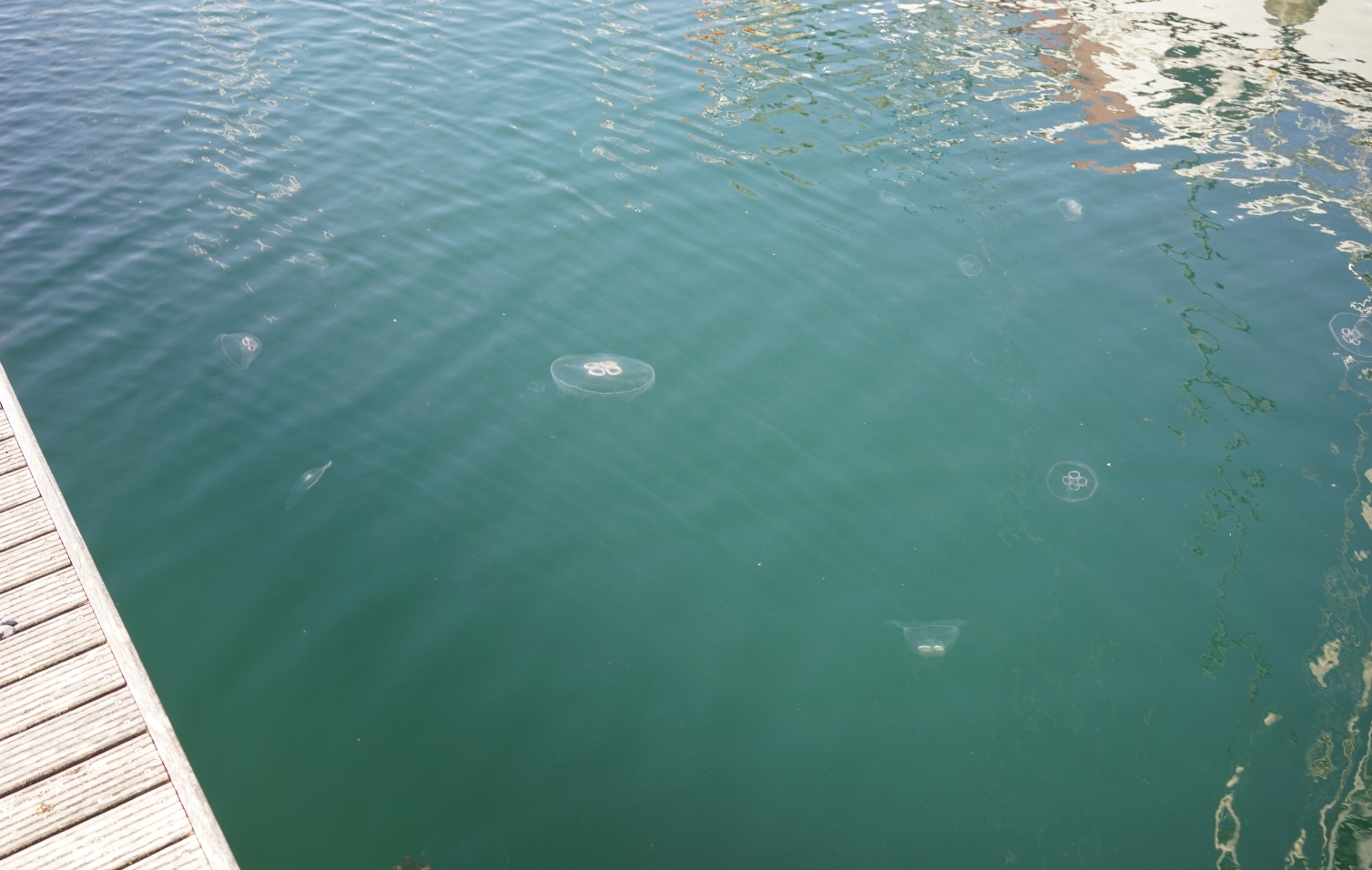
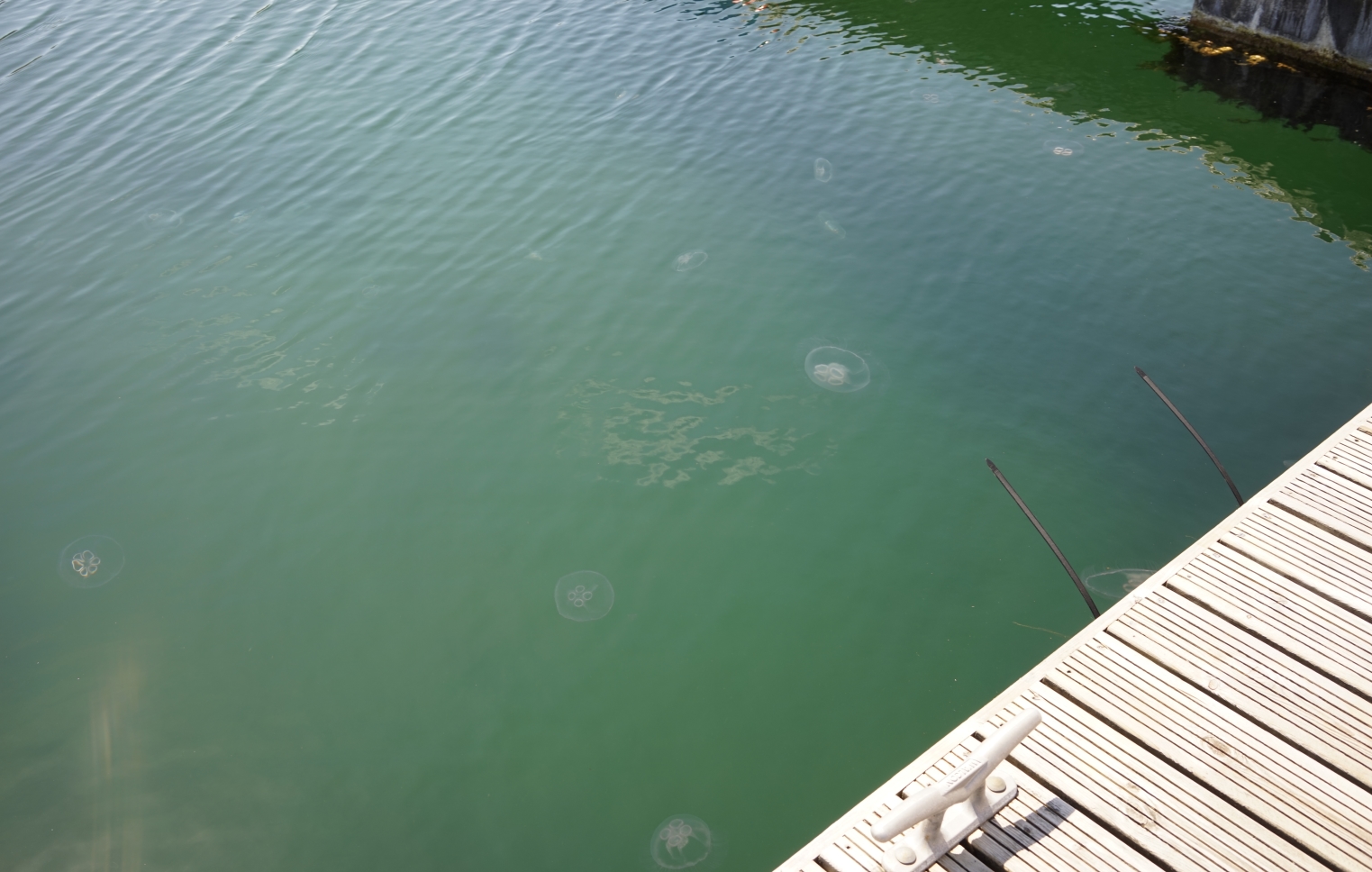
For my PhD I am working with EDF Energy and I’m developing an early warning system using drones/UAVs, to provide early warning for what’s called marine Ingress. Marine Ingress is an unwanted biomass in the ocean, and this is generally in the form of large amounts of seaweed or jellyfish. What happens is this marine ingress gets sucked into water intakes at coastal industries, such as nuclear power plants, and can clog up the water filtration systems. The aim is to provide a minimum of six to seven hours of warning prior to these potential events impacting coastal industries. So, despite working very closely with the nuclear industry, the work can also be applied to desalination plants and other industries such as marine finfish aquaculture. This is because they get affected by the same problems and there is very little warning at all when these events happen.
Is there anything else you still would like to achieve within your PhD research?
I guess what I’d like to achieve is to get my PhD!!
In terms of the technical side of work, I am in my final year of my four-year iCASE PhD. My final year is going to be a year of tying up loose ends within the project. I’ve got some of the main parts of the project already completed and published in papers. I hope to adapt what I have done for the model development in the machine learning detection side of things for the Jellyfish. I need to incorporate the seaweed aspect into this or adapt the model to the seaweed as well as the jellyfish and collect some spectral measurements for jellyfish. Covid-19 has disrupted the more natural flow of my work and the logical steps I aimed and set out to take. I had to chop and change the timeline of my project. That has been a short-term challenge to maintain progression on the project, despite the disruptions that everyone’s having at the moment due to Covid-19. It’s been particularly challenging as my data collection is very seasonal so a few months missed at a specific time of year can be very difficult!
What was your career journey before you started your PhD?
I had a gap year after I completed my A Levels, probably because I didn’t feel ready for University at that point! I went to work in industry at an engineering company and worked on the world’s largest underground train station doing all the suspended ceilings and other associated work with that. Very different to what I’m doing now! I left that job after a year and started my undergraduate degree in Zoology and did that for three years. I then progressed on to conservation biology, and then came straight to Cranfield after my MSc.
Throughout your PhD, what’s been your proudest moment so far?
I think the proudest moment would probably be the time that I got my first paper published!! When you do any degree be it a PhD, undergrad or postgraduate, you’re always assimilating information, mainly by reading and learning from literature. So to be able to get my own research out there, published in reputable journals, it was very exciting! It eventually felt like all the hard work and stress leading up to that point was worth it!
What excites you about your area of research?
I guess it would have to be the unknown side to it! Outside of my research, I am always exploring new avenues and also enjoy a lot of ‘extreme sports’. I always like to be at the cutting edge of knowledge or awareness in whatever I do. Before I started my PhD, a lot of the things that I have achieved within the PhD, people would say, “well it’s not possible!”. I’ve been able to solve problems with the detection of jellyfish in the ocean when people said, “it wasn’t possible”, but we’ve managed to do it! Also, from the biological side of it, I have a very strong interest in ecology, and invertebrates in particular. Jellyfish are generally fascinating from a biological point of view and have a lot of scope for further research. There are even certain jellyfish that are immortal!
Do you get to interact and collaborate with other PhD students?
Yes I do, a lot more so pre Covid-19! It has been very different working from home, as everybody will probably agree! I try to collaborate and work closely with my peers to bounce off ideas, to sense to check them, and the day-to-day challenges we all help each other with.
Why did you choose to come to Cranfield?
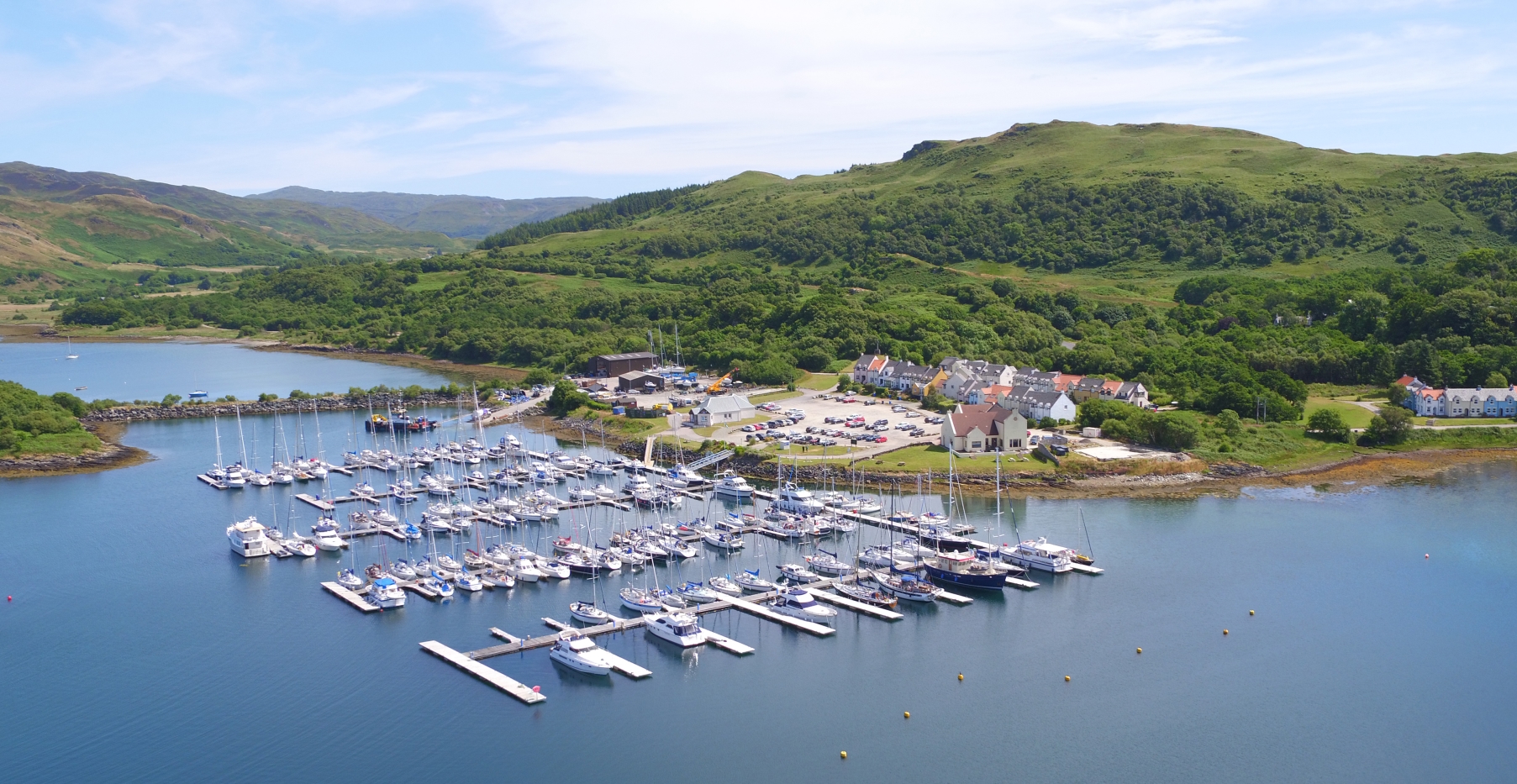
I came to Cranfield University because it interested me that they had a reputation for Applied Research rather than just plain research. In particular it was the PhD that I’m doing, and that it was a very nice balance between engineering and technological, but also the biological nature of it. So the machine learning and drone/UAV side of things mixed in with biology was of great interest to me.
What is it like completing your PhD at Cranfield?
I get the impression it’s quite different to other universities because of the nature of Cranfield as there aren’t any undergraduate students around! At my previous university it was predominantly undergraduates, as the majority of universities are in the UK, with a sort of a smattering of PhD students, who used to lecture on our courses. Doing a PhD at Cranfield gives you a lot of freedom to explore your own research interests and goals.
What have you enjoyed most about your time at Cranfield so far?
I’ve enjoyed the freedom of it all! Cranfield is a quiet place, it’s not all hustle and bustle like being right in the middle of a city. There are pros and cons to that, some people prefer it and some people don’t, I have enjoyed the quiet nature around the university. Also, with the lack of undergraduates at the university, we have more access to lecturers and the teaching staff and you can have conversations and spend time with them in a way that is probably, I can only imagine, more so compared to other universities. I think that’s critical, my previous university was very good at that as well and I got great value from that.
What are your plans for the future?
Funnily enough, I am working with the Cranfield Careers Team at the moment on this! To be perfectly honest, the main reason I did the PhD was for the personal challenge of doing it! It wasn’t necessarily because I wanted to go into academia, although I am considering it as an option now. I’m thinking about going into teaching or maybe even going into the commercial private industry working with something to do with drones. I’m also considering working for the government on related projects. I’m currently at the stage where I’m checking out my options and seeing what would be best for me.

Categories & Tags:
Leave a comment on this post:
You might also like…

Moving to the UK to study? How to plan for banking, exchange rates and transfers
Currency and banking are two of the most practical parts of financial planning for international students. They are also often the most overlooked. We asked Dr Lakshmy Subramanian, Course Director for Cranfield University's Banking, ...
Cranfield: an environment where innovation thrives
The latest Knowledge Exchange Framework rankings from UK Research and Innovation (UKRI) gives an insight into the real and meaningful impact that UK universities have. The seven categories that make up KEF6 cover everything ...
How Cranfield accelerated my career in Logistics and Supply Chain Management
After graduating from the MSc in Logistics and Supply Chain Management at Cranfield University, I've been reflecting on the experiences that made my journey so valuable and the impact it has had on my ...

Mendeley: a powerful tool to organise and manage your references
Are you looking for a way to manage your references, create in-text citations and reference lists for your assignments or thesis? If so, you may wish to consider using Mendeley. What is it? Mendeley is ...

Keen to develop your study skills?
Alongside the technical skills and academic knowledge that you will gain on your course, as a Cranfield student you have the opportunity to develop a range of other skills that can enhance your learning experience. ...

The V-conomy: powering the sixth wave of global economic growth
The world could be on the verge of a major surge in economic growth and development, driven by the convergence of AI and clean energy technology. Waiting to ride the K-wave The Russian ...