

PhD in flood management using Unmanned Aerial Vehicle images and Artificial Intelligence
11/01/2021
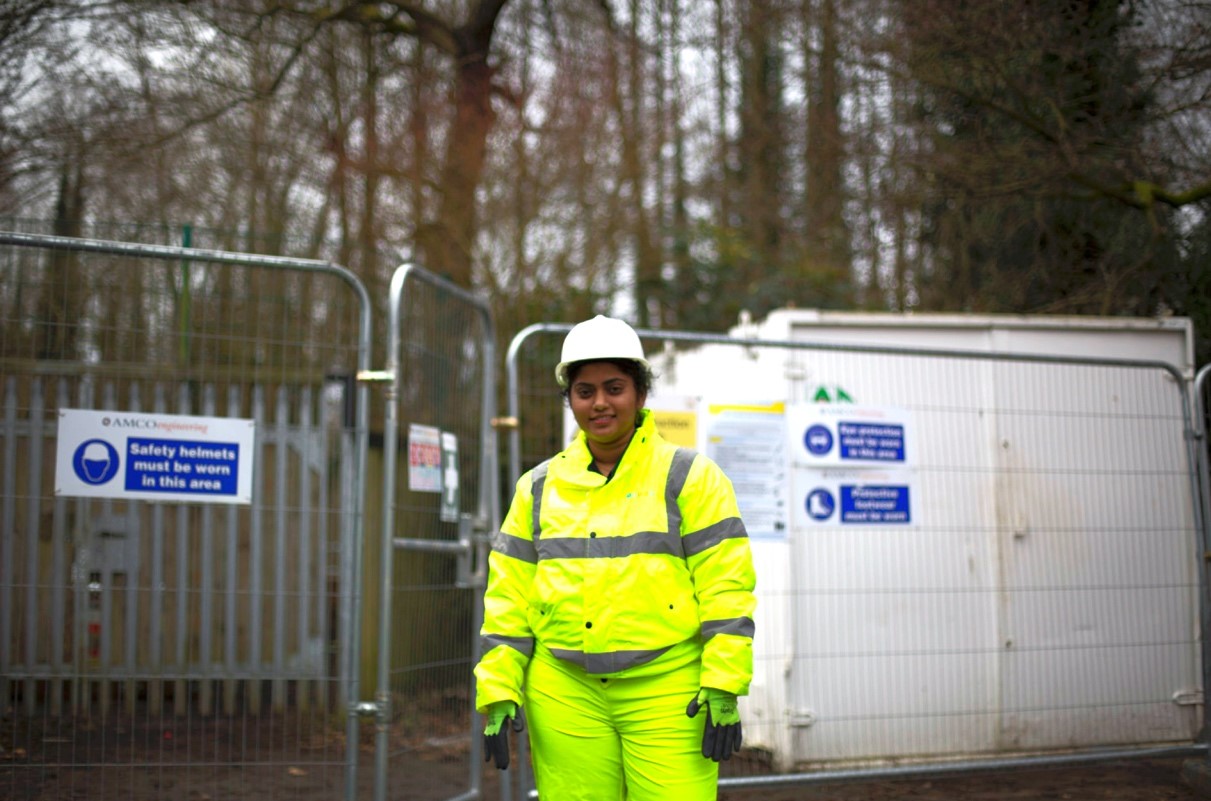
I am delighted that I have successfully secured the sponsorship for the PhD (Intelligent Dynamic Flood Response and Recovery Strategy) at Cranfield University. EPSRC, Atkins and Cranfield University together sponsor this PhD programme.
The PhD project aims to develop an AI-based tool using high-resolution Unmanned Aerial Vehicle (UAV) images to assess the impact of flooding on people and critical infrastructure assets. This tool will, consequently, facilitate efficient clean-up and recovery. I plan to extract the key flood parameters from the UAV imagery using computer vision technology to identify flood type and assess the damage caused. If I can further develop a method to quantify and classify the damage based on the parameters obtained from the image, it would enable me to recommend an effective flood response and recovery strategy. With the increasing effects of climate change, flooding is becoming more frequent and disastrous. Therefore, this study would be beneficial to improve urban flood resilience in the future.
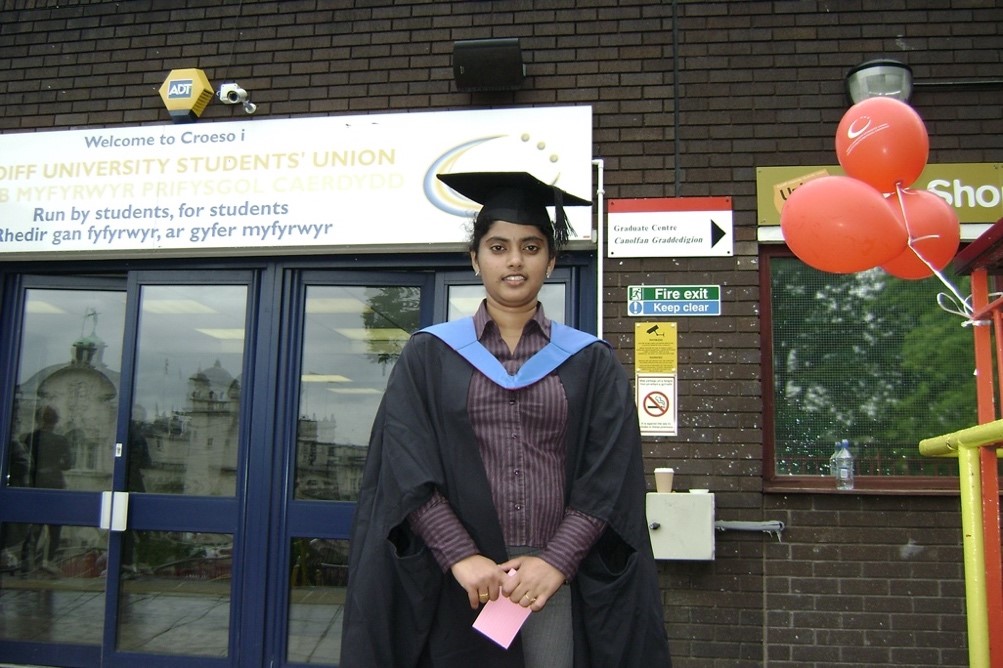
I had completed my bachelor’s degree in Civil Engineering at the University of Kerala in India. I then got a job as a software engineer through a campus placement after my bachelor’s studies, I decided to pursue my interest in water engineering a year after. I moved to the UK to start my master’s degree in Environmental Water Engineering at Cardiff University. After graduation, I started my career in the water industry and have worked as a civil engineer in the UK water industry for over 11 years now.
Whilst working in the UK water industry, I came across the possibilities of using digital technologies in the water industry. I aspire to combine my software engineering experience with water engineering to be a part of the research, solving complex environmental and water problems we face in our ever-changing environment. I had been looking for a PhD research opportunity that suited my aspirations and would help me contribute to the industry. When I came across this PhD vacancy, I did not have to think twice before applying for it!
In one of the projects I worked on, I used images obtained from an aerial survey to identify a leak in a factory’s trade effluent pipe. An experienced pilot carried out the survey using a helicopter. There were limitations in flying an aircraft in adverse weather conditions. As the pilot can control the UAV remotely, it will be safer, accessible, quicker, and cost-effective than other aerial survey methods. So, the use of UAVs for flood management has a clear advantage. I want to learn more about flight control techniques and any specific flight methods that would benefit flood monitoring.
During my time at Cranfield University working on my PhD, I intend to improve my research skills and conduct quality research with my supervisor’s and fellow researchers’ help. I believe the multidisciplinary environment at Cranfield would broaden my knowledge in other areas and expand my skillset.
I recently learnt from Dr Rivas Casado that part of the funding support for my PhD comes from the Andrea Wilson Memorial Fund, formed in memory of an exemplary Atkins employee. Atkins regularly donates to continue Andrea’s passion for UAV research. Being an ex-employee of Atkins, I am pleased to receive the funding from this Memorial Fund of an inspirational Atkins employee.
I am looking forward to joining a fantastic research team and carrying out my research under Dr Monica Rivas Casado’s and Dr Yadira Bajon Fernandez’s supervision. I want to contribute to a study that would help us prepare better for the changing environment.
And finally, I am excited to be back at university from a corporate environment and have loads of fun!
I will be back soon to update you on my progress!

Categories & Tags:
Leave a comment on this post:
You might also like…

Moving to the UK to study? How to plan for banking, exchange rates and transfers
Currency and banking are two of the most practical parts of financial planning for international students. They are also often the most overlooked. We asked Dr Lakshmy Subramanian, Course Director for Cranfield University's Banking, ...

Cranfield: an environment where innovation thrives
The latest Knowledge Exchange Framework rankings from UK Research and Innovation (UKRI) gives an insight into the real and meaningful impact that UK universities have. The seven categories that make up KEF6 cover everything ...
How Cranfield accelerated my career in Logistics and Supply Chain Management
After graduating from the MSc in Logistics and Supply Chain Management at Cranfield University, I've been reflecting on the experiences that made my journey so valuable and the impact it has had on my ...

Mendeley: a powerful tool to organise and manage your references
Are you looking for a way to manage your references, create in-text citations and reference lists for your assignments or thesis? If so, you may wish to consider using Mendeley. What is it? Mendeley is ...

Keen to develop your study skills?
Alongside the technical skills and academic knowledge that you will gain on your course, as a Cranfield student you have the opportunity to develop a range of other skills that can enhance your learning experience. ...
The V-conomy: powering the sixth wave of global economic growth
The world could be on the verge of a major surge in economic growth and development, driven by the convergence of AI and clean energy technology. Waiting to ride the K-wave The Russian ...