


PhD during Covid-19; New challenge, new opportunities
23/06/2020
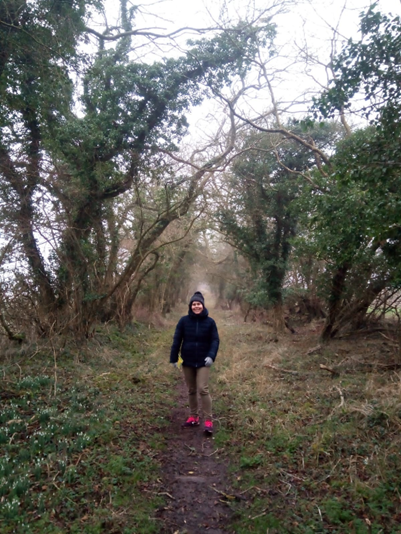
Normally, doing a PhD can be highly stressful, terribly challenging, and quite often drives you through a sinuous road of craziness. We are students, but at the same time, we are preparing to become leading experts in our very specific fields, which requires skills and aptitudes not everybody possesses. We constantly work hard and quite often we struggle with our research, especially in those times when we need to yield results. However, add this a pandemic that forces us to stay home, and things get even more complicated!
My research involves plenty of laboratory work: setting up experiments, performing them, and analysing their results. All these tasks require a physical presence in university facilities, and cannot be performed at home, changing the way I used to work on my thesis and therefore modifying my daily routine.
Other than the changes to my work life, this pandemic has had an adverse effect on my social life. While it is true that a PhD is a path you must follow alone, we still rely on our friends, family, and supervisors to provide us with support, which is vital for our success. Being separated from them, can make us feel lonely and disconnected.
Nevertheless, there are many activities that you can take on to keep busy and feel productive. These are essential to maintain your physical and mental health and boost your motivation. Reading and writing are often exercises on which we tend to procrastinate the most, as they require patience, focus and silence. This quarantine, ironically, has created the perfect environment for this type of work, so I have been able to complete my literature review (always useful for any thesis), as well as continue writing articles I have been working on, and research further experiments to conduct when the university opens again.
Over the lockdown, I had to change some habits and plans as they were no longer possible. I enjoy traveling, hiking, and socialising in the pub with my friends, but those activities had to be replaced. I have continued meeting my friends via online calls, and although it is not the same as before, it is still fun to hear from them and play online games. This has made me realise how lucky I am to have them, and how valuable they really are in my life.
Since I could only go out for small walks, I started looking into other activities such as pilates and yoga, and discovered new hobbies I like. I have also altered my eating habits; now that I spend more time at home, I am more concerned about my health and so I tried leaner but still delicious recipes that I want to keep cooking after the lockdown. I have also learnt a new language, worked on the house and the garden and spent time taking care of myself, which I often forgot to do in the past.
Overall, all the time spent at home has enabled me to look back at all the work, progress, and new connections I have made since I moved to England about a year and a half ago. I have had time to think and meditate, to know myself and to grow not only professionally but also as I person.

Categories & Tags:
Leave a comment on this post:
Comments are closed.
You might also like…

Mendeley: a powerful tool to organise and manage your references
Are you looking for a way to manage your references, create in-text citations and reference lists for your assignments or thesis? If so, you may wish to consider using Mendeley. What is it? Mendeley is ...

Keen to develop your study skills?
Alongside the technical skills and academic knowledge that you will gain on your course, as a Cranfield student you have the opportunity to develop a range of other skills that can enhance your learning experience. ...

The V-conomy: powering the sixth wave of global economic growth
The world could be on the verge of a major surge in economic growth and development, driven by the convergence of AI and clean energy technology. Waiting to ride the K-wave The Russian ...
Need help using the Python programming language?
We know some of our students are currently trying to learn Python, so we wanted to make you aware of some great LinkedIn Learning videos that can help. But don't you have to pay for ...
What does it really take to become a Chevening Scholar?
Say “Turkmenistan” to most people and you’ll get a blank look. That was true when I left Ashgabat for the UK to study an MSc in Logistics and Supply Chain Management at Cranfield University ...

Get a head start on referencing and plagiarism
We offer a module on Referencing And Avoiding Plagiarism which you can find on your Canvas dashboard. It explains the role and importance of citing references and how to incorporate the work of other authors ...
This is a great blog entry! Really interesting which most of us can understand. Thanks for writing it! Tracey