

Standing on my soapbox for women in STEM
27/09/2021
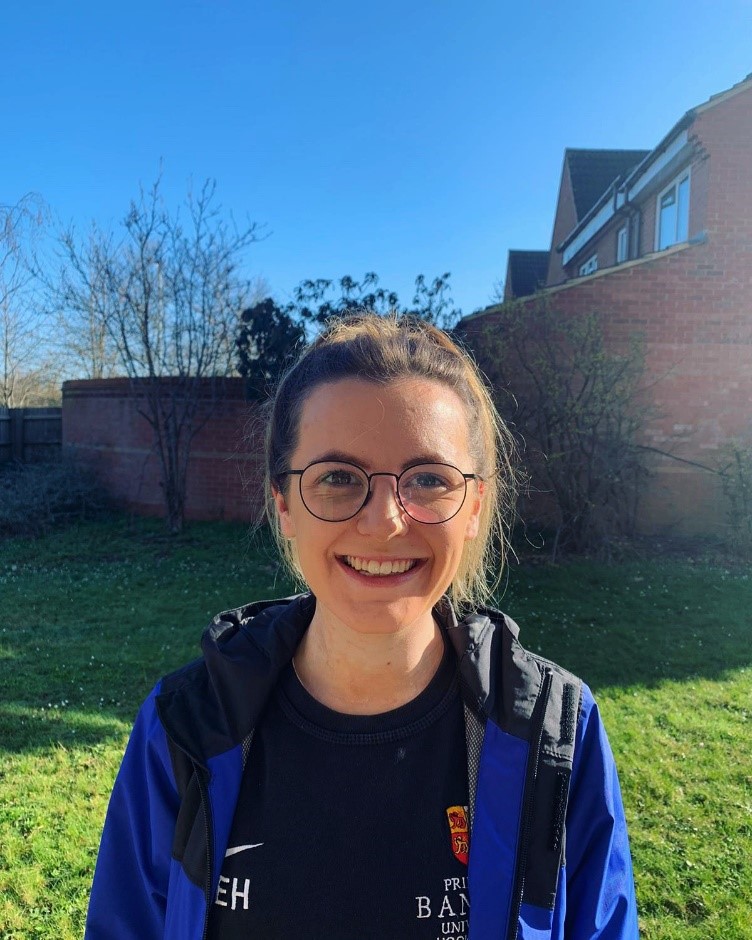
On a notoriously wet lockdown December’s day in 2020, I came across Soapbox Science. A platform promoting women in science? A platform to get my research out to the masses? Yes please. Soapbox Science is an outreach platform based on the format of the speaker’s corner in Hyde Park, London. It allows women and non-binary scientists to share their fascinating science, new discoveries and why science is simply great! I thought I’d give it a try, I’m never one to turn down an opportunity for a chat.
Initially, I had to write a tweet summarising my research. The tweet read:
Let’s revolutionise mining as we know it today! It’s time to utilise the 100,000 past metallurgical sites and deposits across the EU. Metals from old mines could be used for renewable energies including electric vehicles and solar PV. Join me and my PhD journey to change the world one mine at a time.
It worked! I was invited to be a speaker at Soapbox Science MK 2021. Twelve scientists have been chosen and I was one of them. The next step is media training. We all got together and had a seminar with a top BBC Media bod. He had done some big BBC shows and was very insightful. I know I find my project interesting, but this training made me realise how I could make it interesting to other people.
It was now time to put what I had learnt into practice. I needed to make a two-minute promo video. A two-minute video to introduce my research, to encourage people to listen to more, and to promote myself and science. All without the assistance of PowerPoint. I headed to my garden, got a cup of dirt, found a bit of metal floating around in the garage, got my laptop and I was set, raring to go. Talking into your phone by yourself was a strange experience. It took many attempts before I recorded the one. The one with no mistakes and one where I didn’t drop the cup of soil. Time to submit and wait for my feedback.
We watched each speaker’s video one by one and gave feedback. All Soapbox speakers, the Soapbox committee, and a top BBC Media expert. It felt savage. I had never received feedback like this before. The variety of talks is vast, from artificial intelligence to diseases in wheat to obviously metal recovery from mines. It was humbling to know I wasn’t the only getting feedback this way. The response was positive. Apparently, I am engaging and passionate about my research, who would’ve thought! Six months into my PhD and I had already started establishing myself as a bit of a public speaker. I had not imagined I’d be doing this a year ago.
As the event draws closer, the promo increases. Alongside our promo videos, we have a bio to explain a bit of our background as scientists and what we do for fun. My bio is as follows:
I am a second-year PhD student at Cranfield University. I am researching environmentally friendly avenues to recover metals from historic industrial sites for potential renewable energy technologies. I enjoy environmental science because it draws from different aspects of science e.g., biology, chemistry, geology, and soil science, and it requires creative problem-solving skills. Environmental science is important because there is no ‘planet B’ so let’s rescue this one! Outside of science, I am a keen rower and dabble in cross fit.
The bios and videos were posted by Soapbox Science on social media. My own circle of friends and family don’t fully understand what I do day-to-day so, I decided to share it on my own social media platforms. To my amazement, they actually find it interesting and have booked it into their diaries to stream!
So, save the date Thursday 14 October 2 pm, to live stream six top-quality scientists covering some top-quality content!
My promo video:

Categories & Tags:
Leave a comment on this post:
You might also like…
Mendeley: a powerful tool to organise and manage your references
Are you looking for a way to manage your references, create in-text citations and reference lists for your assignments or thesis? If so, you may wish to consider using Mendeley. What is it? Mendeley is ...
Keen to develop your study skills?
Alongside the technical skills and academic knowledge that you will gain on your course, as a Cranfield student you have the opportunity to develop a range of other skills that can enhance your learning experience. ...
The V-conomy: powering the sixth wave of global economic growth
The world could be on the verge of a major surge in economic growth and development, driven by the convergence of AI and clean energy technology. Waiting to ride the K-wave The Russian ...

Need help using the Python programming language?
We know some of our students are currently trying to learn Python, so we wanted to make you aware of some great LinkedIn Learning videos that can help. But don't you have to pay for ...
What does it really take to become a Chevening Scholar?
Say “Turkmenistan” to most people and you’ll get a blank look. That was true when I left Ashgabat for the UK to study an MSc in Logistics and Supply Chain Management at Cranfield University ...

Get a head start on referencing and plagiarism
We offer a module on Referencing And Avoiding Plagiarism which you can find on your Canvas dashboard. It explains the role and importance of citing references and how to incorporate the work of other authors ...