

NetZero targets to NetZero solutions – my journey so far, and the next steps
24/09/2020
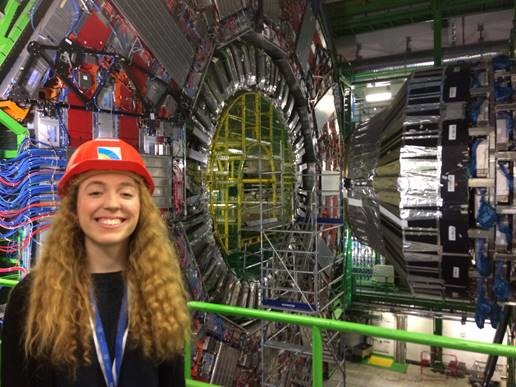
The middle of a global pandemic is a strange time to be about to go back to university. In a few short weeks I will begin studying for an MSc in Advanced Mechanical Engineering at Cranfield. Despite this, I am extremely excited. I have spent the last few years outside of academia, and I can’t wait to engage that side of my brain again.
My first degree was in mathematics – a subject that I will always love. I am turning now to Mechanical Engineering in order to learn how to use maths to solve hands on, real world problems. One of the reasons that I was drawn to Cranfield University is that their course is designed to be accessible to people from a range of academic backgrounds.
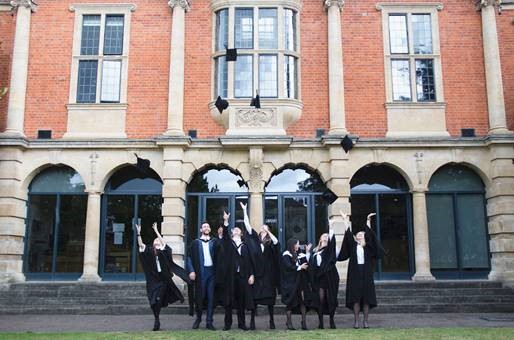
I have spent the last few years on a graduate scheme with the Civil Service. Whilst working for the Department for Transport I led a project to model future rail decarbonisation scenarios. This work formed part of an evidence base which the government then used to accept the Committee on Climate Change’s recommendation to achieve net-zero greenhouse gas emissions by 2050. I am delighted to have been awarded a ‘Net Zero’ Scholarship by Cranfield – having played a part in setting this target, I now have the opportunity to become one of the engineers who helps to deliver it.
Cranfield has been really engaged with me as an incoming student, organising zoom sessions and sending out regular emails. I’ve been given a lots of useful information about how the course will work – including in the context of Covid. I feel confident that Cranfield are treating social distancing seriously, but at the same time they recognise the value of in-person learning. I’m pleased that at least 70% of learning will be delivered face-to-face in safe, socially distant settings. I currently live in London, so I’m also glad to be moving to Cranfield’s rural campus.
Despite not knowing exactly what lies ahead in these uncertain times, I am really excited to make a start on my course and find out what it’s like to be a Cranfield Student.

Categories & Tags:
Leave a comment on this post:
You might also like…

Moving to the UK to study? How to plan for banking, exchange rates and transfers
Currency and banking are two of the most practical parts of financial planning for international students. They are also often the most overlooked. We asked Dr Lakshmy Subramanian, Course Director for Cranfield University's Banking, ...
Cranfield: an environment where innovation thrives
The latest Knowledge Exchange Framework rankings from UK Research and Innovation (UKRI) gives an insight into the real and meaningful impact that UK universities have. The seven categories that make up KEF6 cover everything ...
How Cranfield accelerated my career in Logistics and Supply Chain Management
After graduating from the MSc in Logistics and Supply Chain Management at Cranfield University, I've been reflecting on the experiences that made my journey so valuable and the impact it has had on my ...

Mendeley: a powerful tool to organise and manage your references
Are you looking for a way to manage your references, create in-text citations and reference lists for your assignments or thesis? If so, you may wish to consider using Mendeley. What is it? Mendeley is ...
Keen to develop your study skills?
Alongside the technical skills and academic knowledge that you will gain on your course, as a Cranfield student you have the opportunity to develop a range of other skills that can enhance your learning experience. ...
The V-conomy: powering the sixth wave of global economic growth
The world could be on the verge of a major surge in economic growth and development, driven by the convergence of AI and clean energy technology. Waiting to ride the K-wave The Russian ...