

Meet the Course Director: Dedicating my career to decarbonisation and developing you as the high-calibre process engineer who will lead the decarbonisation transition
19/11/2019
Selecting the right Master’s course to kick-start your career is a challenging task, especially in the area of process and chemical engineering, largely because the courses available in this branch of engineering involve similar modules and structures. All these courses, however, have a unique flavour, features and may appeal to us in a different manner, depending on our preferences. It’s important to realise that the course uniqueness is primarily driven by the effort and expertise of the academic team, and the vision of the course director. This, however, may not be apparent from the information presented to you. That’s why, as the course director for the MSc in Process Systems Engineering at Cranfield University, I want to share my career story with you. I trust it’ll help you better understand my perspective on where the course is heading, and why the course and I can support you to become high-calibre process engineers.
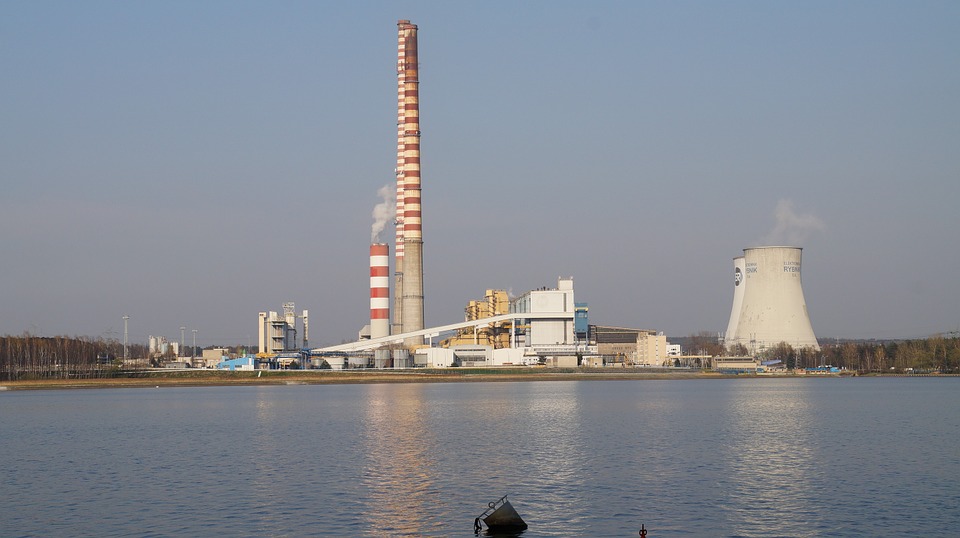
I was born and raised in the heart of Polish industrial sector. I’ve always shown an interest in understanding how the world and different processes around us work. The enormous amount of questions I asked as a child must have driven my parents crazy! However, it was their patient answers that helped me to develop, and subsequently retain this inquisitive and always curious mind. That’s why I decided to pursue a career in academia.
At the early stage of my education, I developed a passion for maths and chemistry, as these helped me to further understand and make sense of how the world around me worked. It was also the time when I set my career goal to contribute to solving the global challenges through fighting climate change and developed a strong motivation to make a difference through my work. To gain a broad understanding of the environmental issues of the energy and power sector, I enrolled for the interdisciplinary programme in environment and energy at the Silesian University of Technology. As this has primarily focused on environmental, design and modelling aspects of power generation systems, I started developing expertise in techno-economic feasibility and environmental impact assessment of engineering systems.
Having achieved the perfect score on my undergraduate degree, I wanted to further challenge myself and decided to go abroad. That’s how I came across Cranfield University. I most likely felt exactly like you right now. When I was recommended Cranfield as the potential place for international exchange, I was a bit confused as I hadn’t heard of it before. I did some research and was surprised by the vibrant multicultural population of Cranfield students and staff, and the unique and internationally-leading research being done.
With my background in energy and environmental engineering, I decided to focus on the decarbonisation of energy and industrial processes. Therefore, I enrolled on the MSc in Carbon Capture and Transport. This course was similar to the MSc in Process Systems Engineering, but with three different modules — it was more inclined towards decarbonisation of industry and power generation sectors. I really enjoyed the course because it enabled me to expand my knowledge from the power sector to the industrial sector and work on the industrially-sponsored group project. However, it wasn’t the main reason I enjoyed it the most. What helped me to become a successful academic and process engineer were the opportunities to network and work with peers from around the world. These helped me to expand my perspective and grow personally and professionally. Moreover, I had an opportunity to tailor my MSc thesis to my career goals and focus on the decarbonisation of the power sector. My work resulted in a journal publication and helped me to secure a PhD position in the same research area.
During the PhD programme at Cranfield, I focused on the decarbonisation of the power sector and developed innovative concepts to reduce the efficiency penalties and subsequently, costs associated with carbon capture systems. With 9 journal publications in my PhD thesis, I passed the VIVA examination without corrections. I also received the Lord Kings Norton Award for the best PhD thesis at Cranfield. A couple of years later, I became the course director for the Process Systems Engineering course, a position I hold today.
You may wonder why I’m sharing my career story with you and how does this explain how the course can support you to become a high-calibre process engineer? Through my experience studying process engineering at Cranfield, I’m able to serve you better as the course director and mentor you to develop relevant knowledge, skills and behaviours that will make you successful process engineers. I believe that we, as process engineers, have a crucial role to play in solving climate change and other global challenges. Therefore, in line with the vision of the Institution of Mechanical Engineers that accredits the MSc in Process Systems Engineering, through a combination of technical and managerial modules, interaction with industry, relevant assessment and projects, as well as placing the strong focus on career mentoring, the course team supports you to become the process engineers who will be “improving the world through engineering”. I also like to make it more relevant to our course and say that together we’re “solving global challenges via process engineering”.

I invite you to check yourself whether Cranfield is for you. If you’d love to experience Cranfield’s environment, come and see me during our upcoming open days on 23 November 2019 or 14 March 2020 or let’s arrange a meeting if at any other date if you’re around.
I’m looking forward to hearing from you!

Categories & Tags:
Leave a comment on this post:
Comments are closed.
You might also like…

Moving to the UK to study? How to plan for banking, exchange rates and transfers
Currency and banking are two of the most practical parts of financial planning for international students. They are also often the most overlooked. We asked Dr Lakshmy Subramanian, Course Director for Cranfield University's Banking, ...
Cranfield: an environment where innovation thrives
The latest Knowledge Exchange Framework rankings from UK Research and Innovation (UKRI) gives an insight into the real and meaningful impact that UK universities have. The seven categories that make up KEF6 cover everything ...
How Cranfield accelerated my career in Logistics and Supply Chain Management
After graduating from the MSc in Logistics and Supply Chain Management at Cranfield University, I've been reflecting on the experiences that made my journey so valuable and the impact it has had on my ...

Mendeley: a powerful tool to organise and manage your references
Are you looking for a way to manage your references, create in-text citations and reference lists for your assignments or thesis? If so, you may wish to consider using Mendeley. What is it? Mendeley is ...

Keen to develop your study skills?
Alongside the technical skills and academic knowledge that you will gain on your course, as a Cranfield student you have the opportunity to develop a range of other skills that can enhance your learning experience. ...
The V-conomy: powering the sixth wave of global economic growth
The world could be on the verge of a major surge in economic growth and development, driven by the convergence of AI and clean energy technology. Waiting to ride the K-wave The Russian ...
Hello Professor Dawid,
Will definitely want to drink from your fountain of knowledge. You’re an achiever!
Good afternoon sir, your speech gave me a lot of encouragement, and I look forward to be your student in the future, thank you very much.