

My experience on the Component Design module
09/07/2020
My name is Princewill Moh, I am a Nigerian student on the Advanced Mechanical Engineering MSc at Cranfield. When reviewing the course modules and I saw the course content for the Component Design module I had concerns that I may find it boring, or perhaps not very interesting but boy was I in for a shock. From the very first session, I knew I was going to enjoy this. To those who think school should always be serious, please note that this post is not for you.
Paul Lighterness, the module leader, started by introducing us to Innovation as a Concept – something totally new to me. Two things stood out for me:
- Thinking inside the box is as powerful as thinking outside the box (I’ll come back to this later)
- Most good ideas don’t come while ‘at work’, they come when you’re maybe taking a shower or doing something else. (There’s a famous saying about the best ideas and toilets, but we won’t go there…)
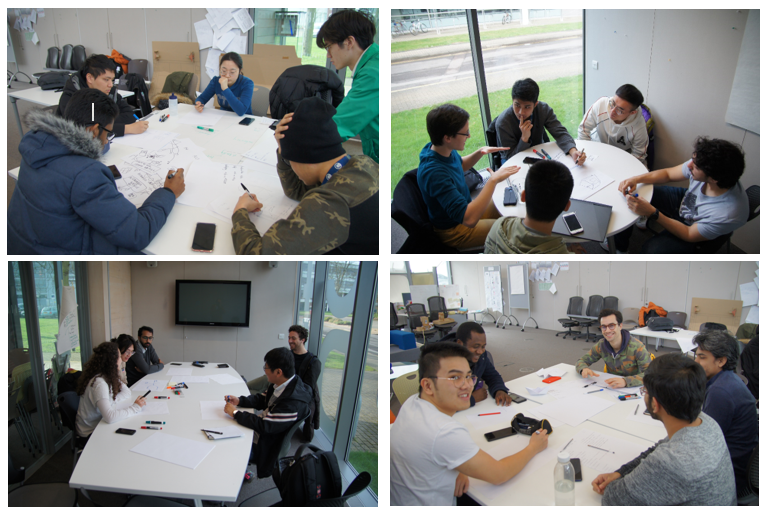
Next, we explored the dynamics of teams and the differences between people using some optical illusions (remember the gold/white or blue/black dress? – It’s is blue/black by the way). This showed how the best teams aren’t really the smartest group but the group with skills that complement each other.
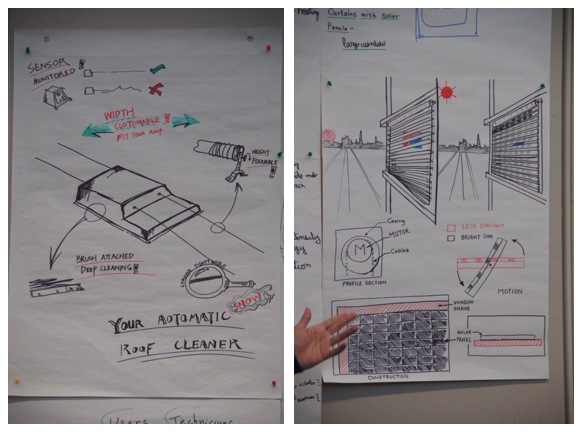
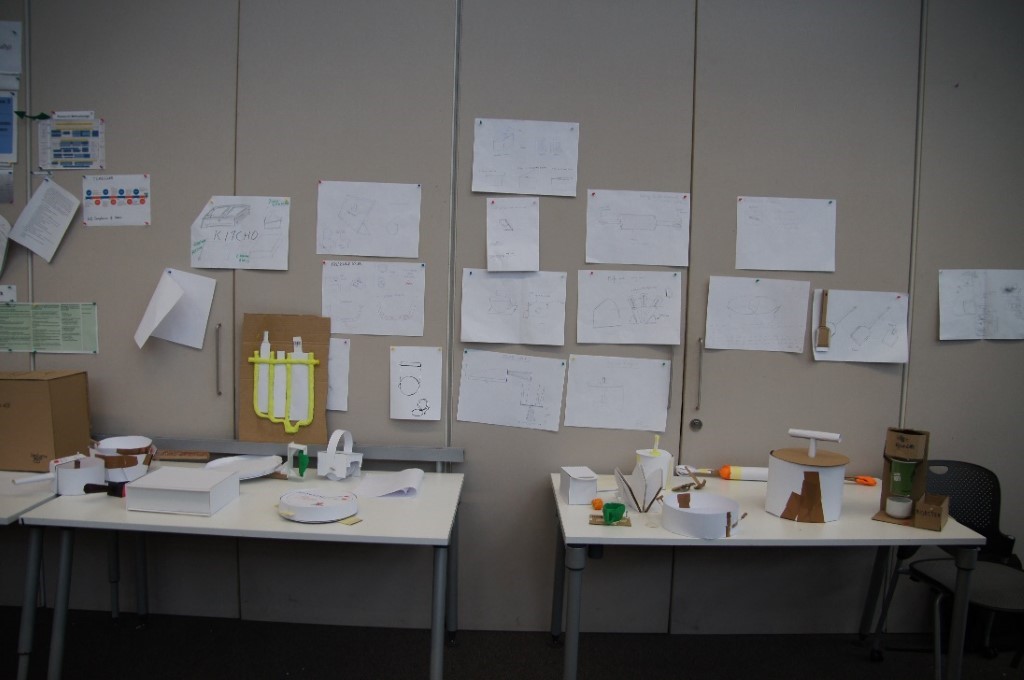
Then we began the hard part, coming up with an innovative idea under 30 minutes and creating a prototype. Of course, the ideas were bizarre as you would expect, someone made a quad-knife (don’t ask me what that is). I came up with a pot that allows the cook to make the best jollof rice. I am from Nigeria, and jollof rice is our national pride. My prototype looked more like a 3-year old’s attempt at creating something, so you’ll have to forgive me for not including a photo.
Instead here’s a photo of some of the stuff we made.
Professor Leon Williams then took us on an enthralling journey of one his own innovations. I can’t tell you what it was or who it was for because of the pesky thing called a ‘Non-Disclosure Agreement’, but the exercise showed us practically how the theory and concepts we were learning were being used in solving the challenges facing companies and organisations in the real world.
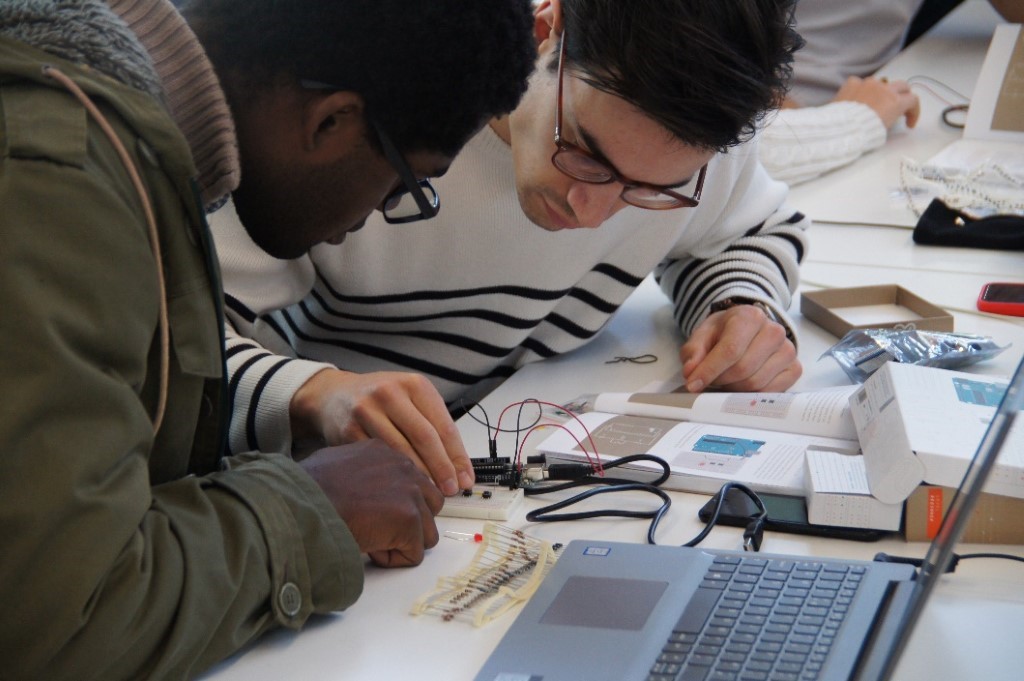
During the module we also attempted some prototyping using Arduino (IDE). It had been so long since I last used a breadboard so I had to quickly brush up my knowledge of switches, resistors, batteries, lights and sensors. The coding wasn’t complex, so we played around with ideas like temperature sensors, lighting etc. My teammate tried to create a Theremin… and failed. Maybe next time, Alex.
The week didn’t end without us practicing both teamwork and innovation by forming groups and creating an innovation for the household. My group had the novel idea of an indoor farm, not just indoors, but a farm in the kitchen for urban dwellers. We initially came up with a bulky refrigerator-like design but we knew it would take up too much space. Paul urged us to think outside the box, so we did … and the wonderful idea we settled for was… wait for it… a smaller BOX (see I told you I’d come back to it).

It was altogether an engaging and really enjoyable experience, and I got to learn while also having fun. This module is one that will really stand out for me. Finally, here’s a photo of the class.

Categories & Tags:
Leave a comment on this post:
You might also like…

How do I access the full-text of Harvard Business Review (HBR)?
This is a frequently asked question, and it's worth knowing how to access this key management journal. So, how do you access HBR in full-text? The short answer is via our eJournals finder. You can find ...

Engineering problem to solve? Let Knovel help you find a solution
Did you know that Knovel provides you with more than just eBooks? Knovel is a key database for many engineering, mechanical and materials courses here at Cranfield University, and contains content from an extensive range ...
What happens when female scholars meet influential leaders?
On the 5 March 2026, our British Council Women in STEM Scholars had the privilege of sitting down with two excellent role models of industry and academia: Professor Dame Karen Holford, ...
From MSc to CEO: Igniting a research revolution
For many, a master’s degree is achieving a big milestone. Kilyan Ocampo, Computational Fluid Dynamics alumni shares how studying at Cranfield helped launch his career in the energy sector. Today, Kilyan ...
Commuting, collaborating and growing: My first term experience at Cranfield
My first term at Cranfield University has been an extremely positive and rewarding experience. While the course has been intense at times, it has pushed me in the best possible way and allowed me ...

Sourcing country analysis – a guide to Library sources
For those researching a country, you will find that country information tends to take two forms: Analysis - country reports are descriptive reports covering most areas of interest on a country. They contain an analysis ...