

Bright solar future in South Africa
25/10/2019
I wanted to reflect on my experiences from a fieldwork in South Africa last week.
My centre for Energy Systems and Strategy aims to inform decision makers on how technologies and society co-evolve together and what interventions might be needed to ensure that outcomes are ‘just’. One of my projects analyses the sustainability and livelihood impacts of concentrated solar thermal power (CSP) plants. This is part of a larger research project, SOLving WAteR ISsues for CSP plants (SOLWARIS), awarded by Horizon 2020 programme by the European Commission (H2020-LCE-11-2017 under grant agreement n°792103). My colleague, Pegah, is working with me on this project.
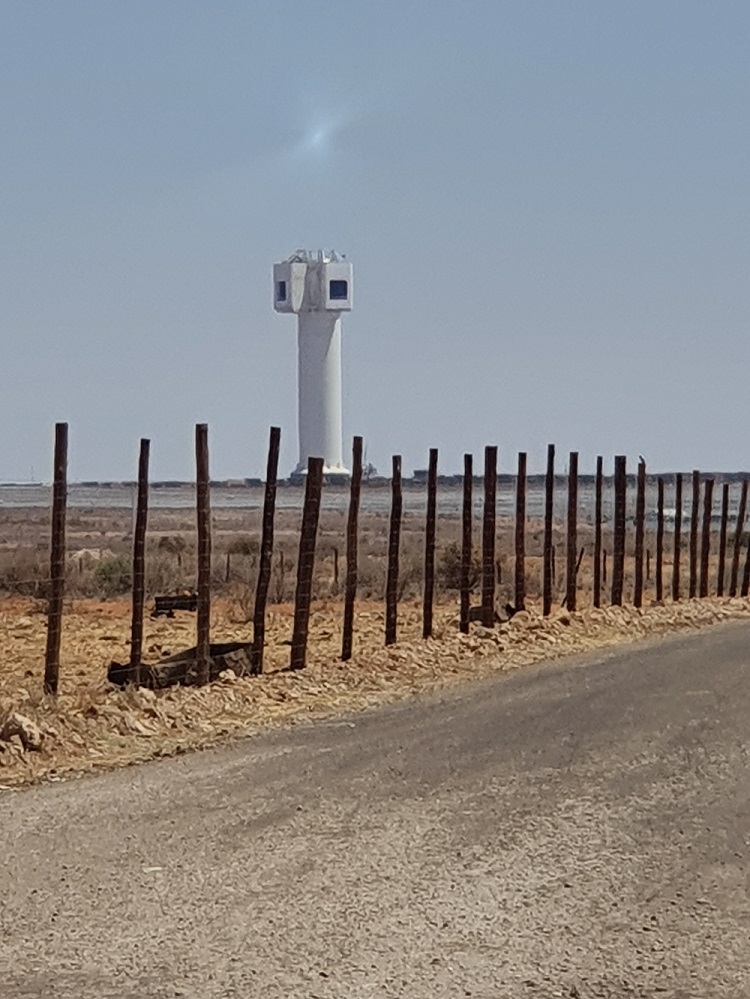
We selected communities near Khi Solar One (see the picture on the right), a solar tower thermal power plant, in the Northern Cape province in South Africa to find out their views on how this plant affected their wellbeing. For those of you who are fans of ‘Planet Earth’ documentaries, this province is based in Kalahari region, home to different types of wild animals and Kgalagadi National Park. We have partnered with the University of the Free State (UFS) in Bloemfontein, Prof Lochner Marais and his research team to undertake this case study.
To be honest I didn’t know what to expect in South Africa. During my undergraduate studies, I helped out at Habitat II, the Second United Nations Conference on Human Settlements that was held in Istanbul. I had met someone from South Africa then and he told me about ‘apartheid’. As I like watching Olympics, I also know that South Africa is strong in a number of sports. I like having red bush tea every now and then. And finally yes, I had seen some pictures of ‘shacks’, corrugated iron houses but because I never saw one in real life, they seemed very distant and surreal to me.
Our journey started in Bloemfontein where I had the opportunity to talk about my research on ‘low carbon economy transitions’ at Centre for Development Support at UFS. I met a number of faculty and students to find out about their research interests. Then we met two colleagues from UFS, Jan and Phia, who had agreed to run our focus groups in Afrikaans with us. They took care of all the preparatory work in advance of our arrival. We travelled for six hours from Bloemfontein to Upington. On our way, we saw giraffes, ostriches and antelope running around freely in game fields.
Upington is a small city with a population of around 75,000 people. Our hotel was on the high street in walking distance to many shops and restaurants. Over three days, we ran seven focus groups. some of these were held in guest houses (‘bed and breakfast’ as we call them in England), community halls or a church. All focus groups took place in Afrikaans, though some people talked to us in English. Luckily, Jan was very skilled in writing notes in English in his computer so that we were able to follow the discussions.
My take home messages are that:
- CSPs bring benefits as well as some potential disbenefits to the local communities. We came across a spectrum of people, young and old, male and female, highly educated and limited education, slim and stout, short and tall. People raised a number of issues around the impacts on wildlife, waste, types and duration of jobs created as many CSP and solar farms become part of the scenery in Northern Cape. Yet, they also expressed their frustration that despite all these plants, they still have ‘load shedding’ where power is cut during certain hours in a day.
- As humans we are all connected. During the focus groups (whilst trying to keep up with reading Jan’s notes), I very much enjoyed observing people: with different complexion, some with brown or hazel eyes, some with such animated gestures where arms are almost raising to the clouds, some who kept very quiet, some with openness and enthusiasm in their voices… all of which made me feel the power that connects us together even though we can not talk the same language.
- The gap between rich and poor is massive in South Africa. I saw that shacks indeed exist. Some areas are looked-after so well with nicely cut lawn and beautiful houses, some with swimming pools. Yet this wealth coexists with neighbourboods made up of shacks where small children are walking around with bare foot.
- Social issues are at the heart of many economic problems in the developing world. During my conversations with Phia, a community development practitioner turned academic, she told me about her work on self-healing and wounding. How ‘feeling of inferior’ through generations influences people’s self-esteem and wellbeing. She told me about work done in Australia on how a vicious cycle of inferiority/ ‘perceived’ superiority impacts indigenous people and their relationship with their own children, fuelling issues of violence (spreading from adults towards children to children towards children), alcohol or drug dependency and extreme forms of sexual assault. These conversations reminded me of the past (Bosnian women) and current (Rohingya women) dramas families, including women, men and children are facing in different parts of the world.
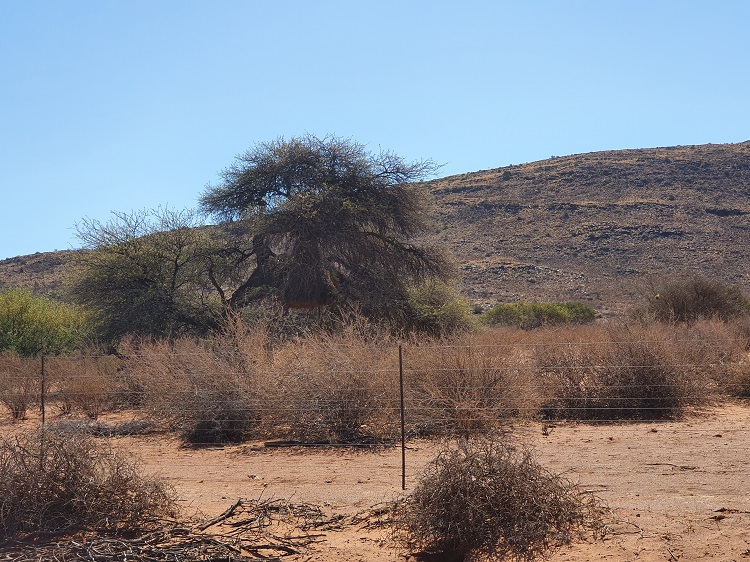
I’m hoping that our research to understand how communities near these large plants benefit/ disbenefit from them will inform the communities, energy industry and policymakers so that low carbon energy transition is ‘just’ for us all. Like the trees that are full of energy and fighting for survival in a brown landscape I saw in different places across Northern Cape, I am positive that we can make the world a better a place. We have a lot of work to analyse these issues as perceived by the communities and assessed by the experts via interviews. We will be visiting other global destinations too, so stay tuned.

Categories & Tags:
Leave a comment on this post:
Comments are closed.
You might also like…

Moving to the UK to study? How to plan for banking, exchange rates and transfers
Currency and banking are two of the most practical parts of financial planning for international students. They are also often the most overlooked. We asked Dr Lakshmy Subramanian, Course Director for Cranfield University's Banking, ...
Cranfield: an environment where innovation thrives
The latest Knowledge Exchange Framework rankings from UK Research and Innovation (UKRI) gives an insight into the real and meaningful impact that UK universities have. The seven categories that make up KEF6 cover everything ...
How Cranfield accelerated my career in Logistics and Supply Chain Management
After graduating from the MSc in Logistics and Supply Chain Management at Cranfield University, I've been reflecting on the experiences that made my journey so valuable and the impact it has had on my ...

Mendeley: a powerful tool to organise and manage your references
Are you looking for a way to manage your references, create in-text citations and reference lists for your assignments or thesis? If so, you may wish to consider using Mendeley. What is it? Mendeley is ...
Keen to develop your study skills?
Alongside the technical skills and academic knowledge that you will gain on your course, as a Cranfield student you have the opportunity to develop a range of other skills that can enhance your learning experience. ...
The V-conomy: powering the sixth wave of global economic growth
The world could be on the verge of a major surge in economic growth and development, driven by the convergence of AI and clean energy technology. Waiting to ride the K-wave The Russian ...
You said: “I am positive that we can make the world a better a place. We have a lot of work..”
I agree with you, excellent hope, dream, and it is the GOAL of Goals; I can only add : indeed we can make the world a better a place for everyone.
Thanks,