


My first impression of the Centre for Creative Competitive Design
13/02/2019
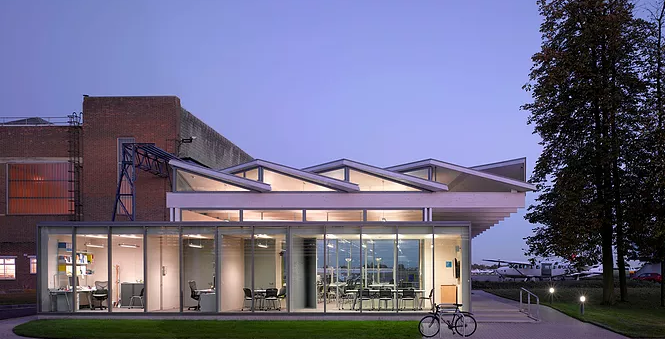
It’s been nearly 4 months since I came to Cranfield University and I want to write something for myself and you to record and show my study and life here. As a visiting PhD student, my research topic is about crowdsourcing innovation, and I am fortunate to have a two-year study at C4D (Centre for Creative Competitive Design). In fact, for C4D, I think not only you, but also many students at Cranfield University are not familiar with it. Many friends asked me what C4D is, where is it? Haha, don’t worry, let me answer these questions.
C4D is part of the School of Water, Energy and Environment and is a competitive innovation design centre. The purpose of establishing C4D is to encourage students, teachers, researchers and industrial partners to inspire and explore creativity; to use design thinking to achieve and promote innovation and development in themselves, the country and even the whole world. Although it’s called the competitive innovation design Centre, C4D is a comprehensive Centre that integrates multiple disciplines, including technology development, creative innovation, circular economy, industry design, data-driven innovation, materials, mechanical design engineering, control systems engineering and so on. The C4D building itself is in an excellent location, right in the Centre of the University, opposite the University library, within 3 minutes you can get to the student activity centre (Cranfield Student Association or CSA), IT Service Centre, and the main building, Vincent Building. Because it is an innovative design Centre, the C4D building gives me the feeling that the design is very modern and very transparent, as shown above in Figure 1.
So what is inside the C4D building?
I sketched a C4D internal structure diagram, as shown in Figure 2. It is a comprehensive building integrating teaching, research, conference and office. The building mainly includes a multimedia teaching area (students who do not like to sit on a chair can sit on a sofa in class), discussion area, working area for postdoctoral, doctoral and research master students, staff working area, meeting rooms, kitchen (free coffee, tea, and milk, microwave oven, refrigerator, coffee machine and other equipment are all available), the Centre head and his assistant office. What I admire most is that all seats can be moved, which means according to different class and activity requirements, the teaching area and discussion area layout can be adjusted at any time to provide students with the best learning conditions.
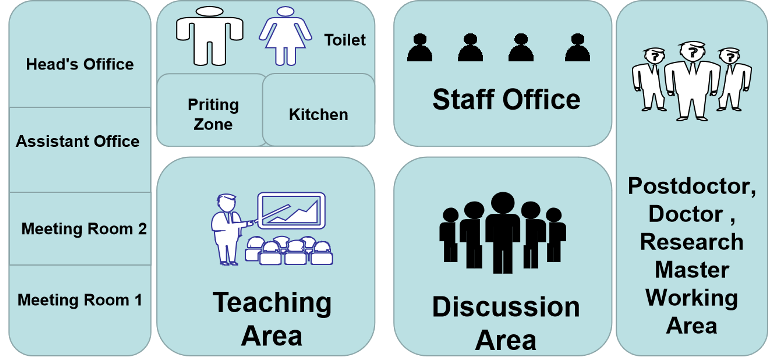
Figure 2. C4D internal structure
My PhD
As a doctoral student, my supervisor has many requests and expectations for me. I still remember the first day when I was in C4D, my supervisor spent a whole day showing me around, getting familiar with the learning environment, visiting the lab, discussing my study plan, helping me to design the Gantt chart for my two year’s study and arranging a study seat for me. In my opinion, my supervisor wanted me to become plan-oriented and to develop a habit of rational planning by doing so. C4D offers a computer for each research student, there is also a semi-open learning environment with good privacy. My supervisor told me that he left the best seat for me. Don’t believe me? You see, I can see all kinds of planes when I look back (see Figure 3).
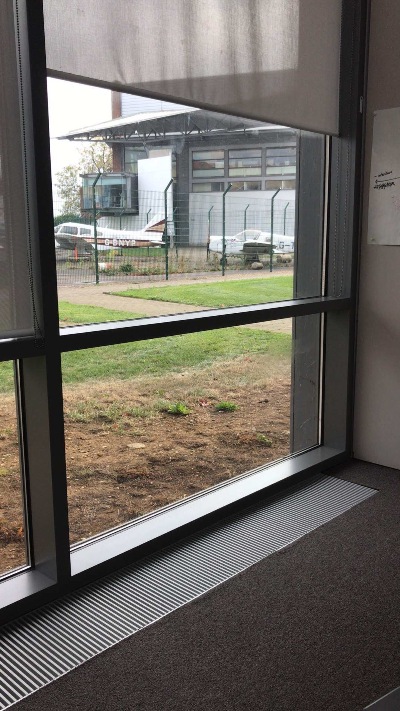
Figure 3. Planes outside when I look back
After introducing the learning environment, I will specifically talk about my learning situation in C4D. Since I have already determined my research direction, and also passed the thesis opening proposal, I am focusing on the research on the application and incentive mechanism of crowdsourcing innovation in SMEs. In addition, in order to help students learn better, Cranfield University offers free online public courses, which usually last between half a day and one day. Also, our Centre often conducts cross-professional cooperation and exchange activities. I was fortunate to participate in the two-day Hackthon event with the Exeter University MBA students (Figure 4). I have never experienced such activities in my domestic university. Although the two day’s activity didn’t last long, it has left a deep impression on me. It emphasised teamwork and resource integration and was a very good interdisciplinary activity. I made many new friends through this event as well.
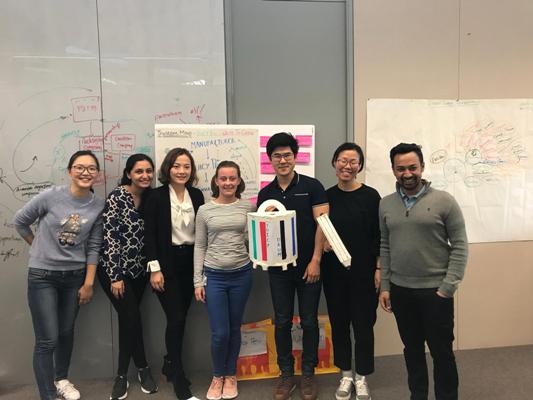
Figure 4. My team at the Hackathon event
My overall experience so far
In fact, for nearly 4 months studying in C4D, what I want to say most is that it really gives me a feeling of home. My teachers and colleagues are very concerned about each other, often partying and shopping together (Figure 5 to 7 are our latest Christmas party and New Year’s cleaning). My supervisor often asks me how I feel, how I have been studying recently, I think he always wants to confirm if I have a good state. I am very grateful to everyone here, and enjoy studying in C4D. Ok, this blog is coming to an end. After that, I will continue to update my daily life in C4D. Bye bye.
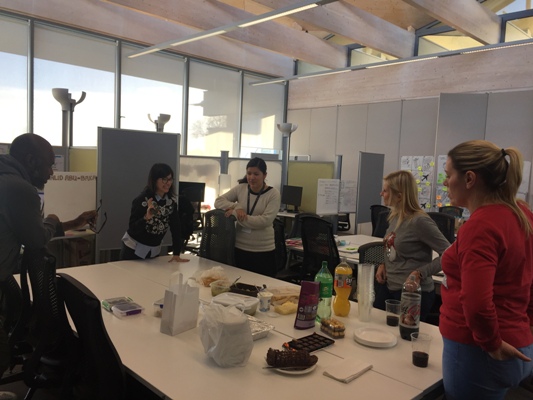
Figure 5. Christmas dinner

Figure 6. Chicken wings I prepared
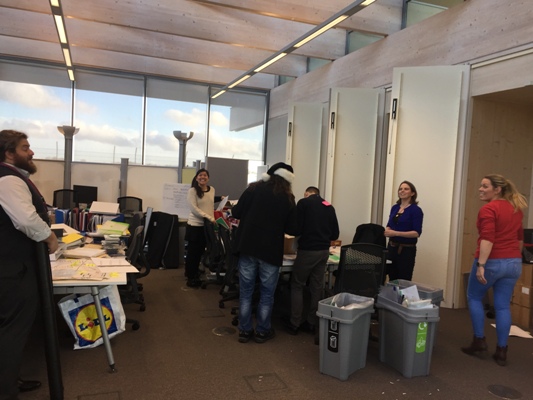
Figure 7. Annual cleaning

Categories & Tags:
Leave a comment on this post:
You might also like…

Mendeley: a powerful tool to organise and manage your references
Are you looking for a way to manage your references, create in-text citations and reference lists for your assignments or thesis? If so, you may wish to consider using Mendeley. What is it? Mendeley is ...

Keen to develop your study skills?
Alongside the technical skills and academic knowledge that you will gain on your course, as a Cranfield student you have the opportunity to develop a range of other skills that can enhance your learning experience. ...

The V-conomy: powering the sixth wave of global economic growth
The world could be on the verge of a major surge in economic growth and development, driven by the convergence of AI and clean energy technology. Waiting to ride the K-wave The Russian ...

Need help using the Python programming language?
We know some of our students are currently trying to learn Python, so we wanted to make you aware of some great LinkedIn Learning videos that can help. But don't you have to pay for ...

What does it really take to become a Chevening Scholar?
Say “Turkmenistan” to most people and you’ll get a blank look. That was true when I left Ashgabat for the UK to study an MSc in Logistics and Supply Chain Management at Cranfield University ...

Get a head start on referencing and plagiarism
We offer a module on Referencing And Avoiding Plagiarism which you can find on your Canvas dashboard. It explains the role and importance of citing references and how to incorporate the work of other authors ...