


Why I chose to study Forensics at Cranfield
28/10/2020
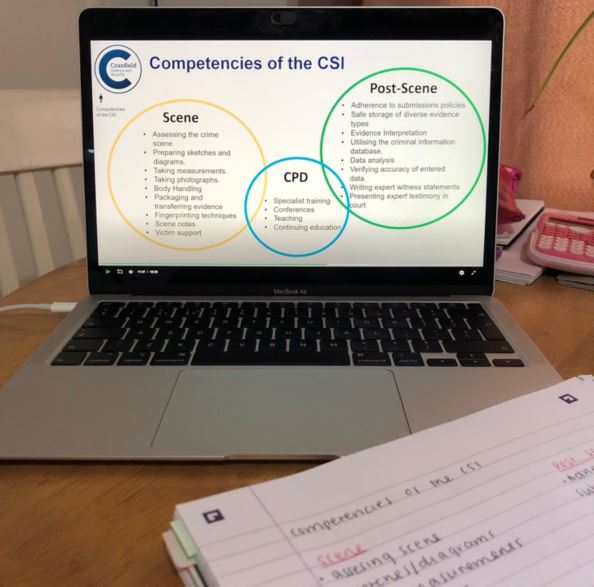
My first degree was in Integrated Mechanical and Electrical Engineering at the University of Bath. (I would highly recommend a trip to Bath for those of you who have never been.) Having graduated I spent a couple of years working in industry at Dyson before taking some time out and working in France during the winter ski season. Although I enjoyed my first degree thoroughly, I ultimately decided I didn’t see engineering as my future, and I wanted to retrain in another subject field.
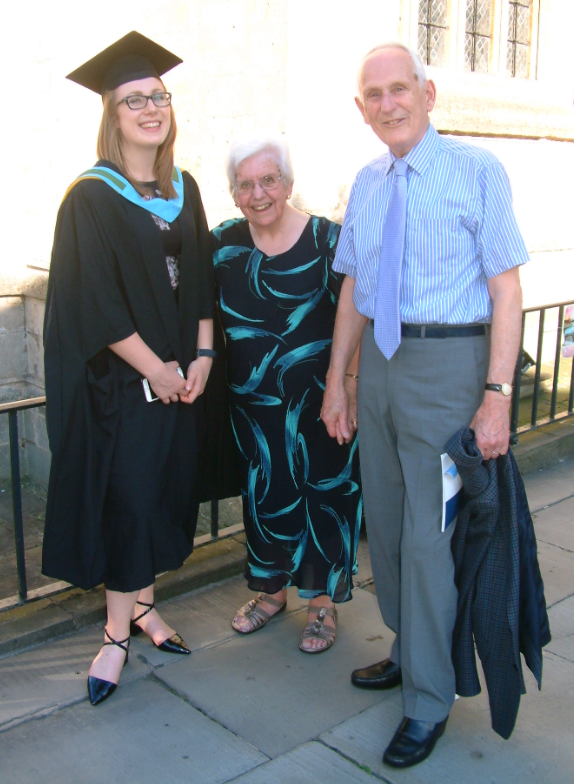
My decision to study the MSc Forensic Explosive and Explosion Investigation came relatively easily. I have always had a huge fascination with Crime and Forensics. I can often be found binge watching the latest true crime documentary on Netflix, so entering a career in this field seemed like a really logical next step. What really sealed the deal, and especially my choice to apply for the Explosive course at Cranfield, was my visit to Shrivenham for an open day. I loved the excitement the lecturers brought to the presentations of their subjects and the huge range of facilities on offer was a huge draw. I don’t believe there is any other University in the UK that has access to both an armoury and an explosives range and this makes Cranfield truly unique with the opportunities it can give its students. I really loved how most of the lecturers are still very active in their fields as this ensures the material taught in modules is as up to date as it can be. Also, if an hour at the explosive range watching things go bang doesn’t make you want to pursue the subject, I don’t know what will.
Winning the Cranfield University Forensic Excellence Scholarship has been an absolute honour. Part of my application was to describe where I saw the future of forensics and it really got me thinking about the areas of research that could help work towards these future innovations. The scholarship will be a huge help financially and will allow me to gain the experience that will ensure I can be one of the forensic scientists that help make these forward advances in the future.
I am really looking forward to delving into the practical aspects of the course. With Cranfield’s connections with the Defence Academy there will be a lot of opportunities to see explosives in action. I have also chosen a couple of firearms and ballistics modules as my electives. I chose these to really take advantage of the facilities Cranfield has at its disposal – you really can’t get this sort of education anywhere else!
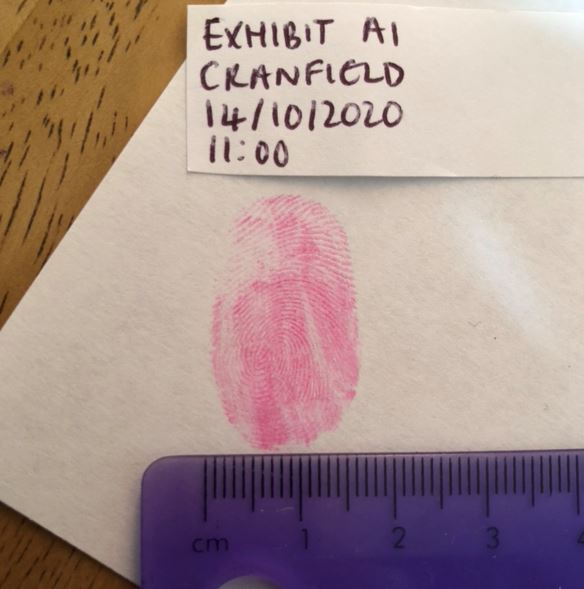
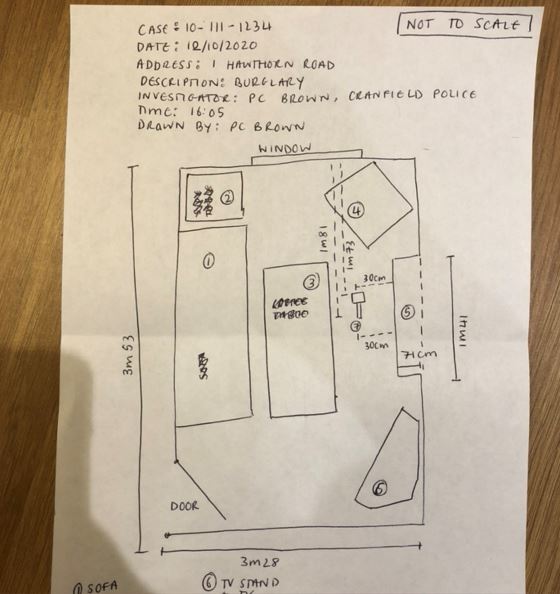
So far it appears that Cranfield has really gone above and beyond to help us all during the Covid-19 restrictions. I feel really safe around campus and every opportunity has been made to ensure we are all safe and looking out for each other. I am currently a couple of days into my first assessed module, Investigation and Evidence Collections, and the use of the online learning platform has been really good. So far I don’t feel like I am missing out on quality of teaching or the ability to talk to my lecturers face to face. The vast majority of my lectures have been live so far which has been really good. There has also been the effort to create practical’s we can do in our own accommodation. My room has already been transformed into a crime scene and I have had to photograph and sketch the location of “evidence” – (which in my case was the season 5 box set of 24).
Hopefully in the near future we will get to experience some more face to face learning. I am feeling super optimistic for the rest of the course and I am really excited to get started on some of my more specialised modules.

Categories & Tags:
Leave a comment on this post:
You might also like…

Moving to the UK to study? How to plan for banking, exchange rates and transfers
Currency and banking are two of the most practical parts of financial planning for international students. They are also often the most overlooked. We asked Dr Lakshmy Subramanian, Course Director for Cranfield University's Banking, ...

Cranfield: an environment where innovation thrives
The latest Knowledge Exchange Framework rankings from UK Research and Innovation (UKRI) gives an insight into the real and meaningful impact that UK universities have. The seven categories that make up KEF6 cover everything ...
How Cranfield accelerated my career in Logistics and Supply Chain Management
After graduating from the MSc in Logistics and Supply Chain Management at Cranfield University, I've been reflecting on the experiences that made my journey so valuable and the impact it has had on my ...

Mendeley: a powerful tool to organise and manage your references
Are you looking for a way to manage your references, create in-text citations and reference lists for your assignments or thesis? If so, you may wish to consider using Mendeley. What is it? Mendeley is ...

Keen to develop your study skills?
Alongside the technical skills and academic knowledge that you will gain on your course, as a Cranfield student you have the opportunity to develop a range of other skills that can enhance your learning experience. ...

The V-conomy: powering the sixth wave of global economic growth
The world could be on the verge of a major surge in economic growth and development, driven by the convergence of AI and clean energy technology. Waiting to ride the K-wave The Russian ...