


Richard Robinson: My journey to Cranfield as a Chevening Award Scholar
28/02/2023

Hi, I’m Major Richard Robinson, Head of School for the Caribbean Special Tactics Centre within the Caribbean Military Academy, Jamaica (West Indies).
I’m from Montego Bay, Jamaica! I am pursuing a MSc in Counterterrorism within the Cranfield Forensics Institute (CFI).
Why did you choose Cranfield?
In 2022, I received the Chevening Scholarship and started my academic journey in the UK at Cranfield University. Having served close to 14 years in Intelligence and Counterterrorism operations and training, Cranfield was the obvious choice to pursue my post-graduate studies in the UK.
I aim to continue to contribute to Jamaica’s national security through capacity and capability development within the areas of counterterrorism, intelligence, investigations and tactics through training and research. In the face of globalisation Jamaica and by extension the Caribbean region must develop cutting-edge capabilities, knowledge and effective policies to counter extreme violence and acts of terrorism.
Studying terrorism at Cranfield will provide the necessary tools to achieve this goal!
What was it like travelling to the UK?
After a 9-hour flight from Montego Bay, Jamaica to London Heathrow, I received a warm welcome at the airport when I was picked up by the university arranged transportation.
I visited the Cranfield Forensic Institute where I sit most of my modules and was excited about being back in the lab. 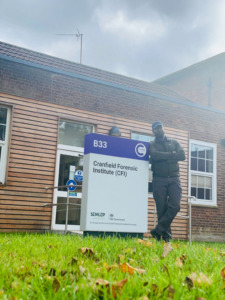
What have been the highlights of your course so far?
To put it simply, it has surpassed my expectations. Staff (lecturers & admins) truly want to see you do well; going above and beyond to support your academic, professional and personal development. Their passion, knowledge and industry experience will blow your mind.
It’s been an interesting and challenging journey. Looking ahead just as energized as I was on day 1.
The biggest lesson so far is “to start” – without that first step none of this would be possible. With all the thinking and planning, just remember to start by taking that first step.
Do what you’re told can’t be done. Believe you can. Then just do it.
I have done three modules that have involved working in the field;
- Firstly, Introduction to Evidence collection required actively identifying, collecting, analysing and interpreting evidence collected at a very realistic Mock Crime Scene housed at the CFI.
- Secondly, Introduction to Firearms and Forensic Ballistics which involved a trip to the Shrivenham Campus in Oxfordshire, where I was able to learn from some of the best minds on firearms investigation working with UK MOD/Armed Forces.
- Finally, and more recently I completed the Terrorism Risk Management and Mitigation module with a field trip to Shrivenham, where I was able to see the impact of explosives on materials and the various improvised methods and techniques used by terrorists.
Tips for settling in and managing your workload
As the realities of the weather in the UK become more apparent; and certainly homesickness sets in for some… remember your ‘why’… hold on to it, water it and make the most of this opportunity. UK weather is one of those ‘wonders of the world’ you have to prepare for both physically and mentally!
- Reach out to family and friends for support and don’t overthink making use of the amazing wellness/well-being support systems put in place by your University and Chevening.
- Don’t work alone! Find ways to collaborate to study and discuss the difficult aspects of the modules with your class mates. Don’t suffer in silence with a topic!
- Reach out to lecturers! They actually want you to, don’t think it’s a sign of not being smart enough, post graduate studies is not about information retention but information analysis and presentation; therefore, its not uncommon for some to need time to adjust.
- Finally, please have fun! Your post-graduate journey must be fun and exciting. Engage with persons on campus and visit the CSA, Cranfield Village and Milton Keynes.
All the best with those assignments and exams. Keep warm and dry, the warmer months are coming!

Categories & Tags:
Leave a comment on this post:
You might also like…

Engineering Tomorrow. Part two: Can we move around the world without emissions?
Moving people and goods around the world is essential to modern life. But every journey has an environmental cost, and reducing the emissions associated with transport is one of the major engineering challenges of ...
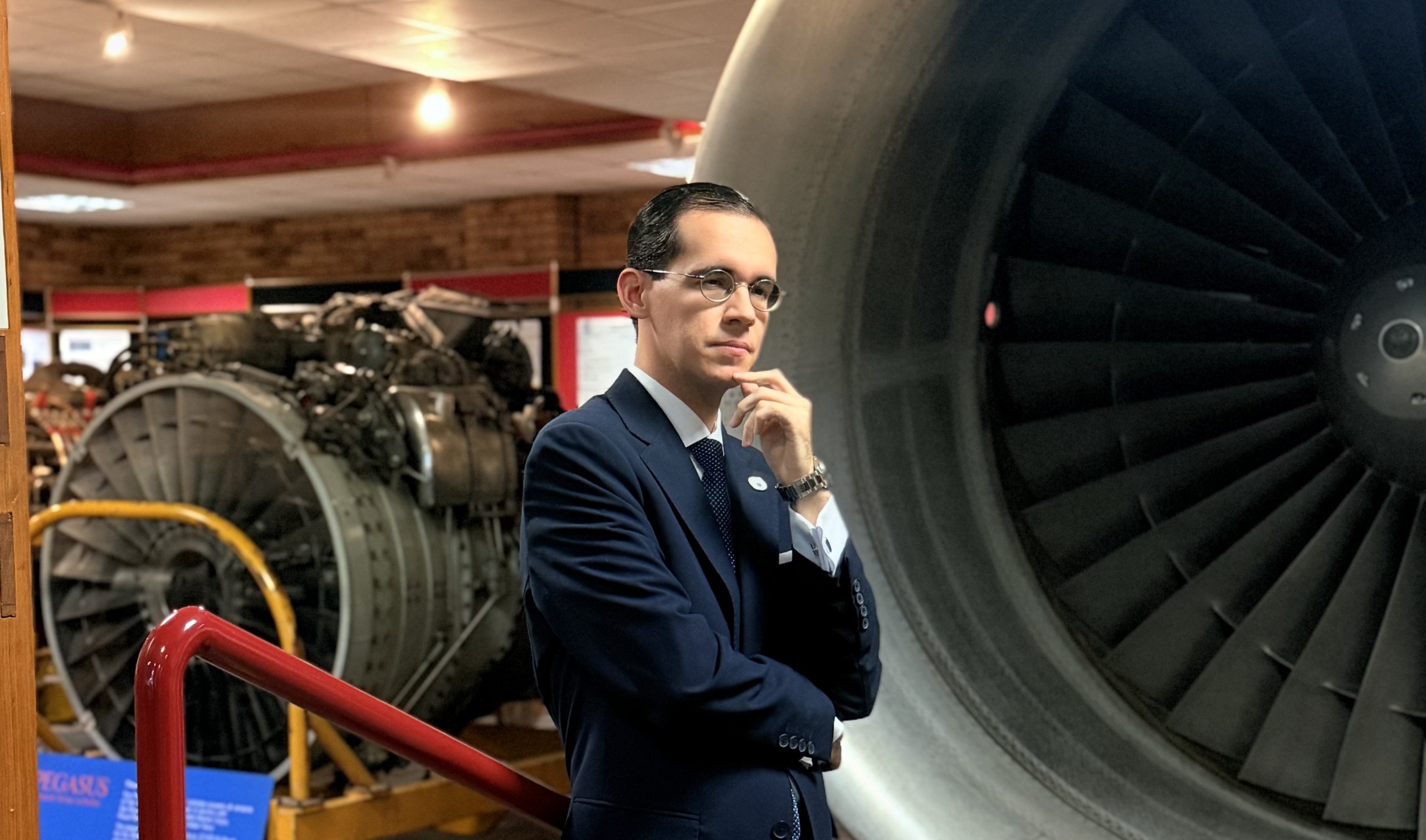
Following in the footsteps of aerospace pioneers
I came to Cranfield to understand how aircraft stay in the sky. Months later, I was measuring the performance of aircraft engines in flight aboard the National Flying Laboratory Centre's Saab 340B. My ...
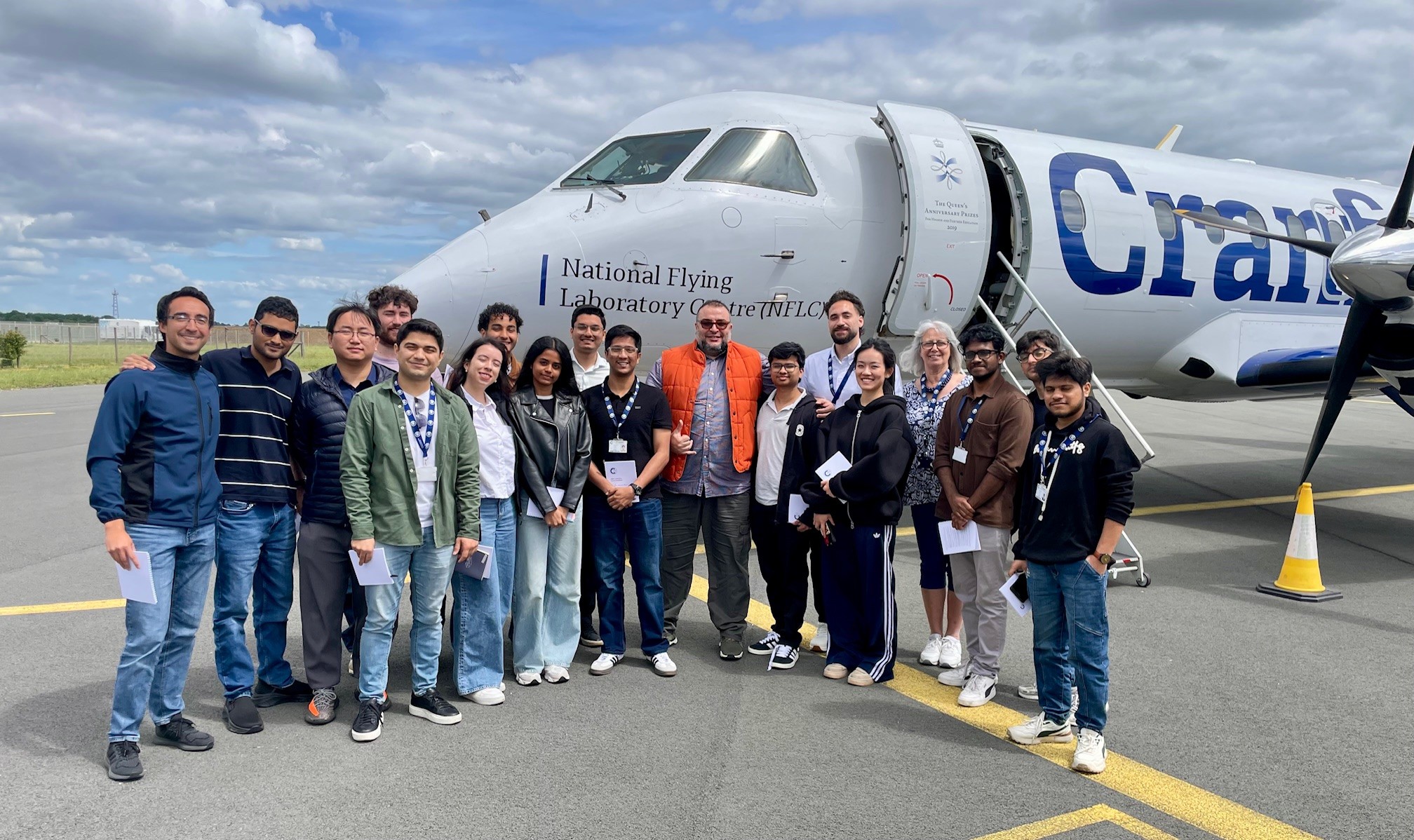
From looking up at jet engines to powering the future of flight
From flying aboard Cranfield's Saab 340B flying classroom to rebuilding a gas turbine component by component, Jouni Kailouh's journey shows how specialist, hands-on experience can turn a fascination with propulsion into a future career ...
Engineering Tomorrow. Part one: Can we power the future without costing the Earth?
The world needs energy. To power homes, industries, transport and the technologies shaping our future. But as demand grows and the pressure to reduce emissions increases, how do we generate the energy we need ...
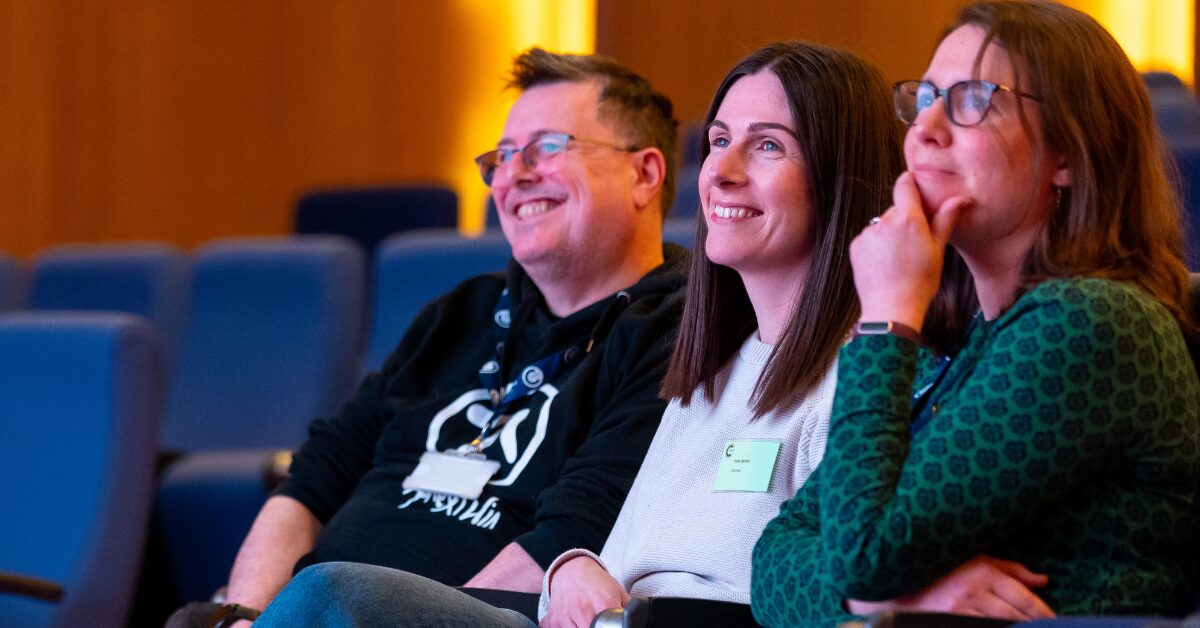
Looking ahead: Building foresight skills for a more sustainable future
As sustainability challenges become more complex and uncertain, organisations need people who can look beyond today's pressures and think strategically about the future. From changing regulations and emerging technologies to supply chain disruption and ...

Brazil to Cambridge: How Cranfield helped me build a career in data analytics
I was hungry for something bigger. Before Cranfield, I was living in São Paulo, Brazil, working as a Data and Market Intelligence Analyst in the trading division of Raízen. My background is actually ...