

Engineers, scientists, armed forces personnel and industry come together for the 52nd HRV Conference and Workshop
01/11/2017
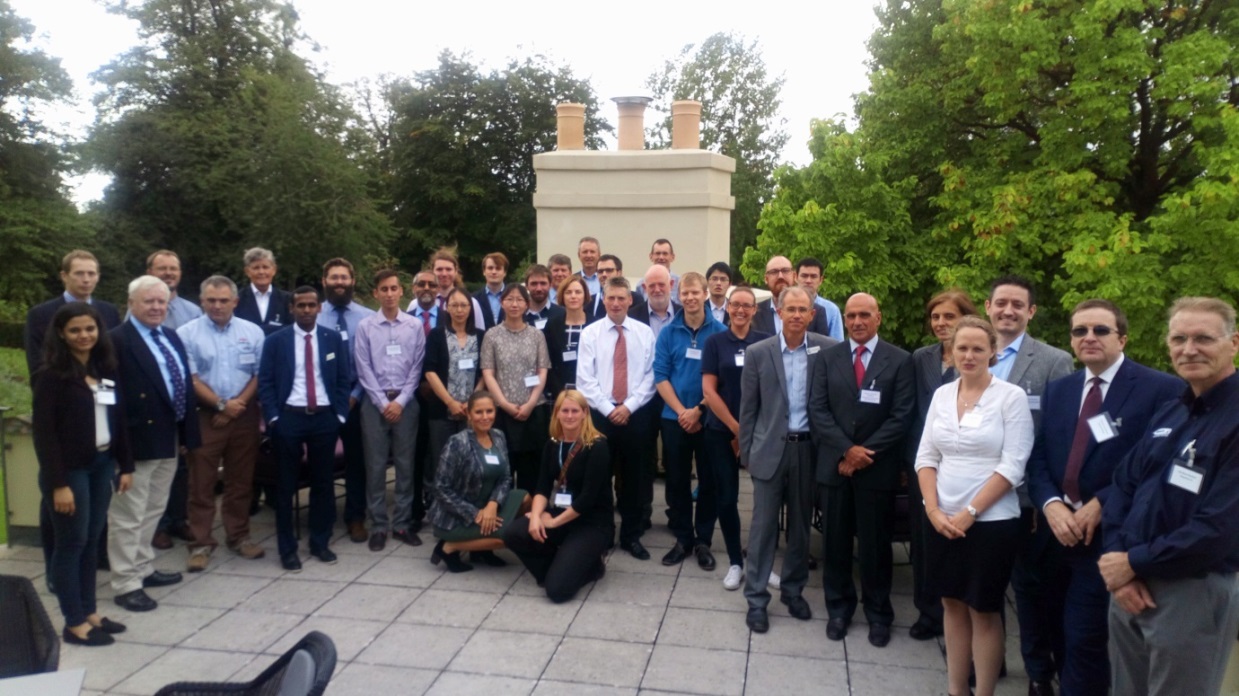
We recently hosted the 52nd UK Conference and Workshop on Human Response to Vibration at the Sudbury House Hotel in Faringdon, just a few miles down the road from our base at Shrivenham.
The conference was attended by around 50 delegates and sponsors from the UK and overseas, and covered all aspects of sound, shock and vibration effects.
Topics included safety limits, measurement of exposure, legal issues, guidelines and standards within the context of building vibration and environmental noise, road, off-road, and rail vehicles, aircraft, marine craft, power tools and simulators.
Dr Tao Wu of the Health and Safety Executive opened up proceedings with a very informative speech on the role of the HSE in the vibrations context, background regulatory issues and overall occupational and societal activities.
Dr Gurmail Paddan from the Institute of Naval Medicine – home of the Royal Navy’s medical training – gave the audience a comprehensive talk on the use of rigid inflatable boats and vibration issues during service.
Two fascinating lectures by medics followed: Dr John Murphy from the Royal National Lifeboat Association showed real-life clips of rescue crews operating in rough seas, illustrating the level of extreme danger RNLI volunteers go through in order to save lives. Dr Jon Clasper, Visiting Professor at Imperial College London and Emeritus Professor of trauma surgery for the Royal Centre for Defence Medicine, explained how standards and protocols for dealing with blast injuries in vehicles cannot come from crash testing for motor vehicle accidents.
Dr James Watson, Manager, Cranfield Impact Centre, also spoke about F1 crash testing and the strenuous efforts made to avoid ‘ringing’ in the sledge testing facility. Great care is taken to ensure the sledge’s performance does not unduly influence accelerometer results and therefore produce more reliable readings from crash test dummies.
It was also a pleasure to have industry partners displaying their products and services at the conference too.
Peter Sherfield, Product Specialist Manager at Shrivenham-based Shawcity, said: “Attending this conference has given me a better appreciation of what my customers require – along with hiring and selling instrumentation, we also provide training to help customers take measurements themselves and this has to be practical and relevant. This kind of direct feedback is invaluable.”
Cranfield’s links with industry were demonstrated in other ways as well.
Yogyata Kapoor, a 2015 Cranfield Automotive Mechatronics MSc graduate, was representing DJB Instruments. She now works for the company – which produces a range of vibration testing equipment for the automotive industry, planes and crash testing – as an electronic product development engineer.
At the end of the conference we also spoke about plans for next year’s event. Paul Pitts, from the Health and Safety Executive and Hans Fairley from STIHL are leading the preparation on this event which will be hosted by STIHL with support from the HSE.
A book of papers from the conference is available for purchase here.
Visit the conference webpage: www.hrv2017.co.uk

Categories & Tags:
Leave a comment on this post:
You might also like…

Moving to the UK to study? How to plan for banking, exchange rates and transfers
Currency and banking are two of the most practical parts of financial planning for international students. They are also often the most overlooked. We asked Dr Lakshmy Subramanian, Course Director for Cranfield University's Banking, ...

Cranfield: an environment where innovation thrives
The latest Knowledge Exchange Framework rankings from UK Research and Innovation (UKRI) gives an insight into the real and meaningful impact that UK universities have. The seven categories that make up KEF6 cover everything ...
How Cranfield accelerated my career in Logistics and Supply Chain Management
After graduating from the MSc in Logistics and Supply Chain Management at Cranfield University, I've been reflecting on the experiences that made my journey so valuable and the impact it has had on my ...

Mendeley: a powerful tool to organise and manage your references
Are you looking for a way to manage your references, create in-text citations and reference lists for your assignments or thesis? If so, you may wish to consider using Mendeley. What is it? Mendeley is ...

Keen to develop your study skills?
Alongside the technical skills and academic knowledge that you will gain on your course, as a Cranfield student you have the opportunity to develop a range of other skills that can enhance your learning experience. ...

The V-conomy: powering the sixth wave of global economic growth
The world could be on the verge of a major surge in economic growth and development, driven by the convergence of AI and clean energy technology. Waiting to ride the K-wave The Russian ...