

‘Turn This Ship Around’ and acting your way to new thinking, or ‘fake it till you make it’! (Part one of four)
12/03/2018
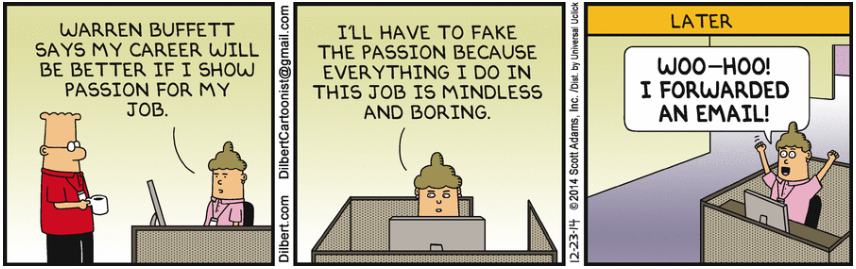
David Marquet tells us about the time he was rapidly running out of time and needed to raise morale quickly. He had two choices, “Change your own thinking and hope this leads to new behaviour, or change your behaviour and hope this leads to new thinking” – he chose the latter. In a past life I’ve observed that the latter approach (what I refer to as “fake it till you make it” or FITYMI) works over the short-term, but you better have a longer term plan to underpin and substantiate the change in behaviour, otherwise people will revert to type under pressure.
Over the past few weeks we’ve been blogging about “Mission Command” and “Centralised Intent” – and we’ve seen some organisations in the early stages of attempting this. There will be some FITYMIs in the crowd, and we wanted to make sure there is some substance which people can fall back on when they need it.
So, as promised, here’s an overview of the method we work through in helping organisations implement Mission Command.

The approach is based on work by Arnoud Franken, Stephen Bungay and others. An easy and interesting read can be found here: https://hbr.org/2010/11/web-exclusive-how-the-uks-royal-marines-plan-in-the-face-of-uncertainty
We’ll explore this approach in more detail over the next few weeks, but the common mistakes we see are:
1. Jumping to conclusions (one of some executive management’s favourite sports), and attempting to work through Stage 5 without properly working through Stages 1 – 4
2. Some executive management believing they have to have and supply the answers and thus trying to work through Stages 1 – 7, rather than stopping at Stage 3 and handing over to the next management level down to take the strategic intent out into the field.
3. Many not knowing what Measurements (Stage 7) to put in place to know if execution of strategy is actually working.
More anon….

Categories & Tags:
Leave a comment on this post:
You might also like…

Moving to the UK to study? How to plan for banking, exchange rates and transfers
Currency and banking are two of the most practical parts of financial planning for international students. They are also often the most overlooked. We asked Dr Lakshmy Subramanian, Course Director for Cranfield University's Banking, ...

Cranfield: an environment where innovation thrives
The latest Knowledge Exchange Framework rankings from UK Research and Innovation (UKRI) gives an insight into the real and meaningful impact that UK universities have. The seven categories that make up KEF6 cover everything ...

How Cranfield accelerated my career in Logistics and Supply Chain Management
After graduating from the MSc in Logistics and Supply Chain Management at Cranfield University, I've been reflecting on the experiences that made my journey so valuable and the impact it has had on my ...

Mendeley: a powerful tool to organise and manage your references
Are you looking for a way to manage your references, create in-text citations and reference lists for your assignments or thesis? If so, you may wish to consider using Mendeley. What is it? Mendeley is ...

Keen to develop your study skills?
Alongside the technical skills and academic knowledge that you will gain on your course, as a Cranfield student you have the opportunity to develop a range of other skills that can enhance your learning experience. ...

The V-conomy: powering the sixth wave of global economic growth
The world could be on the verge of a major surge in economic growth and development, driven by the convergence of AI and clean energy technology. Waiting to ride the K-wave The Russian ...