


Systems-Thinking – Making it work for you – Part 4 of 4
13/02/2017

Jeremy Hunt was being interviewed on the radio Friday morning talking about wanting to deliver the best Healthcare System in the world. From a Systems-Thinking perspective, this would mean thinking about the way the public maintains its health, and how the public become patients and their pathway through GPs, Ambulance, Hospital etc. and then reintegration back into society as fully recovered, or requiring some form of care/support services that enables this reintegration, or comes as close to reintegration as is economically feasible to achieve. As an aside, I was recently involved in a discussion around Systems, some confusion reigned in the room – in this context we are not talking about computer systems (e.g. payroll system, HR system etc.), and we’re not using it as a pseudonym for a process (e.g. budgeting process, incident handling process etc.). What we do mean for example, as illustrated in our first blog regarding criminal activity, is the Criminal Justice System (involving Police, CPS, Courts, Probation Service, Prison Service, etc.) and its counterpart, the Criminal System, and they both interact with each other. Jeremy Hunt hinted at the Healthcare System counterpart, namely the Public and Patient System which is reacting in some expected ways (i.e. increasing and aging population, because of better diet and Healthcare etc.), and some unexpected ways (increased expectations of the Healthcare System – I want to be seen within 4 hours in A&E) ….
Over the last three weeks we have posted three blogs on Making Systems Thinking work for you. Five key themes were introduced:
- Why it’s crucial to have a clear Purpose of your organisation and its fit in a joined-up System
- Why do we need to look at a System in terms of Processes
- What do we mean by Flow of work through the System
- How do we Measure the Performance of the System to Continuously Improve it
- How do we Manage the Performance of the System to Continuously Improve it
and the first four topics have been covered so far looking at, as an example, the Criminal Justice System (CJS).
In this fourth post on the topic, we’ll look at the final bullet, What to Manage and How to Manage in order to Improve! Or
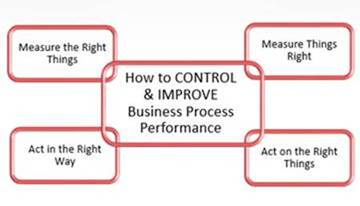
Act on the Right Things
For Process Improvement purposes, there are three ways of Acting on the Right Things. There are tens of ways of acting on the “Wrong Things”! For example, we have been in senior management meetings where the latest result (e.g. Burglary in a Dwelling) has gone up compared with yesterday (or compared with target, or compared with this time last year, etc.). This will generate lots of excitement. People will be exercised in finding a “plausible cause”. Others will be tasked with making sure it comes down tomorrow! Without knowing whether this latest result is a signal (i.e. statistically significant), this activity is known as “over-control” or “tampering”. There is a converse class of errors in management when a one-off event gets treated as if it is common (this is a common mistake made by regulators, e.g. one officer is found to be fixing his results to meet targets, and regulators assume it is happening everywhere, and invokes yet more legislation, overhead, auditing/checking, and even more paperwork to deal with that extraordinary event “to prevent it happening again”).
It is estimated that “Acting on the Wrong Things” method of management is wasting £bns annually in the UK alone.
Acting on the Right Things involves:
- If the latest result is a statistically significant signal (and charts like the one shown in the last post are the most effective/efficient ways of highlighting this), only then investigate that one-off result to establish root-cause (as opposed to “plausible cause” ) and take corrective action, in order to prevent it happening again
- If there are no signals, then drill-down into the underlying subsets (e.g. if dealing with Crime, drill down on all results forming the latest Performance Corridor (see previous post) by Crime Type (e.g. Theft, Violence, Criminal Damage/Arson etc.)) to establish the main driver of, e.g. volume, trends or patterns and develop an improvement initiative/intervention to impact that main driver.
- ….and then Monitor the System or Process or Stage of the Process to establish if the corrective action/initiative/intervention is actually driving a statistically significant improvement (again see the example in previous post).
Act in the Right Way
And this is where Leadership and Organisation, Culture and understanding Processes are either enablers or destroyers of “Acting in the Right Way”. Bullying, shaming, coercion, “make one mistake and you’re out”, league tables, superficial rewards – all are counterproductive to a sustained learning and Continuous Service Improvement environment. See our Book Review of Black Box Thinking by Matthew Syed – he points to plenty of examples of this. And there’s a very good chance that if you’re not Measuring the Right Things, Measuring Things Right and Acting on the Right Things, then you won’t be Acting in the Right Way.
For example, Leadership is critical in setting the appropriate Purpose of the organisation, as well as designing the organisation to execute the strategy needed to deliver Purpose. “Continuous Service Improvement” has to be designed in, not added on as an afterthought! There is enough said in Black Box Thinking about “Review & Learn”, so I’ll say no more on this here. Then applying the Continuous Service Improvement and Review & Learn principles in a disciplined way – some organisation use Plan-Do-Study-Act, some use Information-Decision-Action, some DMAIC from 6-Sigma or combinations/extensions of these. Evolutionary operations (Black Box “Marginal Gains”) and Design of Experiments (e.g. Randomised Control Trials) will be prevalent where Acting in the Right Way is just “the way we do things around here”.
Make this happen, and you’d be surprised by what you can achieve! I wonder how we can make this happen in “Our NHS”?

Categories & Tags:
Leave a comment on this post:
You might also like…

Moving to the UK to study? How to plan for banking, exchange rates and transfers
Currency and banking are two of the most practical parts of financial planning for international students. They are also often the most overlooked. We asked Dr Lakshmy Subramanian, Course Director for Cranfield University's Banking, ...

Cranfield: an environment where innovation thrives
The latest Knowledge Exchange Framework rankings from UK Research and Innovation (UKRI) gives an insight into the real and meaningful impact that UK universities have. The seven categories that make up KEF6 cover everything ...

How Cranfield accelerated my career in Logistics and Supply Chain Management
After graduating from the MSc in Logistics and Supply Chain Management at Cranfield University, I've been reflecting on the experiences that made my journey so valuable and the impact it has had on my ...

Mendeley: a powerful tool to organise and manage your references
Are you looking for a way to manage your references, create in-text citations and reference lists for your assignments or thesis? If so, you may wish to consider using Mendeley. What is it? Mendeley is ...

Keen to develop your study skills?
Alongside the technical skills and academic knowledge that you will gain on your course, as a Cranfield student you have the opportunity to develop a range of other skills that can enhance your learning experience. ...

The V-conomy: powering the sixth wave of global economic growth
The world could be on the verge of a major surge in economic growth and development, driven by the convergence of AI and clean energy technology. Waiting to ride the K-wave The Russian ...