


No. 10, Parliament, BREXIT and the Chaotic Domain!
05/09/2019
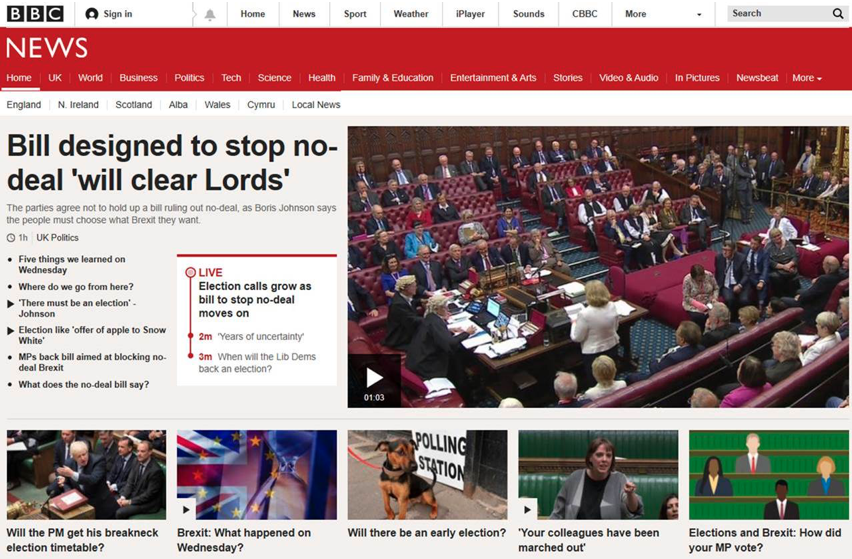
No-one who has been watching parliamentary events play out this week can be in doubt that we are “living in interesting times” – or to put it more bluntly in a state of chaos!
In this state, there is no “play-book”, there is no linear “if this then that” or reliable “Cause & Effect”, strategies and tactics that worked before won’t work now – the world is truly VUCA (Volatile, Uncertain, Complex and Ambiguous). There are very few approaches that can work – one of which is to Act – Sense – Respond in quick-time.
Anyone who has been following these blogs will recall that we introduced a framework for understanding which Domain any Real-world System and its surrounding Environment inhabits – namely the CYNEFIN framework. See: https://blogs.cranfield.ac.uk/leadership-management/cbp/why-mrs-mays-tactics-are-as-likely-as-any-to-work-in-the-current-brexit-chaos-and-the-cynefin-framework
We can see the Act – Sense – Respond loops being played out before our very eyes in real time on our mobile phones. The one thing we can be certain of is that the UK and British politics will be changed forever one we get out of this Chaotic State!
So in your organisation, in which States are your Business Systems/Business Processes and associated Environments – Simple? Complicated? Complex? Chaotic? You better know otherwise you’ll be employing strategies and tactics that may work in one Domain, but don’t work (or even make things worse) in the Domain you are actually in!
And right now, it’s not at all clear, despite the brainpower in the shape of Dominic Cummins et al in No. 10, that the Government knows it is in the Chaotic State! But then, how would we know?

Categories & Tags:
Leave a comment on this post:
You might also like…

Moving to the UK to study? How to plan for banking, exchange rates and transfers
Currency and banking are two of the most practical parts of financial planning for international students. They are also often the most overlooked. We asked Dr Lakshmy Subramanian, Course Director for Cranfield University's Banking, ...

Cranfield: an environment where innovation thrives
The latest Knowledge Exchange Framework rankings from UK Research and Innovation (UKRI) gives an insight into the real and meaningful impact that UK universities have. The seven categories that make up KEF6 cover everything ...

How Cranfield accelerated my career in Logistics and Supply Chain Management
After graduating from the MSc in Logistics and Supply Chain Management at Cranfield University, I've been reflecting on the experiences that made my journey so valuable and the impact it has had on my ...

Mendeley: a powerful tool to organise and manage your references
Are you looking for a way to manage your references, create in-text citations and reference lists for your assignments or thesis? If so, you may wish to consider using Mendeley. What is it? Mendeley is ...

Keen to develop your study skills?
Alongside the technical skills and academic knowledge that you will gain on your course, as a Cranfield student you have the opportunity to develop a range of other skills that can enhance your learning experience. ...

The V-conomy: powering the sixth wave of global economic growth
The world could be on the verge of a major surge in economic growth and development, driven by the convergence of AI and clean energy technology. Waiting to ride the K-wave The Russian ...