


Tackling unhealthy grocery shopping – how my thesis is preparing me for my academic career
01/09/2021
When the thesis topics were published, I instantly knew which project I wanted to work on: Moving from the Eatwell guide to a Food shopping guide. The Eatwell Guide is a dietary guide from the UK government that provides dietary advice for healthy nutrition. My supervisor had the idea to use this guide to provide instant feedback to consumers after their grocery shop. Consumers would receive a graph on their grocery receipt that would tell them how their diet compared to the national guidelines. Could this be a way of nudging consumers towards healthier nutrition?
While many of the potential research topics for MSc students were focused on the agriculture or processing stage in the food chain, I have always been more passionate about sustainable consumer behaviour. When I started my thesis, I already had my PhD spot at the Business school of the University of Warwick secured. Therefore, I wanted to write a thesis targeted at sustainable behaviour change, which potentially provides me with insights that I could use later on.
For my thesis, I had to conduct interviews and analyse the grocery purchases of the participants. While I prefer working with quantitative data, I enjoyed collecting and working with qualitative data. It was interesting to speak with different people and get an idea about people’s perception of sustainable and healthy nutrition. While sustainable and healthy food consumption is something I am very passionate about, it is important to realise that a healthy diet is not something everyone prioritises, especially those struggling with limited financial resources.
During my undergraduate education, I learnt how to search and read literature relatively quickly. Therefore, I managed to search the literature, conduct the interviews, analyse the data, and write the thesis quicker than most of my classmates. I met with my supervisors about once a week to discuss how to proceed. While I received some general guidance, the majority of the work was independent, which I enjoyed.
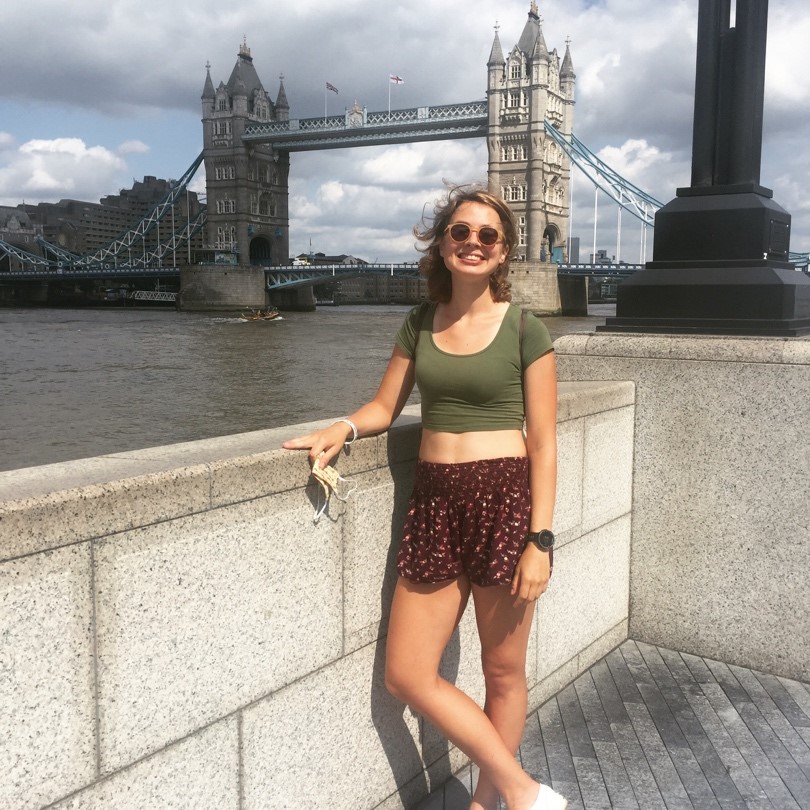
When I wasn’t working on my thesis, I had time to enjoy a wide range of activities. I went on runs or cycles around the area, met up with friends for lunch, dinner or coffee, or take little day trips to London or Bedford. Unlike having lectures, thesis writing can feel a bit lonely and potentially a bit demotivating due to the lack of a structured day. I am lucky that I enjoy independent work, as well as researching and writing papers. Yeah, I don’t know what is wrong with me either, but I guess that is why I am continuing my academic career!!. But it’s important to keep yourself motivated and engaged throughout the project. Therefore, I went on a hiking trip to the Peak District halfway through my thesis to get out of Cranfield and to get my mind off the project for a couple of days.
Now I am going to leave Cranfield in about two weeks. I have learnt a lot during my time here, especially that food sustainability is something that I want to continue to work on for the next period of my life and likely beyond that. Furthermore, I met many great people that I hope I will stay in touch with once we all leave and continue our lives somewhere else. Who would have thought that a small, rural university like Cranfield would enable me to meet and connect with people from all around the world?

Categories & Tags:
Leave a comment on this post:
You might also like…

Referencing the use of generative AI in your work
We recognise that Artificial Intelligence (AI) has, and will increasingly, become a part of our everyday lives and that we need to adapt to it. Hopefully you will have already seen the guidance for staff ...

When AI gets it wrong, who answers? Bridging the ‘confidence gap’ for tech-enabled transformation
Ask AI why it exists and it will tell you it was developed to enable machines to perform ‘human-like intellectual tasks’ including reasoning, learning and problem-solving. We seek out AI to help find answers: ...

Reducing your costs as an international student (without missing out)
Moving to another country to study is exciting, and it's also a big financial step. The good news is that budgeting doesn't have to mean missing out. We asked Dr Lakshmy Subramanian, Course Director ...

Need some help settling in? Wobble Week 2026
Whether you’re finding it hard to settle into your course or accommodation, you arrived late and are struggling to catch up, you feel overwhelmed or you can’t remember everything you’ve already been told, we can ...
Moving to the UK to study? How to plan for banking, exchange rates and transfers
Currency and banking are two of the most practical parts of financial planning for international students. They are also often the most overlooked. We asked Dr Lakshmy Subramanian, Course Director for Cranfield University's Banking, ...

Cranfield: an environment where innovation thrives
The latest Knowledge Exchange Framework rankings from UK Research and Innovation (UKRI) gives an insight into the real and meaningful impact that UK universities have. The seven categories that make up KEF6 cover everything ...