

Are you interested in progressing agricultural science but worried about how to cover the bills?
11/04/2017
I am a third year PhD student at Cranfield University looking at the effects of tillage on soil health. My research was made possible by funding I received from the NFU Mutual Centenary Award.
My journey started with an undergraduate degree in Ecology and Conservation in Natural Sciences at Cambridge University in 2012. I then completed an MSc in Sustainable Agriculture and Food Security at Exeter University in 2014. I began my PhD at Cranfield in 2014.
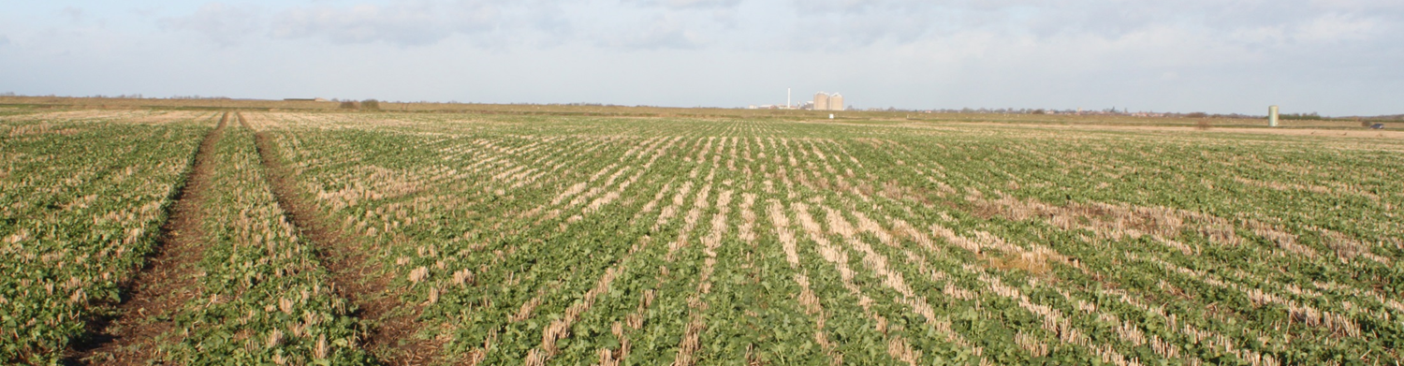
My research concerns strip tillage – a method of seedbed preparation for arable crops which results in rows of disturbed soil covering roughly a third of the total surface area of a field. I am investigating the effect of these practices on the biological, chemical and physical state of the soil in order to better understand their viability and sustainability.
The NFU Mutual Charitable Trust is one member of a group of charities – the AgriFood Charities Partnership – which help fund students within the field of agriculture. The Trust aims to help students who will go on to make a difference within agriculture. The application process is simple, you just need to drop an email to the address found on the NFU Mutual Charitable Trust website and they will guide you through the information you need to submit. If the Trust decides that you and your application are a good match for the research they are looking to fund then you will be invited to a meeting. The meeting is an opportunity for you to discuss your research idea with them, but don’t be put off by this – it’s not meant to be an academic grilling!
The funding they offer covers up to 75% of your course / tuition fees – currently £9,000 per year for a UK or EU PhD student at Cranfield University. If you are successful in receiving the award then you will be invited to the biannual Agrifood Charities Partnership Student Forum which is a great opportunity to meet other agrifood research students whose projects are sponsored by charities. In return, the NFU Mutual Charitable Trust only asks that you submit annual reports (or a single annual report if you are a Masters student). I have not found this to been an onerous task as it has coincided with when I’ve had to submit university review reports, so the two reports can be combined into a single activity.
Being a PhD student at Cranfield with funding from a major agrifood company (Frontier Agriculture Ltd) and two agrifood charities (NFU Mutual Charitable Trust and The Douglas Bomford Trust) means my research is very applied. It involves working with farmers, field agronomists and agricultural advisors.
At every stage the research has to reach the academic standards required as well as being relevant to the project sponsors and partners. At times this has been challenging, but Cranfield University and my supervisors (Professor Jane Rickson and Dr Lynda Deeks) in particular, have plenty of experience in managing these sorts of research projects.
If you are interested in undertaking a further degree where your research has a direct relevance to the agricultural or horticultural industry, I would encourage you to apply to the NFU Mutual Charitable Trust for funding. The deadline for applications is the end of April 2017.
For more information on how to apply for the NFU Mutual Charitable Trust Centenary Award and for more funding opportunities for those starting their course at Cranfield in 2017 check out this blog post from our Student Funding Officer, Sam Goodwin.

Categories & Tags:
Leave a comment on this post:
You might also like…

Mendeley: a powerful tool to organise and manage your references
Are you looking for a way to manage your references, create in-text citations and reference lists for your assignments or thesis? If so, you may wish to consider using Mendeley. What is it? Mendeley is ...

Keen to develop your study skills?
Alongside the technical skills and academic knowledge that you will gain on your course, as a Cranfield student you have the opportunity to develop a range of other skills that can enhance your learning experience. ...

The V-conomy: powering the sixth wave of global economic growth
The world could be on the verge of a major surge in economic growth and development, driven by the convergence of AI and clean energy technology. Waiting to ride the K-wave The Russian ...

Need help using the Python programming language?
We know some of our students are currently trying to learn Python, so we wanted to make you aware of some great LinkedIn Learning videos that can help. But don't you have to pay for ...

What does it really take to become a Chevening Scholar?
Say “Turkmenistan” to most people and you’ll get a blank look. That was true when I left Ashgabat for the UK to study an MSc in Logistics and Supply Chain Management at Cranfield University ...

Get a head start on referencing and plagiarism
We offer a module on Referencing And Avoiding Plagiarism which you can find on your Canvas dashboard. It explains the role and importance of citing references and how to incorporate the work of other authors ...