


Cranfield University Knowledge Transfer Partnership Associates – helping businesses to achieve growth with academic expertise
28/10/2019

Cranfield University has a portfolio of diverse collaborative projects with business that are run under Innovate UK’s Knowledge Transfer Partnership scheme (KTP). Our current KTP business partners include: Siemens Industrial Turbomachinary Ltd., Warden Plastics Ltd., Primagraphics Ltd., SPI Lasers UK Ltd., Spinnaker International Ltd., Haddonstone Ltd., Garrandale Ltd., The Royal Horticultural Society (RHS), Elsoms Seeds Ltd., Pamela Steel Associates Ltd., Renishaw plc and Autoglym Ltd.
Today Associate’s from Cranfield University, that are employed full time on the KTP projects, were given the opportunity to network, learn from each other and share their experiences as KTP Associates.
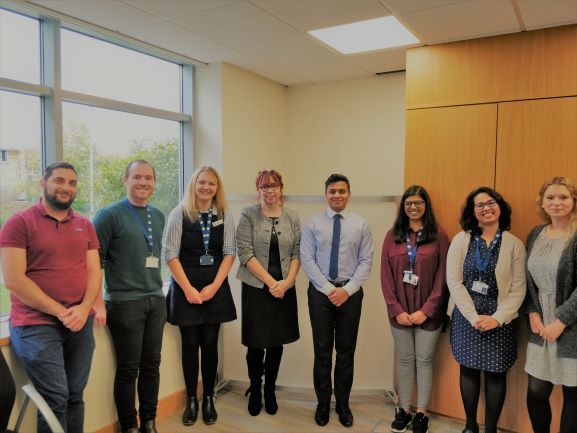
The KTP scheme creates a partnership between the organisation and a UK knowledge base (generally a University) that has appropriate knowledge that can be further developed and transferred to build and embed for the future the knowledge and the capabilities the organisation requires to develop the product or service they have in mind.
A key aspect of the KTP model is the expectation that the project will create value for the organisation such as access to new markets, increases in sales income, reductions in cost and increases in profitability. The project is also expected to lead to benefits in the University in terms of teaching, research, publications and enhanced relationships with industry. The knowledge is developed and transferred into the commercial organisation by means of the partnership recruiting an Associate who is employed by the university but who works at the organisation’s base.
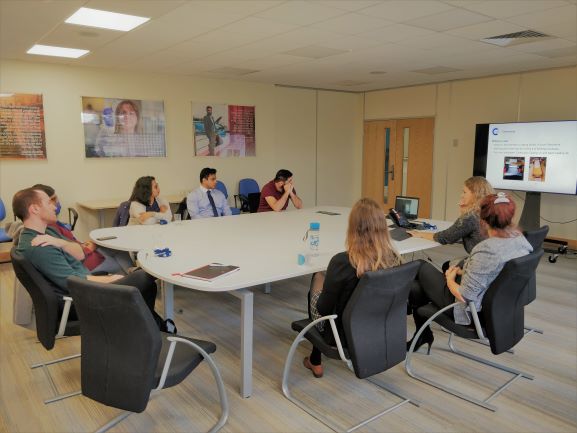
The Associate’s role is to work with the organisation and the university team to develop the knowledge required to solve the particular challenge the company is working on and ensure that existing company personnel are trained in the technology or techniques required to maintain the new capability into the future after the end of the project.
If you are interested in finding out more about the KTP scheme please contact: sandra.messenger@cranfield.ac.uk

Categories & Tags:
Leave a comment on this post:
You might also like…
Building more than research: Reflections from the ECRn Symposium 2026
There’s something quietly powerful about a room full of early career researchers. Not just the ideas, although there were plenty of those—but the conversations, the curiosity, and the sense that everyone is figuring things ...

Library services over Easter, 3-6 April
Kings Norton Library will remain open for study 24/7. You will need your University ID card to enter the building and can use the self-service machines to borrow and return items as usual. Barrington Library ...

How do I access the full-text of Harvard Business Review (HBR)?
This is a frequently asked question, and it's worth knowing how to access this key management journal. So, how do you access HBR in full-text? The short answer is via our eJournals finder. You can find ...

Engineering problem to solve? Let Knovel help you find a solution
Did you know that Knovel provides you with more than just eBooks? Knovel is a key database for many engineering, mechanical and materials courses here at Cranfield University, and contains content from an extensive range ...
What happens when female scholars meet influential leaders?
On the 5 March 2026, our British Council Women in STEM Scholars had the privilege of sitting down with two excellent role models of industry and academia: Professor Dame Karen Holford, ...
From MSc to CEO: Igniting a research revolution
For many, a master’s degree is achieving a big milestone. Kilyan Ocampo, Computational Fluid Dynamics alumni shares how studying at Cranfield helped launch his career in the energy sector. Today, Kilyan ...