


A sit down with Dr Carol Verheecke-Vaessen
10/12/2020

Can you tell us a bit about your area of research?
My name is Dr Carol Verheecke-Vaessen, and I am a Research Fellow in Applied Mycology working within the Applied Mycology group. We apply fungal research on either enhancement of sustainable food production and waste management, or for limiting the risk of contaminants like fungal secondary metabolites that accumulate in food and that are toxic for humans when consumed.
I work within the CSAFI Institute (Cranfield Soil and Agrifood Institute) a multi-disciplinary group focused on the challenges of agribusiness to enhance environmental sustainability and food security.
This month, you are celebrating four years at Cranfield University. So, well done! What brought you to Cranfield University?
I joined Cranfield University as I was interested in an opening for a project ‘Oats for the Future’, which aims to study the impacts of climate change on the Fusarium: Oats pathosystem and propose innovative solutions to mitigate the occurrence of mycotoxins (toxic fungal compounds) to accumulate in oats. This opportunity was a four-year contract with the potential to use different state of the art molecular biology and analytical chemistry tools from EAF (Environment and Analytical facilities).
This once in a lifetime opportunity is why I decided to come to Cranfield!
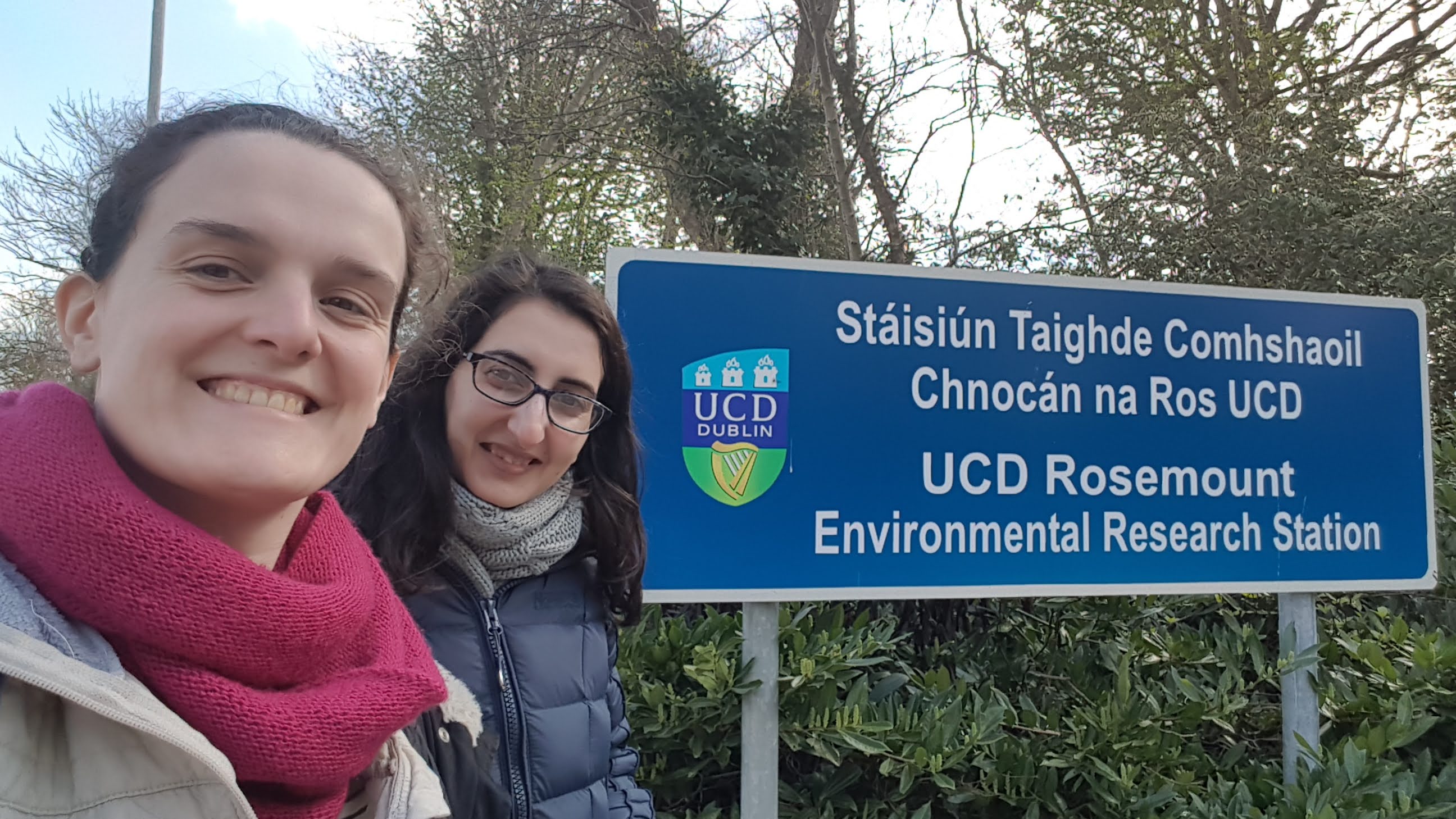
Photo taken pre Covid-19
How has your role changed within your time at Cranfield University?
My role has changed so much! When I joined, I started on one project, and I was liaising with the collaborators to understand how we could make sure we get our deliverables completed on time and build a strong partnership. I started to be more involved in the Applied Mycology Group and helped in the co-supervision and support to PhD students. I helped them to learn some exciting techniques to complement their research so that they can deliver quality research at Cranfield. From that, I also started to write projects, so that I could be more involved in managing my future work at Cranfield. In the last two years, I’ve been developing my ideas and responding to call for projects to sustain the work started at Cranfield. This has led to successes including the community-focused project NutriNuts.
How many years do you see yourself staying at Cranfield?
I want to say as long as possible! I like the environment here at Cranfield because, as an academic, you have the right balance between teaching and research. I like the possibility to balance between teaching modules at the Agrifood MSc, PhD supervision and research projects while linking with the industry. Our work is having a significant impact on the international as well as a local community. This is one of the reasons that motivated me to stay at Cranfield!
How does your work link with industry?
My main work focuses on mycotoxins, which are toxic metabolites produced by fungi. These mycotoxins tend to accumulate in food depending on the environmental conditions from farm to fork. This accumulation is harmful to humans and also animals hence their concentration is regulated in the UK, Europe, and worldwide. As mycologists, we support the industry in developing tools to ensure compliance with the regulation. We can provide guidance on good agricultural/storage/process practices and deliver targeted training for the industry.
How do you bring students into your work?
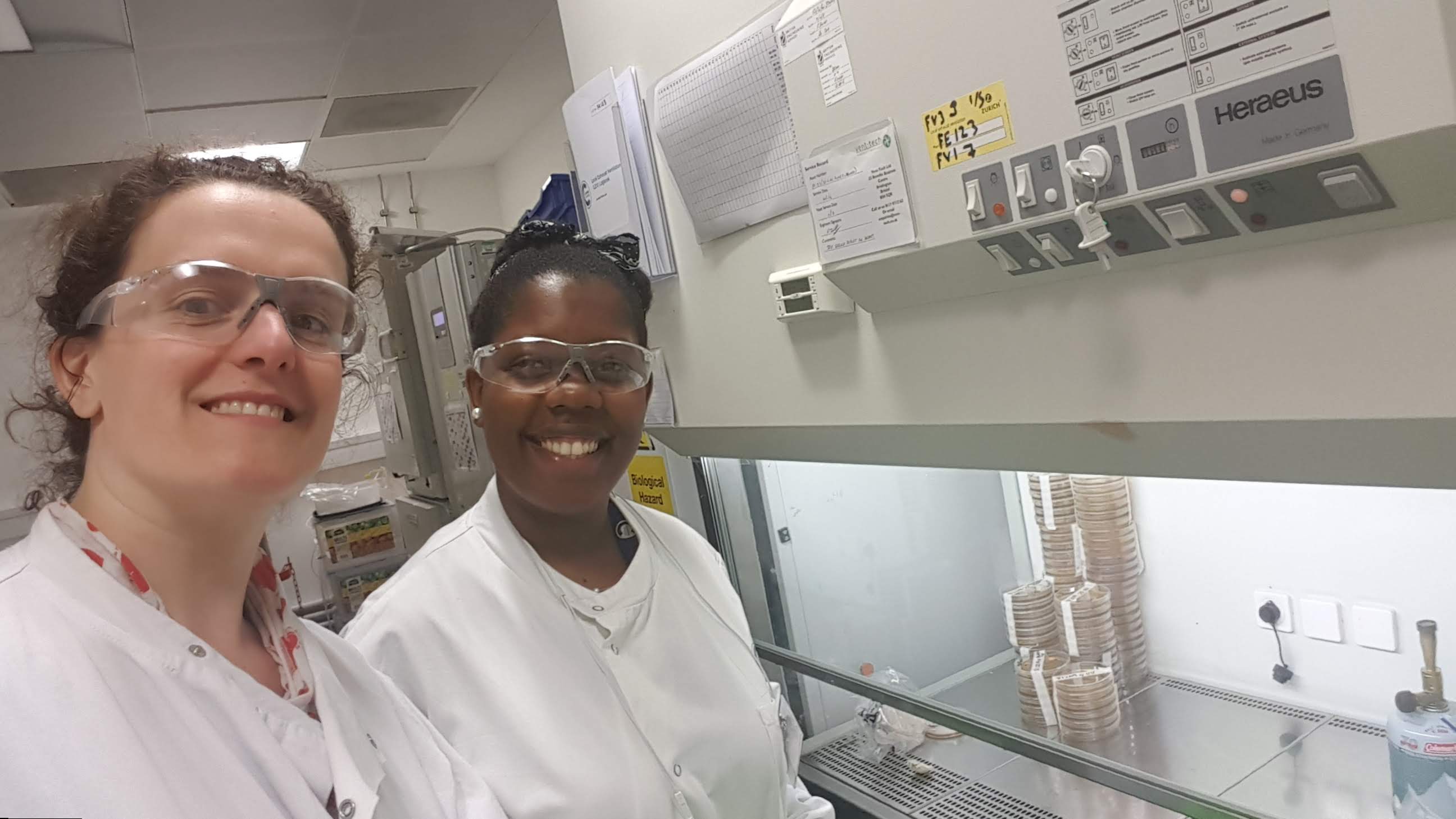
I interact a lot with MSc and PhD students! In regards to master students, every year we offer opportunities to conduct an individual thesis on our ongoing research. It is an incredible opportunity for MSc students to be involved in multi-disciplinary project. One of my previous master’s student was able to do both molecular biology and genome sequencing at the same times as analytical chemistry in less than four months! She was happy to learn a wide variety of different techniques within that timeframe.
For PhD students, I am an advisor to support and guide their research. I will also be the technical referee for analytical and molecular biology techniques.
What we love most about your role?
I think what I love the most is the fact that we work as a community, we have a good interaction between our team leaders and our students. Seeing a student come back to you after their PhD and say, “Thank you, you really helped me out, and it was wonderful to work with you” is the best reward that I can get!
What excites you most about what you’re currently doing?
What I like is that I am always learning! From research to leadership and management skills, I am learning every day!
Can you highlight a unique experience you’ve had whilst working at Cranfield?
A couple of years ago, I co-supervised a group project in collaboration with Forest of Hearts charity intending to develop an edible garden next to Stratford upon Avon. Thanks to Cranfield wide port-folio of MSc courses, we were able to have a group of students that delivered a design of local habitats to restore biodiversity in Warwickshire. This opportunity could only happen at Cranfield!

What are you most proud of?
Currently, what I am most proud of is our NutriNuts project, where we aim to support malnourished children in Ethiopia by supporting the local agrifood chain to produce safer and more nutricious food products in a sustainable approach.
I’m really proud of this project because it showcases the strength of Cranfield University!
It showcases the mix between our links with industry and the capacity we have to provide high impact research. At the same time, I have also been sensitised to the gender challenges that the woman in Ethiopia are facing. We are now working to improve gender equality in our training programs in Ethiopia. Overall, it is an ambitious project with an outstanding community impact, and I think that’s the one I’m most proud of at the moment!
Do you often work collaboratively with other areas of the university?
This is an area that I would like to explore shortly. Cranfield benefits from a wide port-folio of experts where innovation through multi-disciplinary research is always possible to tackle our challenges of tomorrow!
Who would you like to exchange roles with at Cranfield for one day?
I think I would like to be an Head of School! It would allow me to learn on the management work done so that us, researchers, can perform our work. I think it would give me a good insight into how Cranfield management is done at higher levels and how to work towards our joint plan and values.

Categories & Tags:
Leave a comment on this post:
You might also like…

Moving to the UK to study? How to plan for banking, exchange rates and transfers
Currency and banking are two of the most practical parts of financial planning for international students. They are also often the most overlooked. We asked Dr Lakshmy Subramanian, Course Director for Cranfield University's Banking, ...
Cranfield: an environment where innovation thrives
The latest Knowledge Exchange Framework rankings from UK Research and Innovation (UKRI) gives an insight into the real and meaningful impact that UK universities have. The seven categories that make up KEF6 cover everything ...
How Cranfield accelerated my career in Logistics and Supply Chain Management
After graduating from the MSc in Logistics and Supply Chain Management at Cranfield University, I've been reflecting on the experiences that made my journey so valuable and the impact it has had on my ...

Mendeley: a powerful tool to organise and manage your references
Are you looking for a way to manage your references, create in-text citations and reference lists for your assignments or thesis? If so, you may wish to consider using Mendeley. What is it? Mendeley is ...

Keen to develop your study skills?
Alongside the technical skills and academic knowledge that you will gain on your course, as a Cranfield student you have the opportunity to develop a range of other skills that can enhance your learning experience. ...

The V-conomy: powering the sixth wave of global economic growth
The world could be on the verge of a major surge in economic growth and development, driven by the convergence of AI and clean energy technology. Waiting to ride the K-wave The Russian ...