


My work experience and career plans
01/07/2021
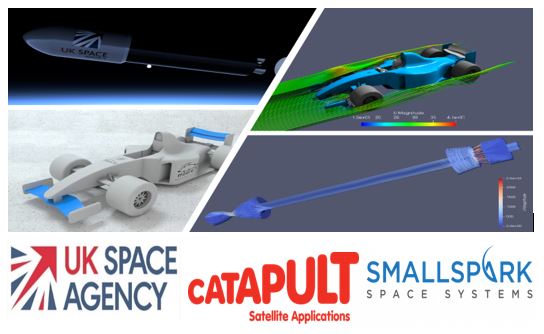
Luckily, I managed to find relevant work experience within the field. It was thanks to Ray Stott from SpaceSpecialists and SpaceMates online that I managed to be introduced to Joseph Ward who is the CEO and director of propulsion at Smallspark Space Systems. This gave me the chance to build initial contact with him, ask him questions about the companies aims and objectives, as well as the technology they were building. I later applied to one of the SPIN internships that his company was offering, in association with the UK Space Agency, and fortunately, the application process went well, and I was accepted onto the programme last Summer for around three months.
Smallspark is a UK based Aerospace and Artificial Intelligence research company based in Cardiff, who are developing low cost rocket propulsion systems. They have also created a software called MooreAI, which allows for the development of high performance, situation specific aerostructures that can be implemented for a variety of applications for aerodynamic optimisation. My main responsibilities were to investigate the effects of various Hybrid Rocket Engine injector designs and develop a method that computationally analysed their performance for optimising the atomisation, combustion properties and mixing of the propellants within OpenFOAM.
Also, I managed to secure a part-time role during my master’s studies at Asteria: Space and Satellites as an Orbital Engineer. Asteria are a student group at the University of Edinburgh dedicated to the development of Oracle 1; a 3U CubeSat designed for remote sensing of the Earth using hyperspectral imaging which will be pursuing a scientific mission to help track mosquito-borne diseases. My role as an orbital engineer is to model the trajectory of the satellite using simulation software like GMAT. I also try and get involved with various other projects within the space sector, for example, the work I am doing with 4WardFutures and the Constructing a Life on Mars (CaLoM) project.
Personally, I just want space to be a part of my daily routine. Hopefully, I am lucky enough to be able to find a job where I can put the skills I have learnt and developed throughout university into practice and help work towards the future of space flight. A personal goal of mine would be working for an organisation such as the UK Space Agency or ESA, I think that would be the pinnacle of my space journey! But in the meantime, I think I will just have to be patient and continue to work on the opportunities that I am involved with now.
Follow my postgraduate journey in my next blog where you will learn about my experience of the Astronautics and Space Engineering MSc

Categories & Tags:
Leave a comment on this post:
You might also like…
My aerospace vehicle design journey at Cranfield
In 2007, I watched the Airbus A380 land in Delhi for the very first time. I was just a kid in India, and it was the biggest passenger plane in the world. I asked ...
Solving aerospace challenges at Cranfield University
Solving real world challenges has always been my goal and with the knowledge that I could gain at Cranfield during my master’s, it was not a decision that required a second thought. The interactive ...
Shaping the future of aviation with aerospace vehicle design at Cranfield
When I was three years old, I went on my first plane ride together with my dad; this was on a Boeing 777-200ER and made me very curious about how it all worked. So, ...
From flight control systems to aircraft design
The beauty of aviation has been a big part of my background and the primary driver of my goals and aspirations. My perspective is that it is more than just a method of transportation ...

Search tips for using our online resources effectively
When you begin to search the literature for relevant, good quality academic material, it can feel daunting and, at times, overwhelming. However, it need not be like that. Here are a few ...

Referencing the use of generative AI in your work
We recognise that Artificial Intelligence (AI) has, and will increasingly, become a part of our everyday lives and that we need to adapt to it. Hopefully you will have already seen the guidance for staff ...