

Methods, Methods, and Methods… Part 2 of 2
04/09/2017

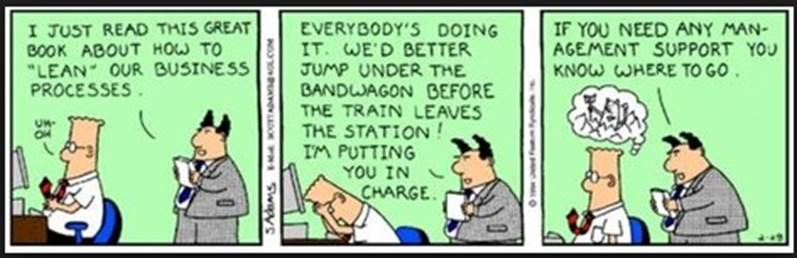
So in our previous blog, we mentioned that we come across challenges like – “We’re going to do ‘Demand Management’ using Method ‘X’”. Per previous blog, our usual response is to unpick this requirement statement to understand two concepts – Demand Management and Method X.
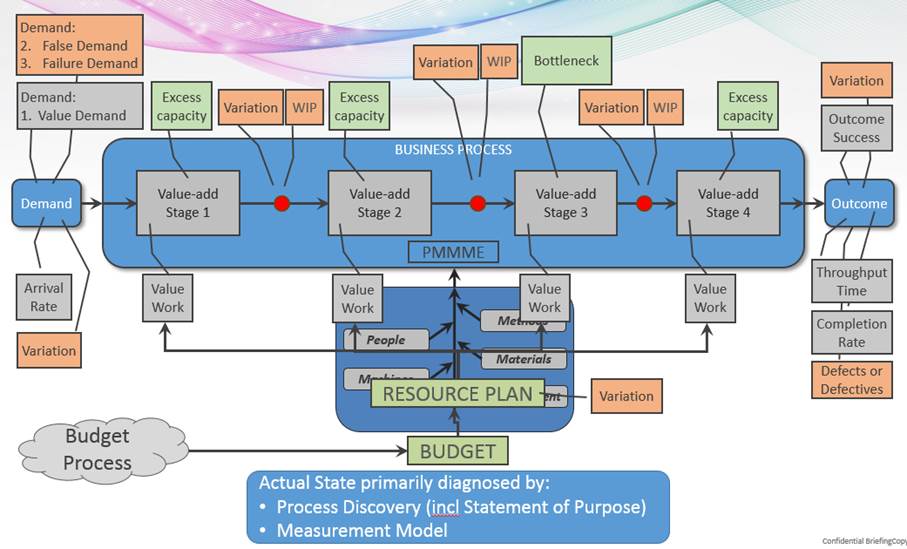
To recap on why we look at Demand Management, it is with an eye to understanding demand, and to characterise it against a well-defined purpose, and set in context in terms of flow towards an outcome, to identify waste and failure demand. There are methods for doing this, such as the Vanguard Method, Lean and variants of the Toyota Production System, for example. However, we noted this is only part of the story, since in certain process types (namely T2R – Trouble to Resolve) actual (or value) demand can also be worked on to improve the overall system. So any method must include the capability to understand sources of value demand, and how to remove or limit the impact of such sources.
Furthermore, some methods focus on identifying and redesigning bottlenecks – but anyone who has read “The Goal” by Eli Goldratt will know, every system, every process, will have a bottleneck, so there’s more to it than that. So the method must be able to identify and enable improvement action of constraints causing bottlenecks, or recognise you have to live with them.
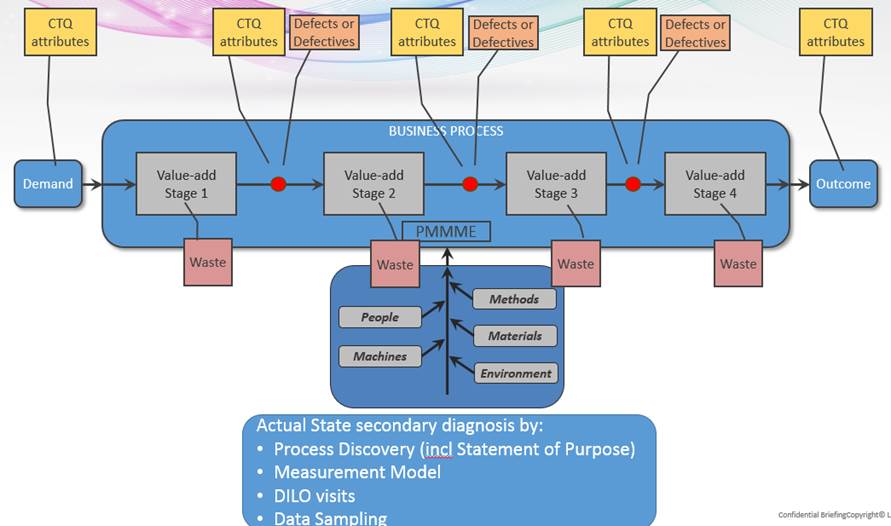
That’s not all, some failure demand may be due to missing CTQ (critical to quality) attributes – so we must capture these in the method.
Finally (well finally for this blog anyway) a massive problem overlooked by many methods is understanding the impact of variation (in control and out of control – and there’s a difference requiring different improvement action). Even without a specific bottleneck, variation can cause WIP (Work In Progress or Backlogs) to build up causing apparent bottlenecks. If it is out of control variation, the apparent bottlenecks can move between stages over time, frustrating efforts focused on just one stage that simply add costs rather than solve the problem! Variation can cause failure demand, unwanted outcomes, under/over resourcing and more…..
So, any one of the well-recognised methods by itself is not fit for purpose in most cases – a blend of methods and techniques is required (just as you cannot do maths with only addition/subtraction (unless you’re a computer!), you need multiplication/division, use of powers/roots, trigonometry, calculus, and, and, and…. depending on the kind of problem you’re trying to solve).
Visualising and Understanding Demand (grey boxes represent what you design for, beige and green boxes are what you actually get that you might not want!) – 1
Visualising and Understanding Demand (grey boxes represent what you design for, orange is what is critical, beige and violet are what you actually get that you might not want!) – 2
So, what exactly is the blend of methods we actually use in our endeavours? Well they’re not in any management fad, on any bandwagon. Nor in any book – yet!

Categories & Tags:
Leave a comment on this post:
You might also like…

Moving to the UK to study? How to plan for banking, exchange rates and transfers
Currency and banking are two of the most practical parts of financial planning for international students. They are also often the most overlooked. We asked Dr Lakshmy Subramanian, Course Director for Cranfield University's Banking, ...

Cranfield: an environment where innovation thrives
The latest Knowledge Exchange Framework rankings from UK Research and Innovation (UKRI) gives an insight into the real and meaningful impact that UK universities have. The seven categories that make up KEF6 cover everything ...

How Cranfield accelerated my career in Logistics and Supply Chain Management
After graduating from the MSc in Logistics and Supply Chain Management at Cranfield University, I've been reflecting on the experiences that made my journey so valuable and the impact it has had on my ...

Mendeley: a powerful tool to organise and manage your references
Are you looking for a way to manage your references, create in-text citations and reference lists for your assignments or thesis? If so, you may wish to consider using Mendeley. What is it? Mendeley is ...

Keen to develop your study skills?
Alongside the technical skills and academic knowledge that you will gain on your course, as a Cranfield student you have the opportunity to develop a range of other skills that can enhance your learning experience. ...

The V-conomy: powering the sixth wave of global economic growth
The world could be on the verge of a major surge in economic growth and development, driven by the convergence of AI and clean energy technology. Waiting to ride the K-wave The Russian ...